
Bill Vass Uses Deepfake to Warn of AI-Driven Fraud Risks
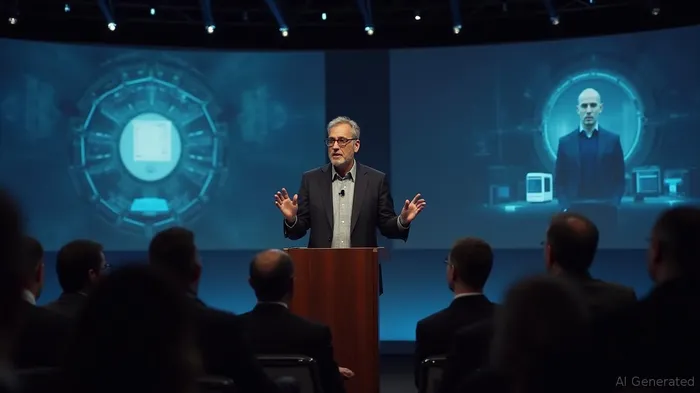
Bill Vass, the Chief Technology Officer of Booz Allen HamiltonBAH--, has taken an unconventional approach to deepfake awareness by creating a deepfake video of himself. The 30-second video, set to be shared with Booz Allen’s global workforce of over 35,000 employees, aims to highlight how easily AI can be used to create convincing fake audio and video content. Vass argues that the common advice of “believe none of what you hear and half of what you see” is no longer sufficient in an era where generative AI has made deepfakes increasingly difficult to detect [1].
The deepfake was developed in collaboration with Reality Defender, a deepfake detection company that has clients like IBMIBM--, VisaV--, and ComcastCMCSA--. Reality Defender recently expanded its Series A funding round, raising $33 million, with Booz Allen’s venture capital arm among the contributors. The partnership underscores the growing concern over deepfake threats in the corporate world [1].
According to Reality Defender’s new CTO, Alex Lisle, deepfakes pose a unique threat compared to other cyberattacks. Unlike traditional cyber threats, which often require high technical expertise, deepfake attacks can be executed with off-the-shelf software and basic technical knowledge. He warns that this lowers the barrier to entry for cybercriminals, making the threat more pervasive [1].
The finance sector, in particular, has been targeted. A notable case involved a Hong Kong-based company that lost $25 million after an employee was deceived by a deepfake video call impersonating the company’s CFO. These incidents highlight the urgent need for stronger authentication processes and better employee training. Deloitte has estimated that generative AI-enabled fraud could reach $40 billion by 2027, with a projected compound annual growth rate of 32% [1].
Vass has personal experience with deepfake attacks. At a previous startup, he received a forged email that appeared to be from himself and involved the CFO. The message led to the processing of a fake $25,000 invoice. These real-world examples reinforce his belief that AI will make such attacks even more common. He argues that people must begin to adopt a more skeptical mindset when interpreting digital content [1].
Experts across the corporate world are increasingly recognizing the need for AI-related authentication measures to be as standard as multi-factor or zero-trust authentication. As deepfake technology continues to evolve, so too must the strategies to combat it. Companies like WPPWPP--, AccentureACN--, and FerrariTSLA-- have already been targeted, further emphasizing the importance of robust cybersecurity measures [1].
Despite these challenges, Vass remains optimistic about the potential for AI to enhance digital security. By educating employees and investing in detection tools, organizations can better prepare for the threats posed by deepfakes and other AI-driven frauds [1].
Sources:
[1] https://fortune.com/2025/07/30/booz-allen-cto-bill-vass-deepfake-cybersecurity/





Comentarios
Aún no hay comentarios