
Bill Gates Predicts AI to Commoditize Expertise in a Decade, Despite Current Employment Trends
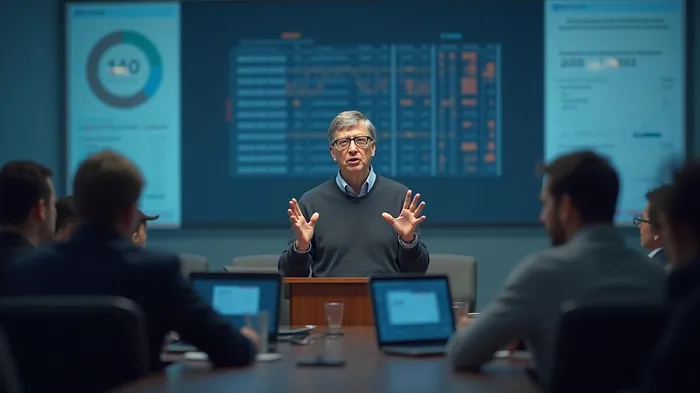
Bill GatesGTES-- has predicted that within a decade, humans will no longer be needed for most tasks, as we are entering an era of "free intelligence" where expertise in all subjects will be commoditized by artificial intelligence (AI). Gates described this shift as profound and somewhat frightening, given its rapid pace and lack of upper bounds.
Eric Schmidt, the former CEO of GoogleGOOG--, has made even more alarming predictions. He expects that within a year, the majority of programmers will be replaced by AI programmers. Schmidt also anticipates achieving artificial general intelligence within five years, where AIs will match the expertise of top human professionals in any field. Within six years, he foresees the arrival of artificial super intelligence, surpassing the collective intelligence of all humans.
Despite these dire predictions, current evidence suggests that humans are not being easily replaced by AI. For instance, the founder of Cursor reported that their AI code editor writes one billion lines of code per day, yet there are still 1.6 million software developers employed in the US. This indicates that human programmers have many years of employment ahead.
Additionally, subscriptions for Microsoft’s Copilot have reportedly remained stagnant for a year, suggesting that Copilot is more of an AI companion for human employees rather than a replacement. Similarly, OpenAI reports that ChatGPT has over 400 million active weekly users, almost 5% of the world’s population, but this has not led to a significant impact on employment.
Academic studies have also found muted effects of AI on employment. One study reported that while highly exposed occupations experience relatively lower demand, the resulting increase in firm productivity increases overall employment across all occupations. Another study found that AI chatbots have had no significant impact on earnings or recorded hours in any occupation.
Historically, new technologies have led to higher employment rather than lower. For example, the invention of typewriters and adding machines led to an increase in clerical jobs due to automation and the Jevons paradox. Today, there are more people employed using spreadsheets than there ever were using adding machines.
In some regions, the concern is not about job loss but about a shortage of workers. For instance, Greece introduced a six-day work week due to a shrinking population and a shortage of skilled workers. Similarly, the persistent shortage of affordable homes in the US is partly due to a lack of available workers to build them.
While AI may eventually replace some jobs, it is likely that humans will find new roles and opportunities. Analysts at Bank of AmericaBAC-- predict that by 2060, there will be three billion humanoid robots performing various tasks, but this is still a long way off. In the meantime, humans will continue to adapt and find better things to do.





Comentarios
Aún no hay comentarios