
Bill Gates' Harvard Regret: The Year He Tried to Keep One Foot in College
Generado por agente de IAHarrison Brooks
viernes, 14 de febrero de 2025, 2:19 pm ET2 min de lectura
GTES--
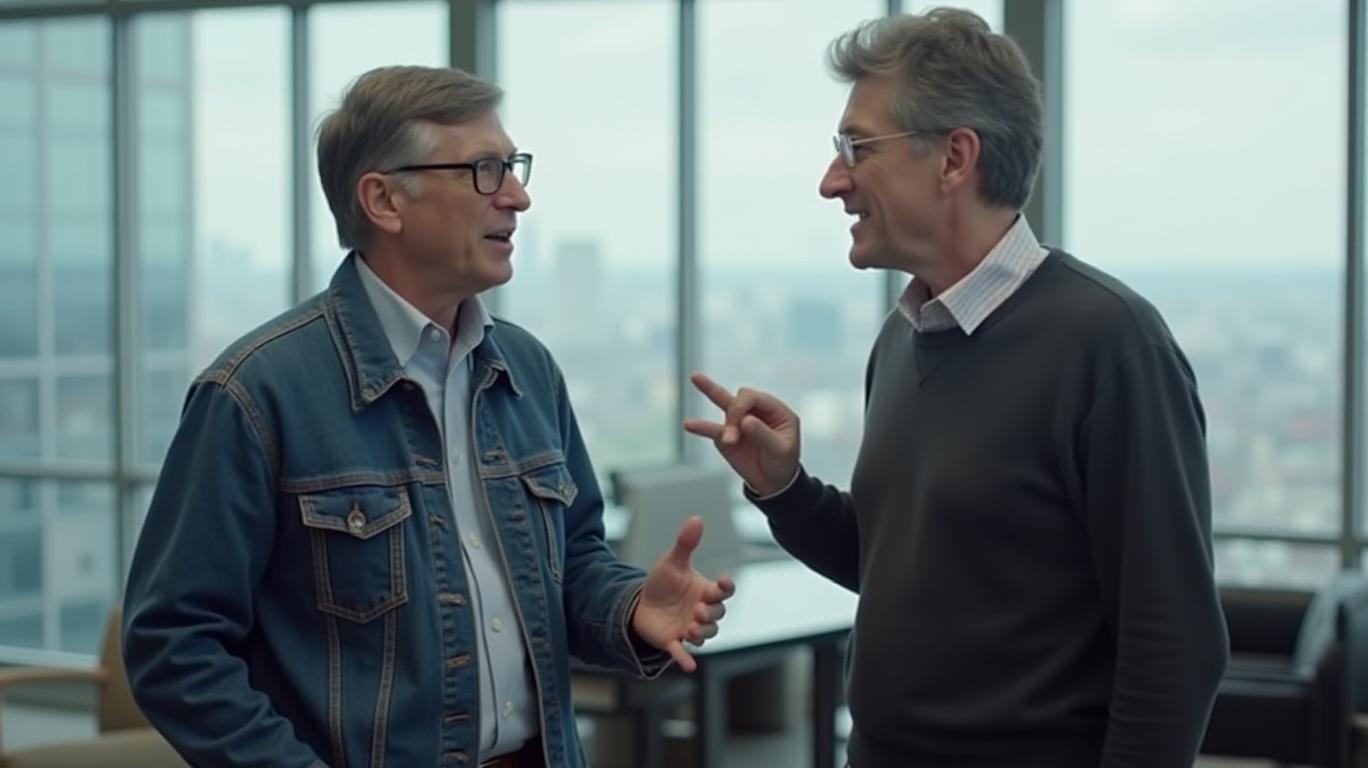
In 1975, Bill Gates faced a pivotal decision: continue his education at Harvard University or leave to found Microsoft with his high school friend, Paul Allen. Gates, then a 20-year-old undergraduate, struggled with the choice, ultimately deciding to leave college to pursue the burgeoning software industry. However, he spent the first year of Microsoft trying to delegate the company's management to a friend, hoping to return to Harvard.
Gates' initial hesitation in leaving Harvard stemmed from his enjoyment of college life. He loved the intellectually rigorous atmosphere, the opportunity to learn deeply about various topics, and the late-night discussions with smart people (Source Code, p. 123). Additionally, he appreciated the social life at Currier House, where he lived, and the male-to-female student ratio, which was unusual at the time (Source Code, p. 124). Gates also found himself surrounded by students whose math skills surpassed his own, giving him a wake-up call and pushing him to excel academically (The Times of London, 2025).
However, the opportunity to be at the forefront of the personal computing revolution proved too enticing for Gates. When Allen showed him the Altair 8800 on the cover of Popular Electronics, they realized that the software industry was about to take off. They believed they could be at the forefront of this new industry by creating software for personal computers (Source Code, p. 135). The urgency to act quickly, as someone else might beat them to the punch, ultimately drove Gates to leave Harvard (Source Code, p. 136).
Despite his decision to leave, Gates spent the first year of Microsoft trying to delegate the company's management to a friend, Ric Weiland, so he could return to Harvard. He even tried to convince Weiland to "take charge of things," but Weiland ultimately left for graduate school and later resigned from Microsoft (Source Code, p. 140). Gates eventually realized that he needed to give Microsoft his full attention to stay ahead of the competition, and he never returned to complete his degree.
Gates' experience highlights the importance of timing and opportunity in the world of startups. By leaving Harvard, he was able to capitalize on the emerging personal computing market and establish Microsoft as a key player in the industry. However, his initial hesitation also demonstrates the difficulty in making such a significant decision, especially when faced with the allure of college life and the uncertainty of the business world.
In hindsight, Gates' decision to leave Harvard and commit fully to Microsoft proved to be the right choice. The company revolutionized the computer industry, turning both co-founders into billionaires. Today, Microsoft is worth more than $3 trillion, and Gates' estimated net worth is $108.7 billion, according to Forbes. Despite his initial regret, Gates' decision to leave Harvard ultimately paved the way for his incredible success in the tech industry.
Sources:
Gates, B. (2025). Source Code: My Beginnings. Knopf.
The Times of London. (2025, February 15). Bill Gates: The Harvard dropout who became a billionaire.
MSFT--
In 1975, Bill Gates faced a pivotal decision: continue his education at Harvard University or leave to found Microsoft with his high school friend, Paul Allen. Gates, then a 20-year-old undergraduate, struggled with the choice, ultimately deciding to leave college to pursue the burgeoning software industry. However, he spent the first year of Microsoft trying to delegate the company's management to a friend, hoping to return to Harvard.
Gates' initial hesitation in leaving Harvard stemmed from his enjoyment of college life. He loved the intellectually rigorous atmosphere, the opportunity to learn deeply about various topics, and the late-night discussions with smart people (Source Code, p. 123). Additionally, he appreciated the social life at Currier House, where he lived, and the male-to-female student ratio, which was unusual at the time (Source Code, p. 124). Gates also found himself surrounded by students whose math skills surpassed his own, giving him a wake-up call and pushing him to excel academically (The Times of London, 2025).
However, the opportunity to be at the forefront of the personal computing revolution proved too enticing for Gates. When Allen showed him the Altair 8800 on the cover of Popular Electronics, they realized that the software industry was about to take off. They believed they could be at the forefront of this new industry by creating software for personal computers (Source Code, p. 135). The urgency to act quickly, as someone else might beat them to the punch, ultimately drove Gates to leave Harvard (Source Code, p. 136).
Despite his decision to leave, Gates spent the first year of Microsoft trying to delegate the company's management to a friend, Ric Weiland, so he could return to Harvard. He even tried to convince Weiland to "take charge of things," but Weiland ultimately left for graduate school and later resigned from Microsoft (Source Code, p. 140). Gates eventually realized that he needed to give Microsoft his full attention to stay ahead of the competition, and he never returned to complete his degree.
Gates' experience highlights the importance of timing and opportunity in the world of startups. By leaving Harvard, he was able to capitalize on the emerging personal computing market and establish Microsoft as a key player in the industry. However, his initial hesitation also demonstrates the difficulty in making such a significant decision, especially when faced with the allure of college life and the uncertainty of the business world.
In hindsight, Gates' decision to leave Harvard and commit fully to Microsoft proved to be the right choice. The company revolutionized the computer industry, turning both co-founders into billionaires. Today, Microsoft is worth more than $3 trillion, and Gates' estimated net worth is $108.7 billion, according to Forbes. Despite his initial regret, Gates' decision to leave Harvard ultimately paved the way for his incredible success in the tech industry.
Sources:
Gates, B. (2025). Source Code: My Beginnings. Knopf.
The Times of London. (2025, February 15). Bill Gates: The Harvard dropout who became a billionaire.

Divulgación editorial y transparencia de la IA: Ainvest News utiliza tecnología avanzada de Modelos de Lenguaje Largo (LLM) para sintetizar y analizar datos de mercado en tiempo real. Para garantizar los más altos estándares de integridad, cada artículo se somete a un riguroso proceso de verificación con participación humana.
Mientras la IA asiste en el procesamiento de datos y la redacción inicial, un miembro editorial profesional de Ainvest revisa, verifica y aprueba de forma independiente todo el contenido para garantizar su precisión y cumplimiento con los estándares editoriales de Ainvest Fintech Inc. Esta supervisión humana está diseñada para mitigar las alucinaciones de la IA y garantizar el contexto financiero.
Advertencia sobre inversiones: Este contenido se proporciona únicamente con fines informativos y no constituye asesoramiento profesional de inversión, legal o financiero. Los mercados conllevan riesgos inherentes. Se recomienda a los usuarios que realicen una investigación independiente o consulten a un asesor financiero certificado antes de tomar cualquier decisión. Ainvest Fintech Inc. se exime de toda responsabilidad por las acciones tomadas con base en esta información. ¿Encontró un error? Reportar un problema


SOBRE NOSOTROS
Nuestra historiaAutores de noticiasBase de conocimientosPolítica de privacidadTérmino de usoDescargo de responsabilidad de corretaje de tercerosTérminos de uso de AIMEDivulgaciones de riesgos de AInvest AICarrerasCONTÁCTENOS
Email: support@ainvest.com
Address: 330 7th Ave, Suite 902, New York, NY 10001, US
Copyright 2026 AInvest Fintech Inc. All rights reserved.


Comentarios
Aún no hay comentarios