
Biglari's Operational Triumph Amid Investment Turbulence: A Q1 2025 Deep Dive
Biglari Holdings (NYSE: BH.A; BH) has long been a study in contrasts: a conservative, operationally focused conglomerate tethered to the unpredictable volatility of its investment portfolio. The company’s Q1 2025 earnings report underscores this duality, with its core businesses delivering record operating performance while its investment bets cratered. For investors, the results demand a sharp focus on what truly matters—Biglari’s operational DNA—and a wary eye toward its Wall Street-style gamble with equities.
The Operational Renaissance
The star of Q1 2025 was undeniably Biglari’s core operations. Pre-tax operating earnings surged to $9.99 million, a 75% leap from the same period in 2024. This marks the highest quarterly operational performance since the company’s 2023 restructuring, driven by its two crown jewels: Steak ‘n Shake and Cracker Barrel.
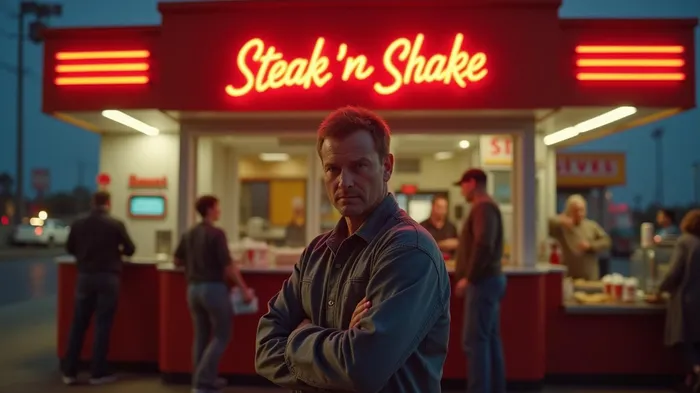
Steak ‘n Shake, the iconic quick-service chain, has become a model of consistency under Biglari’s ownership, with same-store sales growth outpacing competitors. Meanwhile, Cracker Barrel, despite ongoing leadership disputes, posted a modest rebound in Q1, likely due to cost-cutting and menu innovation. The $23.37 adjusted EPS (excluding investment swings) signals operational resilience, a stark contrast to the headline net loss of $126.40 per share, which was inflated by investment losses.
The Investment Quagmire
The elephant in the room remains Biglari’s $51.18 million Q1 investment loss—a staggering reversal from the $23.70 million gain in 2024. Over the past year, the company’s investment portfolio has swung from a $40.72 million loss in 2024 to even greater volatility in early 2025. Sardar Biglari, the CEO, has consistently argued that these swings are “irrelevant” to assessing the company’s true value.
The market is less forgiving. BH.A shares have dropped 6% year-to-date, though they remain up 14% over 12 months at $239.53. This divergence highlights investor skepticism about the sustainability of Biglari’s investment strategy. Critics argue that tying so much capital to volatile equities—a remnant of its hedge fund origins—creates unnecessary risk for a company built on steady operations.
Governance and Leadership Risks
Compounding these challenges is the ongoing proxy battle at Cracker Barrel, where Biglari has demanded leadership changes to address underperformance. While this reflects a commitment to operational accountability, the legal and reputational risks of such contests are non-trivial. Shareholder letters from Sardar Biglari emphasize that Cracker Barrel’s stagnation “threatens to dilute the conglomerate’s value,” but resolving this requires swift action without destabilizing the brand.
The Bottom Line: Focus on Fundamentals
Biglari’s Q1 results are a master class in separating signal from noise. Operationally, the company is firing on all cylinders: Steak ‘n Shake’s growth, cost discipline at Cracker Barrel, and the steady performance of subsidiaries like Maxim magazine all point to a $32.57 million full-year 2024 operating profit—a figure that, while down from 2023, still reflects a sustainable business.
Investors should ignore the noise of quarterly investment swings and instead look to three key metrics:
1. Pre-tax operating earnings growth (up 75% YoY in Q1)
2. Adjusted EPS consistency ($23.37 in Q1 vs. $24.11 in 2023)
3. Debt levels, which remain manageable at $367 million (per 2024 annual report), despite investment losses.
While BH.A’s stock volatility is a legitimate concern, its operational track record and long-term focus on compounding value through core businesses suggest that this is a company worth holding—if not for the next quarter, then for the next decade.
Conclusion
Biglari Holdings’ Q1 2025 results are a reminder that investment portfolios are for speculators, not for conglomerates. The company’s operational excellence—backed by a 75% year-over-year operating profit jump—proves its strategy works. However, the recurring investment losses underscore the need to either divest volatile assets or at least treat them as a side bet rather than a core focus.
For now, the data favors a “buy and hold” approach: the 14% 12-month stock gain and the steady operational growth suggest that Biglari’s moat remains intact. But investors must brace for continued volatility—until the company finally untethers its fate from Wall Street’s whims.





Comentarios
Aún no hay comentarios