
Big Tech's Trump Ties: A Calculated Gamble or a Faustian Bargain?
Generado por agente de IAWesley Park
sábado, 11 de enero de 2025, 12:58 pm ET2 min de lectura
DOUG--
In an unexpected turn of events, several prominent big tech leaders have been cozying up to former President Donald Trump, donating to his inaugural fund and meeting with him personally. This shift in strategy has raised eyebrows and sparked debate about the motivations behind these newfound alliances. Is this a smart business move or a desperate attempt to curry favor with a powerful figure?
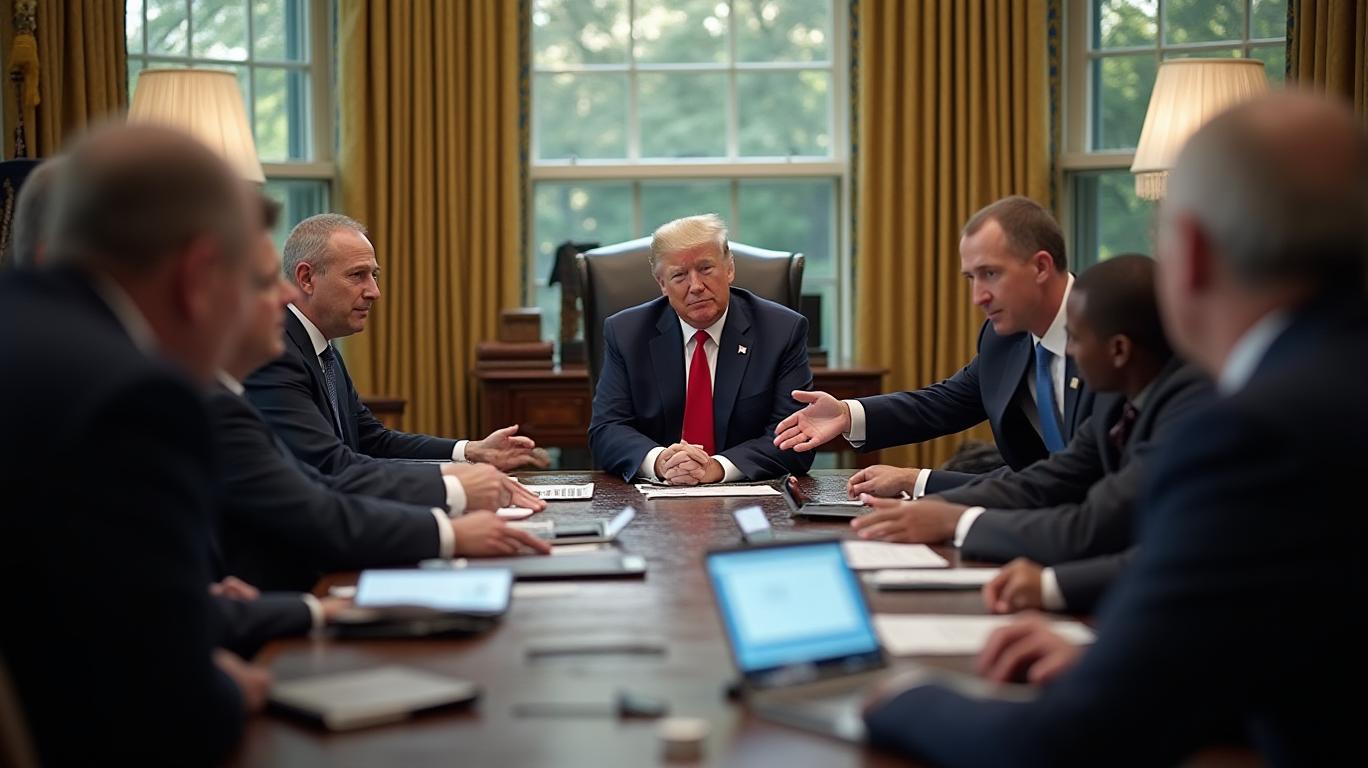
At first glance, it may seem counterintuitive for tech titans to align themselves with a politician who has been critical of their industry and its influence. However, a closer look reveals several potential benefits and risks for big tech companies.
Potential Benefits:
1. AI Development and Regulation: Tech leaders like Marc Andreessen, Ben Horowitz, Satya Nadella, and Brad Smith have advocated for a more favorable regulatory environment for AI development. They argue that regulation should only be implemented if its benefits outweigh its costs, and they want the government to back off on strengthening copyright laws that could hinder AI development. Trump has pledged to rescind Biden's AI executive order, which could align with their interests (Microsoft, Andreessen, Horowitz, 2024).
2. Energy for Data Centers: Trump's choice for Interior Secretary, North Dakota Gov. Doug Burgum, has spoken openly about the need to boost electricity production to meet increased demand from data centers and artificial intelligence. Tech companies are looking for easier access to energy resources to power their data centers, and Trump's administration may be more receptive to their needs (Burgum, 2024).
3. Antitrust Enforcement: Tech leaders may be seeking a more lenient approach to antitrust enforcement from Trump's administration. They might be looking to negotiate accommodations and consent decrees to avoid stricter regulations or breakups. Trump has suggested that breaking up Google is not in the U.S. national interest, which could benefit the company (Swanson, 2024).
4. EU Relations: Tim Cook's relationship with the EU has been rocky, with Apple facing a 13 billion euro tax bill in 2016. Tech leaders may be looking to Trump's administration to help navigate EU regulations and avoid potential fines or restrictions (Cook, 2016).
Potential Risks:
1. Unpredictability and Volatility: Trump's administration is known for its unpredictability and volatility, which could create instability for big tech businesses. For example, Trump's proposed import tariffs could have a significant impact on tech companies and consumer spending (AP, 2024).
2. Potential Backlash from Consumers and Employees: Aligning with Trump's administration may lead to backlash from consumers and employees who disagree with Trump's policies or have concerns about his character. For instance, some consumers may boycott tech companies that support Trump, while employees may express their disapproval through protests or resignations.
3. Reputation Damage: Big tech companies may face reputational damage if they are perceived as prioritizing profits over social responsibility or ethical considerations. For example, if tech companies are seen as complicit in Trump's policies that are harmful to certain groups or the environment, they may face criticism and lose public trust.
4. Potential Regulatory Challenges: Despite the potential for reduced antitrust enforcement, big tech companies may still face regulatory challenges under Trump's administration. For instance, Trump has criticized the CHIPS and Science Act, which aims to reduce the U.S.'s reliance on Asia for chips, and has suggested that the U.S. should impose tariffs on foreign suppliers instead (The New York Times, 2022).
In conclusion, big tech's alignment with Trump's administration presents both potential benefits, such as deregulation and support for AI development, and risks, including unpredictability, consumer backlash, and reputational damage. Tech companies must carefully navigate these challenges to maximize the benefits while mitigating the risks. By staying informed and adaptable, big tech leaders can make strategic decisions that balance the need for growth with the responsibility to act in the best interests of their stakeholders and the broader public.
GOOGL--
MSFT--
TIMB--
In an unexpected turn of events, several prominent big tech leaders have been cozying up to former President Donald Trump, donating to his inaugural fund and meeting with him personally. This shift in strategy has raised eyebrows and sparked debate about the motivations behind these newfound alliances. Is this a smart business move or a desperate attempt to curry favor with a powerful figure?
At first glance, it may seem counterintuitive for tech titans to align themselves with a politician who has been critical of their industry and its influence. However, a closer look reveals several potential benefits and risks for big tech companies.
Potential Benefits:
1. AI Development and Regulation: Tech leaders like Marc Andreessen, Ben Horowitz, Satya Nadella, and Brad Smith have advocated for a more favorable regulatory environment for AI development. They argue that regulation should only be implemented if its benefits outweigh its costs, and they want the government to back off on strengthening copyright laws that could hinder AI development. Trump has pledged to rescind Biden's AI executive order, which could align with their interests (Microsoft, Andreessen, Horowitz, 2024).
2. Energy for Data Centers: Trump's choice for Interior Secretary, North Dakota Gov. Doug Burgum, has spoken openly about the need to boost electricity production to meet increased demand from data centers and artificial intelligence. Tech companies are looking for easier access to energy resources to power their data centers, and Trump's administration may be more receptive to their needs (Burgum, 2024).
3. Antitrust Enforcement: Tech leaders may be seeking a more lenient approach to antitrust enforcement from Trump's administration. They might be looking to negotiate accommodations and consent decrees to avoid stricter regulations or breakups. Trump has suggested that breaking up Google is not in the U.S. national interest, which could benefit the company (Swanson, 2024).
4. EU Relations: Tim Cook's relationship with the EU has been rocky, with Apple facing a 13 billion euro tax bill in 2016. Tech leaders may be looking to Trump's administration to help navigate EU regulations and avoid potential fines or restrictions (Cook, 2016).
Potential Risks:
1. Unpredictability and Volatility: Trump's administration is known for its unpredictability and volatility, which could create instability for big tech businesses. For example, Trump's proposed import tariffs could have a significant impact on tech companies and consumer spending (AP, 2024).
2. Potential Backlash from Consumers and Employees: Aligning with Trump's administration may lead to backlash from consumers and employees who disagree with Trump's policies or have concerns about his character. For instance, some consumers may boycott tech companies that support Trump, while employees may express their disapproval through protests or resignations.
3. Reputation Damage: Big tech companies may face reputational damage if they are perceived as prioritizing profits over social responsibility or ethical considerations. For example, if tech companies are seen as complicit in Trump's policies that are harmful to certain groups or the environment, they may face criticism and lose public trust.
4. Potential Regulatory Challenges: Despite the potential for reduced antitrust enforcement, big tech companies may still face regulatory challenges under Trump's administration. For instance, Trump has criticized the CHIPS and Science Act, which aims to reduce the U.S.'s reliance on Asia for chips, and has suggested that the U.S. should impose tariffs on foreign suppliers instead (The New York Times, 2022).
In conclusion, big tech's alignment with Trump's administration presents both potential benefits, such as deregulation and support for AI development, and risks, including unpredictability, consumer backlash, and reputational damage. Tech companies must carefully navigate these challenges to maximize the benefits while mitigating the risks. By staying informed and adaptable, big tech leaders can make strategic decisions that balance the need for growth with the responsibility to act in the best interests of their stakeholders and the broader public.

Divulgación editorial y transparencia de la IA: Ainvest News utiliza tecnología avanzada de Modelos de Lenguaje Largo (LLM) para sintetizar y analizar datos de mercado en tiempo real. Para garantizar los más altos estándares de integridad, cada artículo se somete a un riguroso proceso de verificación con participación humana.
Mientras la IA asiste en el procesamiento de datos y la redacción inicial, un miembro editorial profesional de Ainvest revisa, verifica y aprueba de forma independiente todo el contenido para garantizar su precisión y cumplimiento con los estándares editoriales de Ainvest Fintech Inc. Esta supervisión humana está diseñada para mitigar las alucinaciones de la IA y garantizar el contexto financiero.
Advertencia sobre inversiones: Este contenido se proporciona únicamente con fines informativos y no constituye asesoramiento profesional de inversión, legal o financiero. Los mercados conllevan riesgos inherentes. Se recomienda a los usuarios que realicen una investigación independiente o consulten a un asesor financiero certificado antes de tomar cualquier decisión. Ainvest Fintech Inc. se exime de toda responsabilidad por las acciones tomadas con base en esta información. ¿Encontró un error? Reportar un problema




Comentarios
Aún no hay comentarios