
Big Tech in the Crossfire: US-China Trade War's Winners and Losers
Generado por agente de IAWesley Park
viernes, 7 de febrero de 2025, 11:11 am ET2 min de lectura
PYPL--
The US-China trade war has been a rollercoaster ride for Big Tech companies, with some feeling the heat more than others. As the world's two largest economies clash over intellectual property, technology transfer, and market access, tech giants find themselves caught in the crossfire. Let's explore how some of these companies are navigating the storm and why certain sectors are more vulnerable than others.
The Push for 'China +1'
Global tech hardware firms have largely completed phase one of their shift out of China, focusing on adding "midstream" tech production outside of the country. This reordering of supply lines presents more credit risks than the prior stage, which involved the expansion of downstream output outside the country. The reallocation of midstream capacity from China will involve even more spending, higher ongoing operational costs, and the possibility of botched executions. Moreover, as the rebalancing of midstream capacity has only occurred over the past one or two years for many firms, we are only getting an early glimpse of the effects. We believe the costs and the drag on operations over the next decade will accelerate and be substantial (Source: S&P Global Ratings).
Midstream Players' Ex-China Moves: The Credit Effects
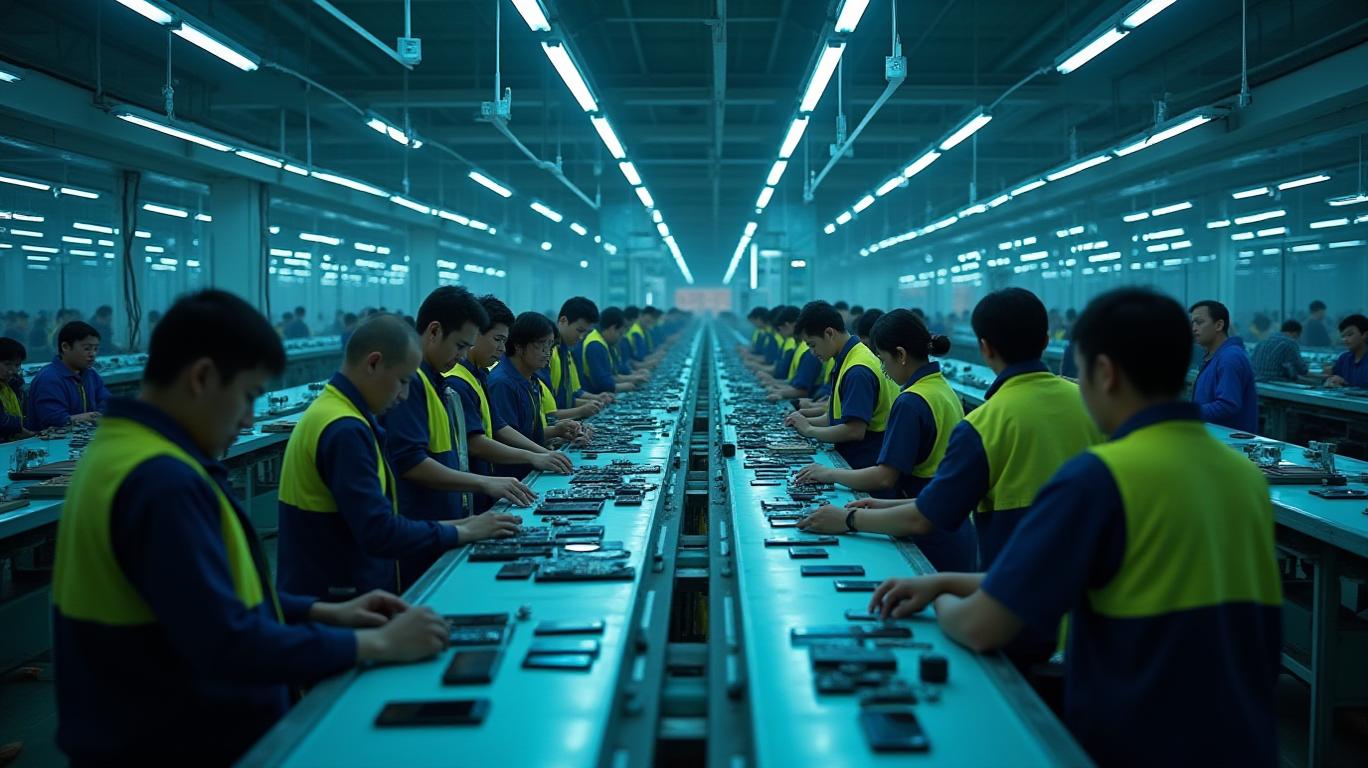
The march of midstream tech production outside of China is accelerating, with companies like Foxconn Industrial Internet Co. Ltd. significantly increasing capital expenditure (capex), most of which is likely to be outside of China. Such investments are likely at the request of their customers, who are seeking to reduce their reliance on Chinese production. However, this shift comes with its own set of challenges and risks, including higher costs, lower efficiency, and the potential for execution missteps (Source: S&P Global Ratings).
Related Research
The reallocation of midstream capacity from China will involve even more spending, higher ongoing operational costs, and the possibility of botched executions. More significantly, we assume this phase will be hard to reverse as it involves heavy investment in plants and equipment that will be difficult to move. Moreover, as the rebalancing of midstream capacity has only occurred over the past one or two years for many firms, we are only getting an early glimpse of the effects. We believe the costs and the drag on operations over the next decade will accelerate and be substantial (Source: S&P Global Ratings).
In conclusion, the US-China trade war has created a complex landscape for Big Tech companies, with some feeling the heat more than others. As the world's two largest economies clash over intellectual property, technology transfer, and market access, tech giants find themselves caught in the crossfire. While some companies, like PayPal and Tesla, have managed to navigate the storm and even thrive in the Chinese market, others, such as Qualcomm and AMD, face significant challenges and vulnerabilities. The key to success in this contentious environment lies in working closely with regulators, investing heavily in compliance and risk management, and being a strong collaborator with the financial system rather than disrupting or going around it. By offering a differentiated value proposition and being innovative within the existing structure, companies can position themselves as indispensable players in the Chinese market, even as the trade war rages on.
TSLA--
The US-China trade war has been a rollercoaster ride for Big Tech companies, with some feeling the heat more than others. As the world's two largest economies clash over intellectual property, technology transfer, and market access, tech giants find themselves caught in the crossfire. Let's explore how some of these companies are navigating the storm and why certain sectors are more vulnerable than others.
The Push for 'China +1'
Global tech hardware firms have largely completed phase one of their shift out of China, focusing on adding "midstream" tech production outside of the country. This reordering of supply lines presents more credit risks than the prior stage, which involved the expansion of downstream output outside the country. The reallocation of midstream capacity from China will involve even more spending, higher ongoing operational costs, and the possibility of botched executions. Moreover, as the rebalancing of midstream capacity has only occurred over the past one or two years for many firms, we are only getting an early glimpse of the effects. We believe the costs and the drag on operations over the next decade will accelerate and be substantial (Source: S&P Global Ratings).
Midstream Players' Ex-China Moves: The Credit Effects
The march of midstream tech production outside of China is accelerating, with companies like Foxconn Industrial Internet Co. Ltd. significantly increasing capital expenditure (capex), most of which is likely to be outside of China. Such investments are likely at the request of their customers, who are seeking to reduce their reliance on Chinese production. However, this shift comes with its own set of challenges and risks, including higher costs, lower efficiency, and the potential for execution missteps (Source: S&P Global Ratings).
Related Research
The reallocation of midstream capacity from China will involve even more spending, higher ongoing operational costs, and the possibility of botched executions. More significantly, we assume this phase will be hard to reverse as it involves heavy investment in plants and equipment that will be difficult to move. Moreover, as the rebalancing of midstream capacity has only occurred over the past one or two years for many firms, we are only getting an early glimpse of the effects. We believe the costs and the drag on operations over the next decade will accelerate and be substantial (Source: S&P Global Ratings).
In conclusion, the US-China trade war has created a complex landscape for Big Tech companies, with some feeling the heat more than others. As the world's two largest economies clash over intellectual property, technology transfer, and market access, tech giants find themselves caught in the crossfire. While some companies, like PayPal and Tesla, have managed to navigate the storm and even thrive in the Chinese market, others, such as Qualcomm and AMD, face significant challenges and vulnerabilities. The key to success in this contentious environment lies in working closely with regulators, investing heavily in compliance and risk management, and being a strong collaborator with the financial system rather than disrupting or going around it. By offering a differentiated value proposition and being innovative within the existing structure, companies can position themselves as indispensable players in the Chinese market, even as the trade war rages on.

Divulgación editorial y transparencia de la IA: Ainvest News utiliza tecnología avanzada de Modelos de Lenguaje Largo (LLM) para sintetizar y analizar datos de mercado en tiempo real. Para garantizar los más altos estándares de integridad, cada artículo se somete a un riguroso proceso de verificación con participación humana.
Mientras la IA asiste en el procesamiento de datos y la redacción inicial, un miembro editorial profesional de Ainvest revisa, verifica y aprueba de forma independiente todo el contenido para garantizar su precisión y cumplimiento con los estándares editoriales de Ainvest Fintech Inc. Esta supervisión humana está diseñada para mitigar las alucinaciones de la IA y garantizar el contexto financiero.
Advertencia sobre inversiones: Este contenido se proporciona únicamente con fines informativos y no constituye asesoramiento profesional de inversión, legal o financiero. Los mercados conllevan riesgos inherentes. Se recomienda a los usuarios que realicen una investigación independiente o consulten a un asesor financiero certificado antes de tomar cualquier decisión. Ainvest Fintech Inc. se exime de toda responsabilidad por las acciones tomadas con base en esta información. ¿Encontró un error? Reportar un problema




Comentarios
Aún no hay comentarios