
Bidenomics: The Early Exit
Generado por agente de IAWesley Park
sábado, 21 de diciembre de 2024, 10:07 am ET1 min de lectura
As President Biden's term nears its end, it's time to assess the impact of his economic agenda, known as Bidenomics. This week, we'll delve into the key aspects of Bidenomics, its achievements, and the challenges it faces as we approach the 2024 election.
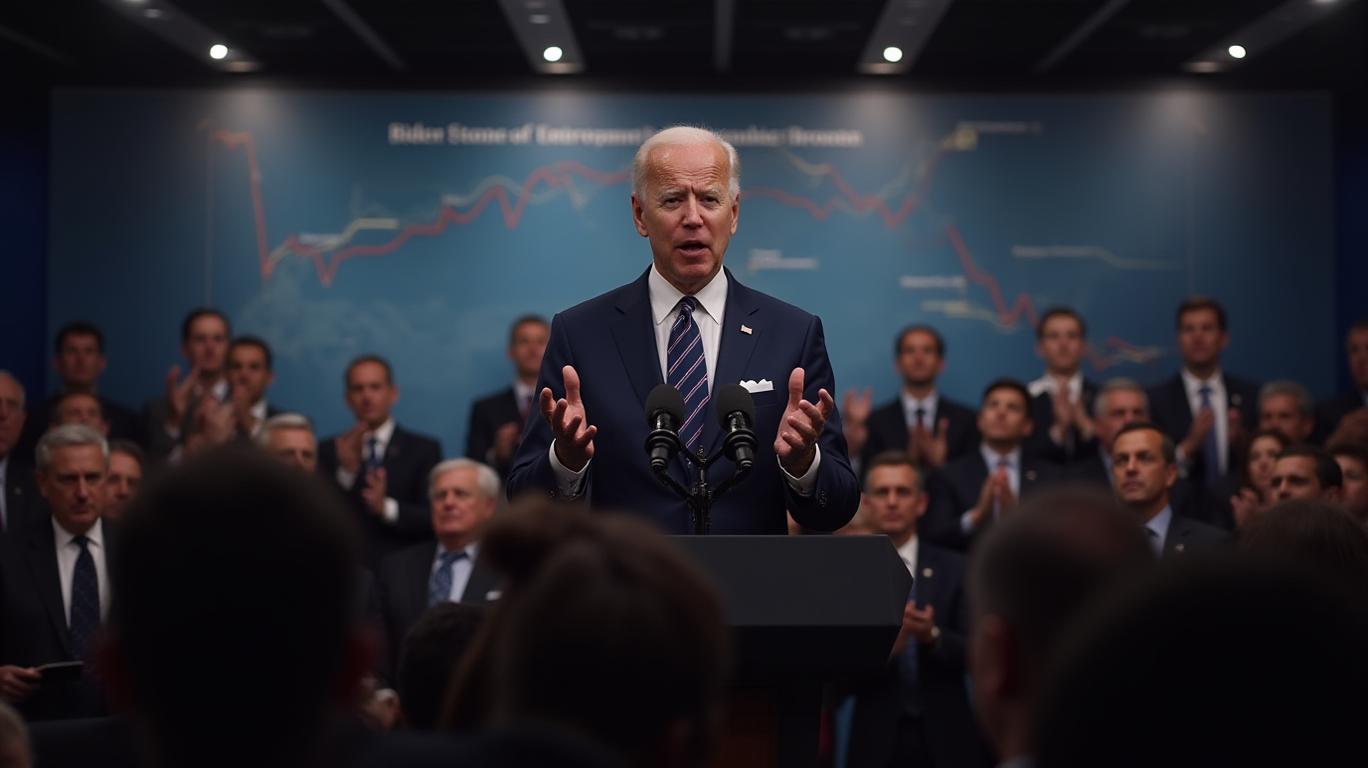
Bidenomics, centered around public investment, empowering middle-class workers, and promoting business competition, has seen mixed results. On the positive side, the U.S. economy has added over 13 million jobs since the beginning of Biden's term, comparable to the 12.6 million jobs added during President Obama's first term (2009-2013). Real average weekly earnings for production and nonsupervisory workers have also increased by 10.5% from February 2021 to February 2023, outpacing the 6.8% increase during the same period under President Obama.
However, the U.S. has faced steep inflation, with the consumer price index (CPI) rising by 9.1% in June 2022, the highest level in four decades. The Federal Reserve has responded with a series of interest rate hikes, raising the federal funds rate from near zero in March 2020 to 3.25% in September 2022. These rate hikes aim to combat inflation but may slow economic growth and increase borrowing costs, potentially undermining the investments and initiatives central to Bidenomics.
Geopolitical factors and global economic trends have also influenced market sentiments towards Bidenomics. The Biden administration's focus on domestic manufacturing, particularly semiconductors, has been bolstered by global supply chain disruptions. The CHIPS and Science Act, allocating $280 billion to strengthen U.S. semiconductor research and manufacturing, has been well-received by investors, with the PHLX Semiconductor Index (SOX) surging 35% in 2023. However, geopolitical tensions, such as the U.S.-China trade war and Russia-Ukraine conflict, have also contributed to market volatility, impacting investor confidence in Bidenomics.
As we approach the 2024 election, the future of Bidenomics remains uncertain. The early exit of President Biden's term has left his economic agenda in a state of flux, with both achievements and challenges to consider. Investors and voters alike will need to weigh the impact of Bidenomics on the U.S. economy and decide whether to continue or pivot from the policies that have shaped the past four years.
In conclusion, Bidenomics has seen mixed results, with job growth and wage increases offset by inflation and interest rate hikes. As we look towards the 2024 election, the future of Bidenomics remains uncertain, and investors and voters alike will need to assess the impact of these policies on the U.S. economy.



Divulgación editorial y transparencia de la IA: Ainvest News utiliza tecnología avanzada de Modelos de Lenguaje Largo (LLM) para sintetizar y analizar datos de mercado en tiempo real. Para garantizar los más altos estándares de integridad, cada artículo se somete a un riguroso proceso de verificación con participación humana.
Mientras la IA asiste en el procesamiento de datos y la redacción inicial, un miembro editorial profesional de Ainvest revisa, verifica y aprueba de forma independiente todo el contenido para garantizar su precisión y cumplimiento con los estándares editoriales de Ainvest Fintech Inc. Esta supervisión humana está diseñada para mitigar las alucinaciones de la IA y garantizar el contexto financiero.
Advertencia sobre inversiones: Este contenido se proporciona únicamente con fines informativos y no constituye asesoramiento profesional de inversión, legal o financiero. Los mercados conllevan riesgos inherentes. Se recomienda a los usuarios que realicen una investigación independiente o consulten a un asesor financiero certificado antes de tomar cualquier decisión. Ainvest Fintech Inc. se exime de toda responsabilidad por las acciones tomadas con base en esta información. ¿Encontró un error? Reportar un problema




Comentarios
Aún no hay comentarios