
Biden's Student Debt Relief: A Boon for Public Workers and the Economy
Generado por agente de IAEli Grant
viernes, 20 de diciembre de 2024, 5:39 am ET1 min de lectura
GAP--
President Biden's recent announcement of canceling nearly $4.3 billion in public worker student debt is set to have a significant impact on the spending habits, economic activity, and housing market of public workers. The debt relief, targeted at borrowers earning less than $125,000 annually, aims to boost consumer confidence and stimulate local economies.
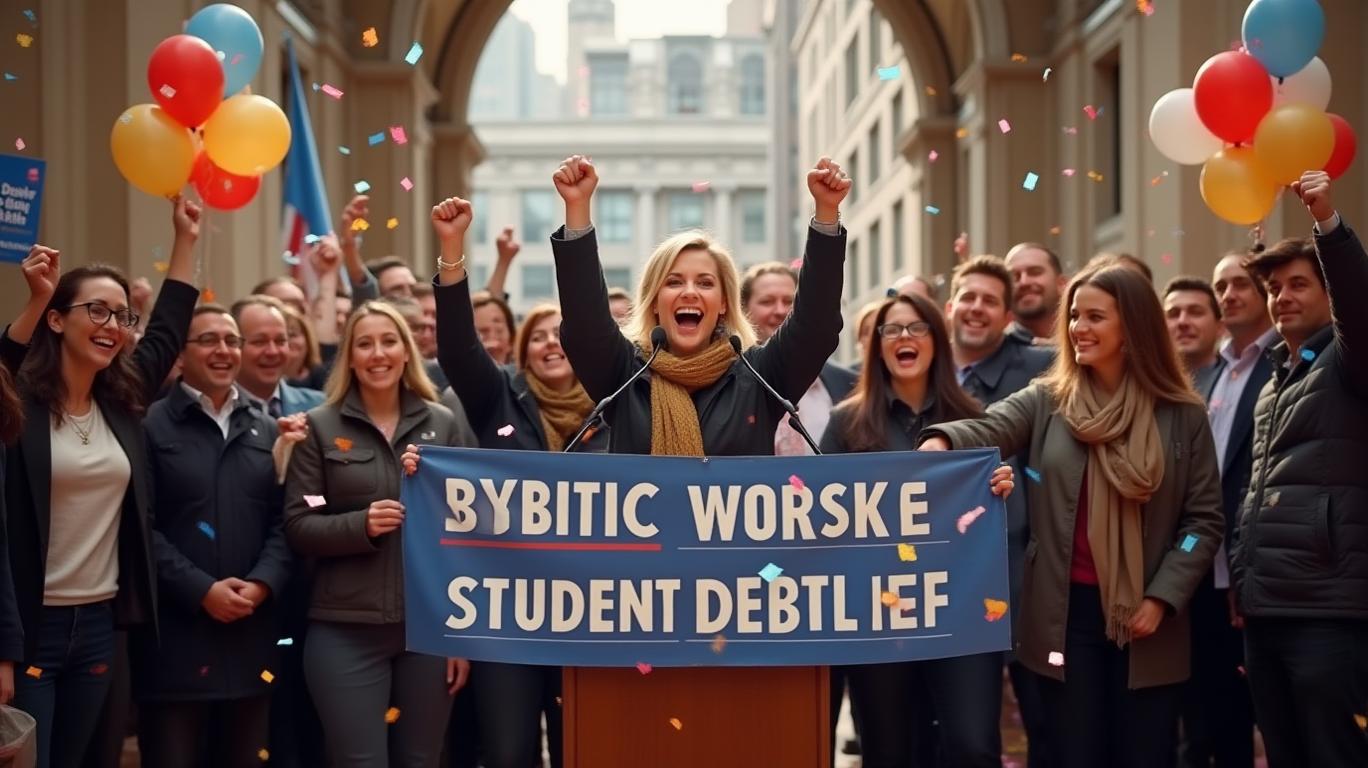
The debt cancellation is expected to boost consumer spending and economic activity among public workers. With reduced financial burden, they may allocate more funds to discretionary items, stimulating local economies. However, the impact may vary depending on individual circumstances and the extent to which the debt relief is targeted at lower-income workers.
The cancellation of public worker student debt could also have implications for the housing market and consumer confidence. With more disposable income, public workers may be more likely to make major purchases, such as buying a home. This could drive up demand for housing, potentially leading to higher prices and increased competition in the market. Additionally, the debt relief may boost consumer confidence, as public workers may feel more financially secure.
The debt relief may also influence the demand for higher education and future student loan debt levels. Prospective students may be more likely to pursue degrees knowing they won't face the same level of debt, potentially leading to increased enrollment numbers. However, this could also lead to higher future student loan debt levels if the increased demand is not met with corresponding increases in affordability and accessibility.
Biden's student debt cancellation policy may have long-term consequences for the distribution of wealth and social mobility. By targeting lower-income individuals, the policy disproportionately benefits those who are more likely to have attended less prestigious institutions and face higher debt burdens. This targeted relief can help reduce the wealth gap and enable these individuals to invest in education, housing, and entrepreneurship, fostering long-term economic growth and social mobility.
In conclusion, President Biden's cancellation of nearly $4.3 billion in public worker student debt is set to have a significant impact on the spending habits, economic activity, and housing market of public workers. The debt relief may boost consumer confidence, stimulate local economies, and influence the demand for higher education. However, the extent of these effects will depend on various factors, such as the distribution of the debt relief and the overall economic conditions.
President Biden's recent announcement of canceling nearly $4.3 billion in public worker student debt is set to have a significant impact on the spending habits, economic activity, and housing market of public workers. The debt relief, targeted at borrowers earning less than $125,000 annually, aims to boost consumer confidence and stimulate local economies.
The debt cancellation is expected to boost consumer spending and economic activity among public workers. With reduced financial burden, they may allocate more funds to discretionary items, stimulating local economies. However, the impact may vary depending on individual circumstances and the extent to which the debt relief is targeted at lower-income workers.
The cancellation of public worker student debt could also have implications for the housing market and consumer confidence. With more disposable income, public workers may be more likely to make major purchases, such as buying a home. This could drive up demand for housing, potentially leading to higher prices and increased competition in the market. Additionally, the debt relief may boost consumer confidence, as public workers may feel more financially secure.
The debt relief may also influence the demand for higher education and future student loan debt levels. Prospective students may be more likely to pursue degrees knowing they won't face the same level of debt, potentially leading to increased enrollment numbers. However, this could also lead to higher future student loan debt levels if the increased demand is not met with corresponding increases in affordability and accessibility.
Biden's student debt cancellation policy may have long-term consequences for the distribution of wealth and social mobility. By targeting lower-income individuals, the policy disproportionately benefits those who are more likely to have attended less prestigious institutions and face higher debt burdens. This targeted relief can help reduce the wealth gap and enable these individuals to invest in education, housing, and entrepreneurship, fostering long-term economic growth and social mobility.
In conclusion, President Biden's cancellation of nearly $4.3 billion in public worker student debt is set to have a significant impact on the spending habits, economic activity, and housing market of public workers. The debt relief may boost consumer confidence, stimulate local economies, and influence the demand for higher education. However, the extent of these effects will depend on various factors, such as the distribution of the debt relief and the overall economic conditions.

Divulgación editorial y transparencia de la IA: Ainvest News utiliza tecnología avanzada de Modelos de Lenguaje Largo (LLM) para sintetizar y analizar datos de mercado en tiempo real. Para garantizar los más altos estándares de integridad, cada artículo se somete a un riguroso proceso de verificación con participación humana.
Mientras la IA asiste en el procesamiento de datos y la redacción inicial, un miembro editorial profesional de Ainvest revisa, verifica y aprueba de forma independiente todo el contenido para garantizar su precisión y cumplimiento con los estándares editoriales de Ainvest Fintech Inc. Esta supervisión humana está diseñada para mitigar las alucinaciones de la IA y garantizar el contexto financiero.
Advertencia sobre inversiones: Este contenido se proporciona únicamente con fines informativos y no constituye asesoramiento profesional de inversión, legal o financiero. Los mercados conllevan riesgos inherentes. Se recomienda a los usuarios que realicen una investigación independiente o consulten a un asesor financiero certificado antes de tomar cualquier decisión. Ainvest Fintech Inc. se exime de toda responsabilidad por las acciones tomadas con base en esta información. ¿Encontró un error? Reportar un problema




Comentarios
Aún no hay comentarios