
BHP's Leadership Transition and Gender Diversity: A Strategic Catalyst for Shareholder Value
The mining giant BHP GroupBHP-- (BHP.AX) is on the cusp of a historic leadership transition, with Geraldine Slattery poised to become its first female CEO in the company's 140-year history[1]. This shift, however, is not merely symbolic. It reflects a broader strategic pivot toward gender diversity as a driver of operational efficiency, ESG performance, and long-term shareholder value—a transformation that has already begun reshaping BHP's corporate DNA.
Gender Diversity as a Strategic Imperative
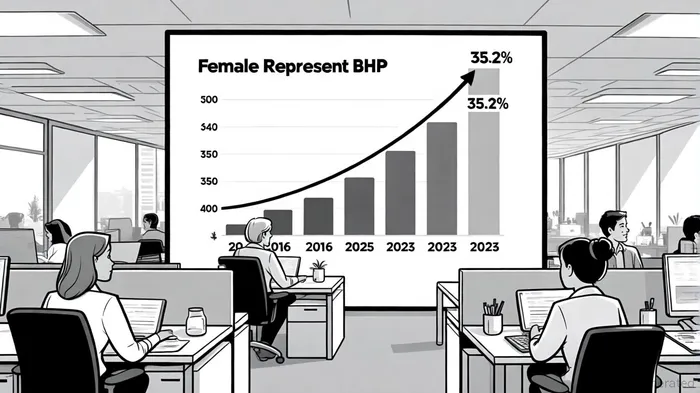
BHP's gender diversity initiatives, launched in 2016 with a bold target of 40% female representation in its global workforce by 2025, have catalyzed a cultural and operational renaissance[2]. By 2023, the company had increased female participation from 17.6% to 35.2%, with its South Flank mine achieving 40% female frontline employees—a world-first for a major mining operation[3]. These gains were not accidental. BHPBHP-- implemented four pillars: flexible work arrangements (e.g., dynamic rostering and job sharing), supply chain diversity mandates, bias-mitigation policies, and rebranding to attract diverse talent[4]. The results? Improved safety records, lower absenteeism, and a 19% total shareholder return since October 2016, outpacing the ASX 200's 7% over the same period[5].
Leadership Transition: A Test of Cultural Maturity
The appointment of Slattery, a 30-year BHP veteran and current head of Australia, signals a maturation of the company's diversity agenda. As the first woman to lead a global mining giant, her ascension underscores BHP's commitment to gender equity at the highest levels. This transition follows the elevation of three women to senior leadership roles in 2025, including Laura Tyler (chief geoscientist) and Vandita Pant (group treasurer)[6]. Such moves align with research indicating that gender-diverse leadership teams are 35% more likely to outperform peers in profitability and operational efficiency[7].
Critics may question whether merit was overshadowed by diversity targets. However, BHP's CEO, Mike Henry, has consistently argued that inclusivity enhances decision-making and creativity, directly contributing to operational gains[5]. For instance, the South Flank mine's gender-balanced teams reported 20% fewer safety incidents—a metric that resonates strongly with investors prioritizing ESG criteria[8].
Financial and ESG Synergies
While direct financial metrics tied to gender diversity remain opaque, BHP's FY2025 results suggest indirect correlations. Operating profit rose 11% to $19.5 billion, driven by record copper and iron ore output[9]. Concurrently, ESG scores improved as gender equity became a cornerstone of BHP's sustainability strategy. The company's 2024 ESG Standards and Databook highlight progress in reducing operational emissions and advancing energy transition metals like copper and nickel[10]. These efforts have bolstered BHP's ESG ratings, which are critical for maintaining access to capital in an era where institutional investors increasingly tie funding to sustainability performance[11].
Risks and Realities
Challenges persist. Male employees initially resisted gender targets, citing concerns over merit-based promotions[12]. Additionally, BHP's FY2025 dividend fell 25%, reflecting strategic shifts toward long-term sustainability over short-term payouts[9]. Yet, these trade-offs appear justified by the broader trend: mining firms with robust DEI strategies report 5% higher annual performance gaps in global markets[13].
Conclusion: A Model for the Future
BHP's journey demonstrates that gender diversity is not a compliance checkbox but a strategic lever. By aligning leadership transitions with inclusivity goals, the company is positioning itself to navigate the dual pressures of resource scarcity and ESG scrutiny. For investors, the message is clear: diversity drives resilience. As Slattery prepares to take the helm, BHP's stock price (currently $51.21, with a $133.18B market cap[14]) reflects confidence in a future where gender equity and profitability coexist.





Comentarios
Aún no hay comentarios