
BHP's Jansen Potash Project: Navigating Delays to Secure a Diversified Future in a Volatile Commodity Landscape
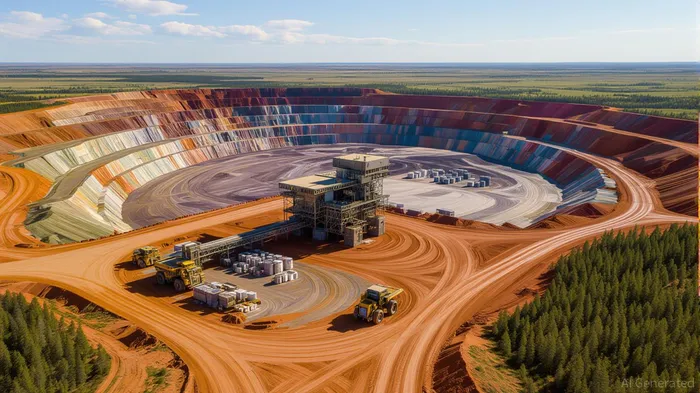
BHP Group's Jansen Potash Project, a cornerstone of its long-term strategy to diversify beyond iron ore and copper, has become a case study in the complexities of capital-intensive resource development. With delays now pushing first production to mid-2027 and cost overruns ballooning to $1.7 billion for Phase 1, the project's setbacks raise critical questions about BHP's ability to balance ambition with execution in a volatile commodities market. Yet, these challenges also offer insights into how a global mining giant adapts to macroeconomic headwinds while maintaining its strategic vision.
The Jansen Dilemma: Delays and Cost Overruns in Context
The Jansen project, initially budgeted at $5.7 billion with a 2026 production start, now faces a 30% cost increase and a one-year delay. BHP attributes this to inflationary pressures, design revisions, and construction productivity issues—familiar challenges in an era of supply chain bottlenecks and rising input costs. The company is also reevaluating the timeline for Phase 2, which was meant to double production capacity by 2030, with a potential two-year delay to 2031. This pause reflects BHP's cautious approach to aligning capital deployment with market conditions, a strategy that prioritizes disciplined allocation over rigid timelines.
The project's significance extends beyond its scale. BHP aims to become the world's largest potash producer, a market it views as essential for meeting rising global food demand. Potash, a key fertilizer component, is tied to agricultural productivity, which is increasingly strained by population growth and climate-driven arable land constraints. However, the Jansen delays underscore the risks of overestimating market absorption rates and underestimating operational complexities.
Strategic Implications: Diversification vs. Core Commodity Exposure
BHP's push into potash is part of a broader diversification strategy to reduce reliance on cyclical commodities like copper and iron ore. While iron ore and copper remain the backbone of BHP's earnings—contributing 70% of FY2024 revenue—the company's management has long emphasized the need to hedge against sector-specific volatility. The Jansen project, with its potential to generate stable cash flows from a high-margin asset, was intended to provide this balance.
However, the delays and cost overruns highlight the trade-offs inherent in diversification. For every $1 invested in Jansen, BHP must now allocate additional capital to maintain its core operations, which have seen record outputs in 2025. The company's iron ore production hit 290 million metric tons, while copper output reached 2.02 million metric tons—figures that underscore the strength of its existing portfolio. Yet, these successes also create a dilemma: should BHP accelerate Jansen despite overruns, or further delay to preserve capital for its core assets?
Investor Sentiment: A Mixed Bag of Risks and Resilience
Investor reactions to Jansen's challenges have been polarized. On one hand, the project's overruns raise concerns about short-term returns and the risk of potash oversupply. The global potash market, still reeling from the post-Ukraine invasion price surge, has seen demand growth fall short of projections. With BHP's Stage 2 investment on hold, some analysts fear the company may miss its potash production targets, potentially diluting shareholder returns.
On the other hand, BHP's financial discipline and operational expertise provide a buffer. The company's EBIT margin of 42% in FY2024—well above the industry average—demonstrates its ability to generate robust cash flows even in tough markets. BHP's capital allocation framework, which allocates 45% of its budget to growth projects and 20% to shareholder returns, further reinforces its commitment to balancing long-term strategy with near-term value. This framework has enabled BHP to maintain its dividend despite project delays, a critical factor for income-focused investors.
Market Dynamics and the Path Forward
The Jansen delays could temporarily tighten the potash market, potentially boosting prices in 2026–2027 as supply constraints offset demand volatility. However, the long-term outlook hinges on structural demand drivers, including population growth and the need for sustainable agriculture. BHP's decision to sequence Jansen Stage 2 based on market signals—rather than adhering to a fixed timeline—shows a pragmatic approach to navigating these uncertainties.
For investors, the key takeaway is that BHP's potash ambitions are not a standalone bet but part of a diversified portfolio. The company's core commodities, particularly copper, remain critical for energy transition markets, where demand is expected to grow at a compound annual rate of 6–7% through 2030. By leveraging its cash flow from these assets, BHP can fund Jansen's phased development without overexposing its balance sheet.
Investment Advice: Patience as a Strategic Advantage
While the Jansen overruns are a near-term headwind, they should not overshadow BHP's long-term strategic advantages. The company's track record of turning complex projects into high-margin operations—such as the productivity gains at Escondida copper mine—suggests that Jansen's eventual success is probable, albeit delayed. Investors should focus on BHP's ability to adapt its capital allocation in response to market conditions rather than fixating on short-term project timelines.
In a volatile commodities market, BHP's disciplined approach to risk management and capital efficiency positions it to outperform peers. For long-term investors, the Jansen project's challenges are a reminder that strategic patience and operational flexibility are as valuable as initial ambition. As the global economy navigates inflation, energy transitions, and food security concerns, BHP's diversified portfolio and adaptive strategy may prove to be a compelling hedge against uncertainty.
In conclusion, BHP's Jansen project delays are a test of its diversification strategy, but the company's financial strength and operational discipline provide a strong foundation for weathering these challenges. For investors, the lesson is clear: in a world of shifting market dynamics, the ability to adapt and execute—rather than rigidly adhere to timelines—is what separates enduring champions from transient performers.





Comentarios
Aún no hay comentarios