
BHP Group's Exposure to China's Iron Ore Demand Shifts: Assessing Medium-Term Supply Chain Risks and Portfolio Resilience
BHP Group, one of the world's largest iron ore producers, faces mounting medium-term risks as China's demand for the commodity undergoes structural shifts. A QuantArt Market report found that China's iron ore demand declined by 2.8% in 2023 and is projected to fall further in 2024, driven by a property sector slump and broader economic stagnation. This trend is compounded by seasonal production cuts in northern steel mills and a contraction in manufacturing activity, as evidenced by the official Purchasing Managers' Index (PMI) remaining below 50 for five consecutive months, according to an AdvisorAnalyst article. For BHPBHP--, which derives a significant portion of its revenue from China-bound iron ore shipments, these dynamics pose acute supply chain vulnerabilities.
China's Demand Deterioration: A Systemic Challenge
The property sector, responsible for approximately 40% of China's iron ore consumption, has become a critical drag on demand. A Bloomberg analysis highlights that Chinese steel mills are operating with narrow profit margins due to elevated production costs and domestic oversupply, further dampening raw material procurement [Bloomberg analysis]. Meanwhile, global supply is surging: Australia's Onslow and South Flank projects, along with Brazil's Vale SA targeting 320–325 million tons in 2024, are set to outpace demand growth, as noted in the QuantArt Market report. This imbalance has already pushed iron ore prices into a bearish range of $105–$113 per ton in late September 2025, with analysts forecasting a long-term decline to $85–$100 per ton, according to the same QuantArt Market report.
The geopolitical dimension adds another layer of risk. A Bloomberg report reveals that China's state-run iron ore buyer has banned all new dollar-denominated BHP cargoes, effectively freezing trade and signaling a strategic shift toward pricing control. This move, coupled with restrictions on BHP's Jimblebar blend fines, underscores Beijing's intent to leverage its market dominance. The immediate fallout includes a sharp drop in BHP shares and volatility in iron ore futures, reflecting investor uncertainty (as reported by Bloomberg).
Portfolio Resilience: Diversification and Strategic Adaptation
To mitigate these risks, BHP must accelerate diversification beyond China. India, for instance, offers a promising counterbalance: its iron ore demand grew by 9% in fiscal year 2023–2024, driven by rising domestic steel consumption, according to the QuantArt Market report. However, BHP's exposure to India remains limited compared to its Australian operations. Additionally, the company could benefit from expanding into other commodities, such as copper and energy transition metals, to reduce reliance on cyclical iron ore markets.
The looming Simandou mine in Guinea, expected to add 120 million tons annually by late 2025, further pressures pricing power, per the QuantArt Market report. While this project could stabilize global supply, it also intensifies competition for BHP, particularly from rivals like Vale and Fortescue Metals, which are better positioned to capitalize on China's shifting procurement strategies, as discussed in the AdvisorAnalyst article.
Investment Implications
For investors, BHP's medium-term outlook hinges on its ability to navigate China's demand erosion and geopolitical friction. The company's current cost structure and capital allocation strategies will be critical in maintaining profitability amid shrinking margins. A Forbes analysis warns that China's transition from property-driven growth to a consumption and technology-driven model could lead to long-term structural declines in commodity demand (see AdvisorAnalyst commentary). This necessitates a reevaluation of BHP's asset portfolio and hedging strategies.
In conclusion, while BHP's iron ore operations remain a cornerstone of its revenue, the confluence of weak Chinese demand, rising global supply, and geopolitical tensions demands a proactive pivot. Investors should monitor the company's diversification efforts, cost management, and engagement with alternative markets to gauge its resilience in an increasingly volatile landscape.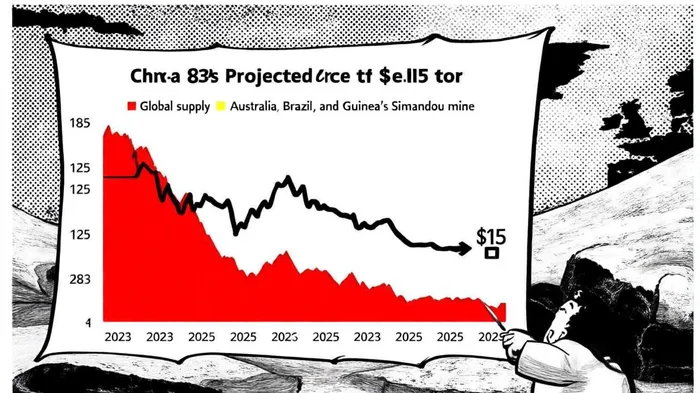







Comentarios
Aún no hay comentarios