
Beyoncé's Chicago Phenomenon: A Masterclass in Event-Driven Tourism and Real Estate Value Creation
The economic ripple effects of Beyoncé's recent concerts in Chicago underscore a transformative trend reshaping urban tourism and real estate valuation: high-profile events are now engines of sustained demand for hospitality assets. As the “Cowboy Carter” tour stopped at Soldier Field in May 2024, it triggered a surge in transient demand that set record hotel occupancy rates, fueled AirbnbABNB-- revenues, and highlighted Chicago's potential as a global entertainment hub. Yet, this momentum is fragile. To capitalize on this, Chicago must double down on tourism marketing investments—positioning hospitality real estate as a compelling buy for investors seeking exposure to event-driven growth.
The Beyoncé Effect: Transient Demand as an Economic Catalyst
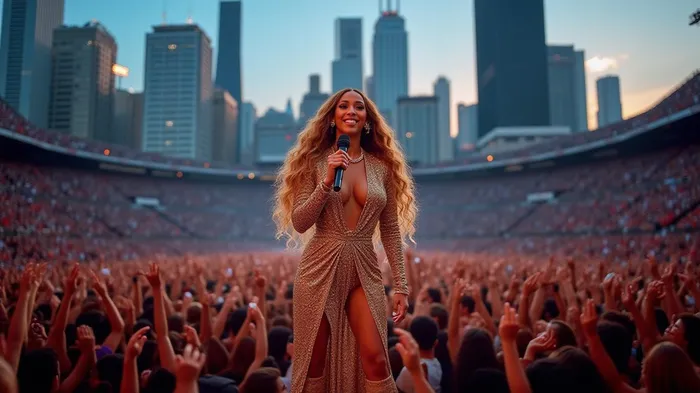
Beyoncé's concerts in Chicago exemplify how superstar events can supercharge local economies. During her performances in May 2024, the city achieved a 98.5% hotel occupancy rate—the highest in its history—driven by a “one-two punch” of the “Cowboy Carter” tour and the National Restaurant Association Show. While the latter attracted business travelers, Beyoncé's cultural pull drew leisure tourists, many of whom spent far beyond their room rates.
Airbnb data reveals the broader economic impact: visitors spent an average of $205 daily on local restaurants, groceries, and attractions—a figure that multiplied during event weekends. This spending directly benefits small businesses and neighborhoods, such as Washington Park, where hosts like Michelle Singleton reported bookings tied to Beyoncé's shows. The ripple effect is undeniable: $20.6 billion in total tourism spending in 2024, driven in part by such events, underscores their role as economic multipliers.
The Fragile Momentum: Risks and Opportunities
Yet, this success is vulnerable to external headwinds. A 2024 survey by the Illinois Hotel & Lodging Association found that 70% of hotels faced cancellations from international travelers due to geopolitical tensions and tariff-driven economic instability. Meanwhile, 60% reported cancellations linked to government travel cuts. These risks highlight the need for strategic investments to insulate Chicago's tourism economy from volatility.
The city's tourism agency, Choose Chicago, faces a critical challenge: its $33 million 2024 budget pales in comparison to rivals like Las Vegas ($457 million) and Orlando ($116 million). Without adequate funding, Chicago risks losing its ability to attract high-profile events, which are vital for sustaining transient demand. Kristen Reynolds, CEO of Choose Chicago, has proposed a Tourism Improvement District—a 1.5% hotel tax increase—to double the agency's budget. This policy could be the lifeline needed to secure events like Beyoncé's concerts, which generate $523.89 in premium room rates alone during peak periods.
Investment Thesis: Why Chicago's Hospitality Assets Are Undervalued Gold
For investors, the calculus is clear: Chicago's hospitality real estate is undervalued and underappreciated. The city's infrastructure—world-class venues, transit systems, and cultural attractions—positions it to capitalize on the global rise of event-driven tourism. Yet, its asset valuations have yet to fully reflect this potential.
Consider the transient demand premium: Beyoncé's concerts alone drove Airbnb searches up over 100% year-over-year, while hotel prices surged by 178%. These spikes create recurring revenue streams for owners of hotels, short-term rentals, and mixed-use properties. Moreover, the city's 6.5% year-over-year visitor growth in 2024—driven by concerts, festivals, and sports—signals a structural shift toward Chicago as a destination for entertainment tourism.
The Play: Target REITs and Local Assets with Event Exposure
Investors should focus on two strategic buckets:
1. Chicago-focused hospitality REITs (e.g., HOTR, CHDN) that own properties near Soldier Field, McCormick Place, and downtown entertainment hubs. These REITs benefit directly from event-driven occupancy spikes and long-term appreciation as tourism infrastructure improves.
2. Undervalued local real estate assets in neighborhoods like the South Side, where concerts and cultural events are expanding beyond the Loop. Properties here offer synergies with “stay-cation” strategies, as suburban and regional visitors increasingly fill gaps left by international cancellations.
The Bottom Line: Act Now, or Risk Missing the Wave
Beyoncé's Chicago concerts are not a one-off spectacle—they're a blueprint for how cities can monetize cultural capital. The economic data is clear: events drive occupancy, spending, and asset value appreciation. But without sustained investment in marketing and infrastructure, Chicago risks ceding its position to better-funded rivals.
For investors, the window is open. Allocate to Chicago hospitality assets today to capture the upside of event-driven demand, while advocating for policies like the Tourism Improvement District that will secure the city's tourism leadership. In a world where “superstar” events define urban economies, Chicago's next act is yours to capitalize on.
This article is for informational purposes only. Always consult a financial advisor before making investment decisions.





Comentarios
Aún no hay comentarios