
Betting on Romania: Navigating Geopolitical Storms for Renewable & Tech Gains
Romania's political landscape is a cauldron of instability, with far-right populism, public disillusionment, and whispers of Russian interference dominating headlines. Yet, beneath the turmoil lies a paradox: a country primed to become an EU powerhouse in renewable energy and tech innovation. For investors willing to parse the chaos, this is a moment of extraordinary opportunity. Here's why Romania's geopolitical crossroads is your new frontier for high-risk, high-reward plays.
The Political Crossroads: Far-Right Rise and EU's Balancing Act
The Alliance for the Union of Romanians (AUR), led by George Simion, has weaponized anti-establishment rage, leveraging public fury over electoral fraud allegations and corruption scandals. The annulment of the 2024 presidential election—a decision Simion's camp brands a “coup”—has deepened societal fractures. Meanwhile, Moscow's alleged role in funding pro-Russian candidates like Calin Georgescu underscores the region's vulnerability to external manipulation.
But here's the critical pivot: the May 2025 election saw Nicusor Dan, a pro-EU centrist, narrowly win the presidency. This victory has averted a far-right takeover that could have triggered EU sanctions and capital flight. Dan's government now walks a tightrope—address economic decay while fending off AUR's populist rhetoric. The stakes? Romania's access to €42 billion in EU structural funds hinges on its commitment to democratic norms.
The spread here tells a story: investors still view Romania as a safer bet than its eastern neighbor, despite the political noise.
The Geopolitical Tightrope: EU Funding at Risk, But Not Yet Compromised
The EU's lifeline—€29.2 billion allocated via the Recovery and Resilience Facility—is tied to reforms. Romania's judiciary and anti-corruption efforts remain weak, but Dan's administration has prioritized stabilizing the economy to unlock these funds. Key projects like the Bucharest-Cluj high-speed rail and Black Sea offshore wind farms are moving forward, albeit slowly.
The wildcard? Russian influence. While 88% of Romanians oppose EU exit, Simion's rhetoric on “sovereignty” risks fracturing public consensus. Yet, the far-right's reliance on diaspora support—a voting bloc now constrained by new polling rules—limits its ability to block reforms. For now, EU funds flow, but investors must monitor the political gridlock: if Dan's government falters, delays in infrastructure projects could cascade.
The Silver Lining: Tech and Renewables as Safe Havens
While politics swirl, two sectors are insulated by hard economics: renewables and tech.
Renewable Energy: Black Sea Winds and Solar Power
Romania is a solar and wind powerhouse. With 4.2 GW of solar capacity and 3.8 GW of wind, it's already ahead of its 2030 targets. The government's contracts-for-difference (CfD) scheme, modeled on the UK system, has attracted 1.5 GW of new projects. The Black Sea's offshore wind potential (2 GW allocated in 2025 auctions) could make Romania a European leader in blue energy.
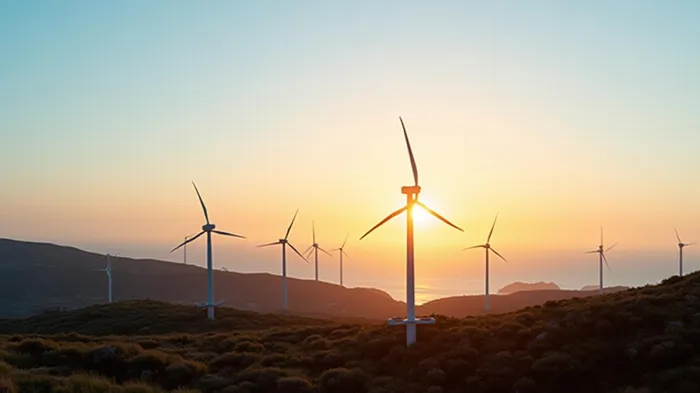
The EU's Green Deal is a tailwind: BCR, Romania's largest bank, plans to allocate €530 million annually to renewable projects. Challenges? Grid bottlenecks and local content mandates. But with strike prices at €65/MWh for solar, the math works for long-term investors.
Tech: Eastern Europe's Silicon Valley
Romania's tech sector is a stealth giant. IT exports are growing at 13% annually, fueled by firms like Webalta (cybersecurity) and Bitdefender (virus protection). The Cluj-Napoca tech hub rivals Budapest, with startups like UiPath (acquired by PE firms for $10 billion) showcasing its potential.
The government's Business Environment Digitalisation Act has streamlined bureaucracy, making Romania fertile ground for EU-funded 5G and cloud infrastructure. With €5.4 billion in EU tech grants allocated, this sector is a geopolitical hedge: even if AUR gains traction, its pro-EU stance won't risk tech partnerships.
Investment Opportunities: Where to Stake Your Claims
- Renewables Infrastructure:
- CfD-backed projects: Invest in utilities like COTEL (Romania's largest energy retailer) or offshore wind ventures in the Black Sea.
Green bonds: Romania's sovereign green bonds (5.2% yield) offer a premium over EU peers.
Tech and Cybersecurity:
- Webalta and Bitdefender (private but publicly listed via parent companies) are defensive plays.
ETFs: The iShares MSCI EM Eastern Europe ETF (LEFE) holds 16% in Romanian equities, offering diversification.
Geopolitical Arbitrage:
- Short-term: Bet on Romanian lira appreciation against the euro, given Dan's reformist credibility.
- Long-term: Buy land near infrastructure projects (e.g., A7 motorway) for logistics hubs.
The Urgency Factor: Why Act Now?
The window is narrowing. If AUR gains parliamentary seats in 2026 elections, they could block EU fund disbursements. Meanwhile, diaspora voting restrictions have already tilted the political playing field toward centrists—a temporary advantage. Investors who wait risk missing the cheapest entry point into a market poised for a post-election rebound.
The calculus is stark: Romania's instability is a paper storm. Its tech and green sectors are anchored to EU funds and global demand. The question isn't whether to invest—it's how much you can afford not to.
The gap between current capacity and 2030 goals? That's your upside.
Final Call: Romania is a geopolitical tinderbox—but also a lithium battery for growth. The far-right's rise is a risk, but the EU's bet on Dan is a lifeline. Act now, before the next election cycle locks in winners. The time to position for Black Sea winds and tech dividends is now.







Comentarios
Aún no hay comentarios