
Betting on Labor Market Resilience: Contrarian Plays in Tariff-Troubled Sectors
The U.S. labor market has defied trade war fears, with falling jobless claims signaling underlying strength even as tariffs roil markets. For contrarian investors, this presents a rare opportunity to capitalize on undervalued sectors like manufacturing and logistics—industries currently under pressure but positioned to rebound once policy uncertainties subside. Let’s dissect the data and uncover the hidden resilience.
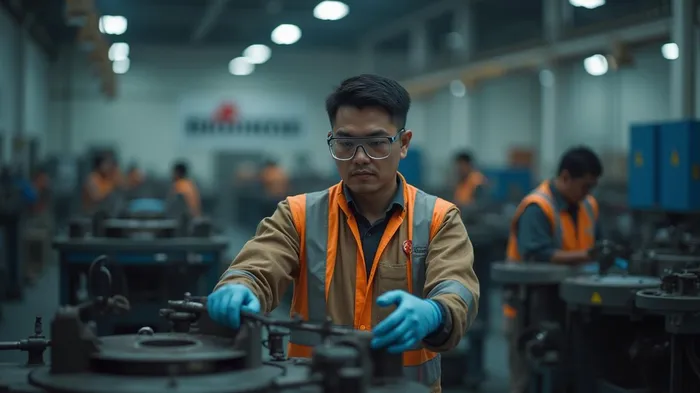
The Contrarian Case: Labor Market Stability Despite Tariff Storms
Recent data reveals a paradox: while trade tensions have sparked market volatility, the labor market remains robust. Initial jobless claims for the week ending May 17 fell to 227,000—below economists’ 230,000 forecast—marking a consistent trend of resilience. The 4-week moving average of claims (220,250) remains historically low, underscoring employers’ reluctance to lay off workers even amid trade headwinds. This stability is critical for sectors like manufacturing and logistics, which are often unfairly penalized in bearish sentiment but underpin the economy’s backbone.
Undervalued Sectors: Manufacturing and Logistics as Contrarian Plays
- Manufacturing: Pricing Power in a Volatile Climate
Tariffs have strained manufacturing margins, but companies with global supply chain flexibility and pricing power are prime candidates for recovery. Take Caterpillar (CAT), whose stock has lagged despite record backlogs in construction equipment. The company’s ability to pass costs to buyers (evident in 3.8% wage growth moderation) and diversification into AI-driven machinery positions it to thrive once trade policies stabilize.
- Logistics: The Unsung Heroes of Global Trade
Logistics firms like FedEx (FDX) have been battered by fears of a trade-driven slowdown. Yet, their workforce stability—evident in the 177,000 April jobs added to transportation and warehousing sectors—suggests demand remains intact. FedEx’s recent $2 billion investment in automation and its exposure to federal stimulus for supply chain resilience make it a contrarian buy at current undervalued multiples.
The Federal Safety Net: Defense and Infrastructure Plays
Investors should also target industries shielded by federal spending. Raytheon Technologies (RTX), a major defense contractor, benefits from bipartisan support for military modernization. With a stable workforce (unemployment in defense sectors remains near 2%) and contracts insulated from trade disputes, RTX offers a defensive hedge against broader market swings.
Caution: Wait for Policy Clarity Before Overexposure
While the labor market’s resilience supports contrarian bets, risks persist. The Federal Reserve’s inflation hawkishness and unresolved trade disputes could prolong volatility. Investors should:
- Avoid overcommitting: Deploy 5-10% of portfolios to these sectors initially.
- Monitor key metrics: Track continuing claims (currently 1.903 million) and the UJOR ratio (approaching 1.0), which signals easing labor shortages.
- Exit triggers: Sell if jobless claims breach 240,000 or the U6 underemployment rate rises above 8%.
Final Call to Action
The data is clear: falling jobless claims and sector-specific job growth (e.g., healthcare’s 58,200 April gains) reflect a labor market too strong to be derailed by temporary trade squabbles. For contrarians, now is the time to scoop up beaten-down stocks in manufacturing, logistics, and defense. These sectors are the unsung pillars of U.S. economic resilience—positioned to rebound once tariffs and trade policies settle. Act now, but act selectively.
Invest with discipline, and let labor market strength guide your portfolio through the storm.







Comentarios
Aún no hay comentarios