
Berkshire Hathaway's Post-Buffett Transition and Its Implications for Long-Term Investors
The leadership transition at Berkshire Hathaway, as Warren Buffett steps down as CEO and Greg Abel assumes the role, marks a pivotal moment for one of the world's most iconic investment conglomerates. For long-term investors, the critical questions revolve around continuity in leadership, strategic alignment with Buffett's legacy, and the resilience of Berkshire's sprawling portfolio under new stewardship. Drawing on recent management reshuffles and operational updates, this analysis evaluates the implications of this transition for the company's future trajectory.
Leadership Continuity: A Deliberate Handover
Berkshire's transition is characterized by a careful balance between preserving Buffett's institutional ethos and introducing a new generation of leaders. Greg Abel, who has overseen non-insurance operations since 2018, will assume full control of the company's operations and stock portfolio in January 2026, with Buffett retaining his role as chairman. This structure ensures Buffett's continued influence, as his voting power remains substantial, but also signals a shift toward Abel's operational expertise.
Key leadership changes underscore this duality. Todd Combs, a long-time investment manager and Geico CEO, has departed to lead JPMorgan Chase's Security and Resiliency Initiative, leaving the equity portfolio under Abel's direct oversight. Meanwhile, Nancy Pierce, Combs' successor at Geico, and Adam Johnson, newly appointed president of consumer products and services, represent a blend of continuity and fresh leadership according to Bloomberg. Marc Hamburg, Berkshire's finance chief, will retire in 2027, with Charles Chang set to take over. These moves reflect a deliberate effort to modernize governance while retaining institutional memory.
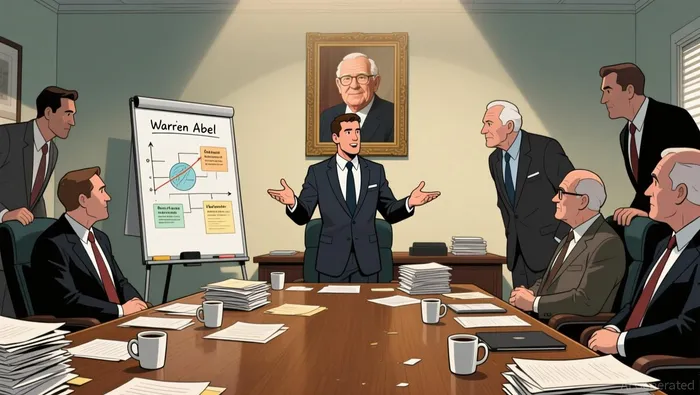
Strategic Alignment: Operational Discipline Meets New Priorities
Abel's leadership style appears to align closely with Buffett's core principles of value investing and operational efficiency but with a more hands-on approach. According to a Bloomberg report, Abel has emphasized optimizing expenses and unlocking value from Berkshire's diverse subsidiaries, including BNSF Railway, Berkshire Hathaway Energy, and industrial operations. This focus on operational rigor mirrors Buffett's emphasis on "economic moats" but introduces a sharper lens on cost management.
However, subtle shifts are emerging. The appointment of Michael O'Sullivan as Berkshire's first general counsel in decades signals a move toward structured legal oversight, a departure from Buffett's informal governance model. Additionally, Abel's direct control over the stock portfolio-a domain previously shared with Combs and Ted Weschler-raises questions about potential shifts in investment strategy. While Buffett's long-term, concentrated bets remain a benchmark, Abel may prioritize diversification or sector-specific opportunities to manage the $1.07 trillion portfolio's scale.
Portfolio Resilience: Sector-Specific Strengths and Challenges
Berkshire's third-quarter 2025 results highlight its sector-specific resilience. The insurance segment, a cornerstone of the business, delivered a combined ratio of 84.3% for GEICO, reflecting efficient claims management. Meanwhile, the manufacturing, service, and retailing (MSR) segment saw a 7.9% year-over-year increase in pretax earnings, driven by rail and leasing operations. These figures underscore the durability of Berkshire's operating businesses, even as Abel navigates a high-valuation stock market.
Yet challenges persist. The company's $380 billion cash reserves, while a buffer against economic downturns, have drawn scrutiny for their underutilization according to Yahoo Finance. Shareholders may increasingly demand returns through dividends or buybacks, a departure from Buffett's historical aversion. Additionally, the departure of Combs raises concerns about the equity portfolio's performance, particularly in a market where active management is increasingly critical.
Implications for Long-Term Investors
For investors, the post-Buffett era presents both opportunities and uncertainties. Berkshire's low P/E ratio of 16x, compared to a peer average of 27x, suggests the market values stability over aggressive growth. Abel's operational background and focus on energy and infrastructure-sectors poised for long-term growth-could enhance portfolio resilience according to Economic Times. However, the success of this transition hinges on his ability to maintain Buffett's cultural legacy while adapting to evolving investor expectations.
The leadership reshuffle also highlights Berkshire's decentralized management model, which has historically allowed subsidiaries to operate with autonomy. This structure, combined with Buffett's continued oversight as chairman, provides a buffer against abrupt strategic shifts. Yet, as Abel assumes more direct control, investors must monitor how he balances innovation with the company's conservative roots.
Conclusion
Berkshire Hathaway's post-Buffett transition is a masterclass in institutional continuity, with Greg Abel positioned to uphold the company's core values while introducing measured modernization. The reshuffling of leadership, strategic focus on operational efficiency, and sector-specific strengths in insurance and manufacturing suggest resilience. However, the management of cash reserves, potential shifts in investment strategy, and evolving shareholder expectations will define the company's long-term performance. For long-term investors, the key takeaway is that Berkshire remains a fortress of capital, but its future under Abel will depend on his ability to navigate the delicate balance between honoring the past and embracing the future.







Comentarios
Aún no hay comentarios