
Berkshire Hathaway’s Leadership Transition: A New Era Under Greg Abel?
The annual “Woodstock of Capitalism” in Omaha took a historic turn on May 3, 2025, as Warren Buffett, the 94-year-old OracleORCL-- of Omaha, announced his retirement as CEO of Berkshire Hathaway by year-end. The surprise succession plan naming Greg Abel, his long-time lieutenant, as successor marks a pivotal moment for one of the world’s most influential conglomerates.
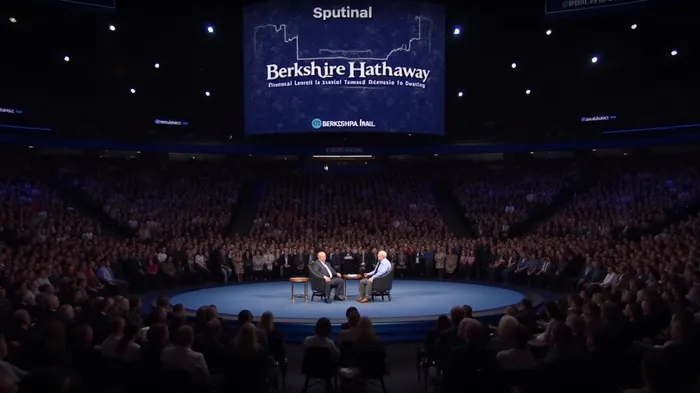
A Smooth Handoff or Uncharted Waters?
Buffett’s decision to step down after 60 years as CEO—despite Abel’s designation as successor in 2021—caught many shareholders off guard. The 62-year-old Abel, who joined Berkshire in 1999 and oversees its non-insurance operations, now faces the monumental task of steering a $1.03 trillion empire through a volatile economic landscape.
Crucially, Buffett emphasized his ongoing role in strategic decisions while granting Abel “final authority over operations and capital deployment.” This dual arrangement raises questions about governance clarity, though shareholders appeared reassured. “The decision to recommend Greg is a testament to his operational genius,” Buffett stated, adding, “The prospects of Berkshire will be better under his management than mine.”
The Financial Imperatives: Cash, Culture, and Capital Allocation
Berkshire’s $347.7 billion cash reserve—a record for the company—will be Abel’s most immediate challenge. The “elephant” Buffett once called it remains a strategic asset, but Abel must decide whether to deploy it aggressively in a post-pandemic world or hold it as a shield against economic uncertainty.
Abel’s track record offers clues: during his tenure as CEO of MidAmerican Energy (now Berkshire Hathaway Energy), he prioritized infrastructure investments and operational efficiency. “Greg’s focus on long-term value creation aligns with Berkshire’s culture,” said shareholder Linda Smith, reflecting a broader sentiment among investors.
Yet Abel’s first test may come sooner than expected. The Federal Reserve’s tightening cycle and geopolitical tensions over trade—areas Buffett directly addressed—could pressure Berkshire’s diverse portfolio, which spans railroads, insurance, and consumer brands.
Buffett’s Legacy and the “Trump Effect”
The transition also highlights Buffett’s enduring influence. His net worth, now $165.3 billion, will remain largely tied to Berkshire’s performance, as he retains all his shares. “This is not just a leadership change—it’s a generational shift,” said analyst Haibo Liu, noting Buffett’s philanthropic pledge to donate 99.5% of his wealth.
Buffett’s critique of President Trump’s trade policies—calling it a “weapon” that risks global instability—added a geopolitical layer to the event. Shareholders, however, seemed more focused on Berkshire’s performance. The company’s 17% rise in 2025 versus the S&P 500’s 3% decline underscored its resilience, a trend Abel aims to extend.
Conclusion: A New Chapter, But Will It Write Itself?
The handover to Greg Abel represents both continuity and transformation. With Berkshire’s 5,502,284% shareholder return since 1965—a staggering figure for a $10,000 investment now worth over $500 million—Abel inherits a legacy of trust and scale. Yet his success hinges on navigating three key imperatives:
1. Capital Allocation: Deploying the $347.7 billion cash pile without sacrificing Berkshire’s independence.
2. Operational Synergy: Uniting the conglomerate’s disparate businesses under a unified strategy.
3. Global Risks: Mitigating trade wars and monetary policy shifts while preserving growth.
Shareholders’ standing ovation at the meeting suggests confidence in Abel’s operational rigor. But as Buffett’s era ends, the market will watch closely whether this “new era” can match the old one’s legendary returns. The answer lies not just in Abel’s decisions, but in how Berkshire adapts to a world far different from the one Buffett mastered.







Comentarios
Aún no hay comentarios