
Berkshire Hathaway’s New Era: The Abel Transition and Buffett’s Enduring Legacy
The Berkshire HathawayBRK.B-- board’s unanimous decision to name Greg Abel as CEO, effective January 1, 2026, marks the end of an era and the dawn of a new chapter for the $1.1 trillion conglomerate. Warren Buffett, the 94-year-old “Oracle of Omaha,” will remain chairman but cede day-to-day control to Abel, a 62-year-old executive deeply embedded in Berkshire’s operations for over 25 years. This transition, announced at the May 3, 2025 shareholder meeting, underscores a meticulous succession plan and a board’s unwavering confidence in Abel’s ability to steer Berkshire’s vast empire of railroads, utilities, insurance, and investments.
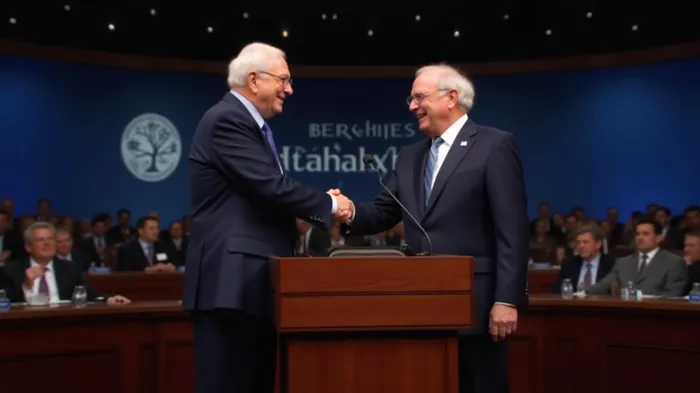
The Transition: A Decade in the Making
Abel’s rise to CEO was years in the works. Since joining Berkshire in 1992 as an accountant, he rose through the ranks, eventually overseeing non-insurance operations like BNSF Railway, Berkshire Hathaway Energy, and See’s Candies. Buffett first named him a vice chairman in 2018 and confirmed him as successor in 2021, calling him “the most capable person I know.” The board’s swift approval of the transition—finalized the day after the shareholder meeting—signaled its trust in Abel’s leadership.
Despite a modest 2% dip in premarket trading after the announcement, Berkshire’s shares closed at a record high of $1.1 trillion in market value on May 2, 2025, reflecting investor confidence in the transition. Buffett’s assurance that “the final word will be what Greg says” further alleviated concerns about leadership continuity.
Abel’s Challenges and Opportunities
Abel inherits a company with a $347 billion cash hoard and a portfolio spanning 90+ subsidiaries. His immediate priorities will be maintaining Berkshire’s decentralized culture—where subsidiary leaders enjoy operational independence—and navigating its massive size, which complicates finding transformative deals. He will also assume sole responsibility for capital allocation decisions, including acquisitions and stock buybacks, previously handled by Buffett.
Abel’s background as a hands-on manager contrasts with Buffett’s hands-off approach. His focus on operational excellence, such as turning around Berkshire Hathaway Energy, suggests a shift toward active oversight of subsidiaries. This could prove critical as Berkshire’s investment portfolio, now managed by Buffett’s lieutenants Todd Combs and Ted Weschler, increasingly incorporates shorter-term growth strategies like stakes in tech firms.
Buffett’s Role: Chairman Emeritus
While stepping down as CEO, Buffett will retain his chairman title, ensuring his voice remains influential. His advisory role will likely focus on major investments and periods of market volatility, leveraging his unparalleled experience. However, Abel’s authority is clear: “The final word will be what Greg says,” Buffett emphasized, underscoring the transition’s finality.
The Market’s Take and Long-Term Outlook
Analysts and shareholders are cautiously optimistic. Berkshire’s cash reserves and Abel’s operational acumen provide a solid foundation. The company’s 5,500% stock return under Buffett—a testament to his value-investing philosophy—sets a high bar, but Abel’s focus on Berkshire’s core businesses may help sustain growth.
Yet challenges loom. Berkshire’s size makes it harder to replicate Buffett’s historic returns, while Abel must balance Buffett’s legacy with evolving markets. His ability to integrate new investment strategies without destabilizing Berkshire’s cyclical businesses will be key.
Conclusion: A Smooth Handoff, but Can Abel Match the Oracle?
The Berkshire board’s unanimous approval of Abel reflects a well-planned transition, ensuring continuity in governance and culture. With a $347 billion war chest and a proven track record in operational leadership, Abel is positioned to maintain Berkshire’s momentum. However, replicating Buffett’s 5,500% return since 1965 will require navigating a post-Buffett era with both humility and innovation.
Investors should note that Berkshire’s stock has outperformed the S&P 500 by 1,300% since 2000, even as its growth slows. Abel’s emphasis on operational excellence and capital discipline, paired with Buffett’s advisory role, suggests a stable path forward. While the Oracle of Omaha’s departure marks a historic shift, the board’s confidence—and Abel’s readiness—offer reassurance that Berkshire’s future is in capable hands.
In the end, the question remains: Can Abel preserve the Berkshire ethos while adapting to a changing world? The answer will define not just the next chapter of this conglomerate, but the legacy of its greatest leader.





Comentarios
Aún no hay comentarios