
Berkshire Hathaway: The $381 Billion Moat and the Post-Buffett Catalyst
Berkshire Hathaway's true worth is not found in its ticker symbol or its recent price pop. It is rooted in a vast, self-funding machine of businesses that generate predictable cash flows. As of the end of 2024, this machine comprised 189 subsidiary companies, spanning railroads, utilities, manufacturing, and retail. These are not speculative bets but durable engines of compounding, each with its own competitive moat. 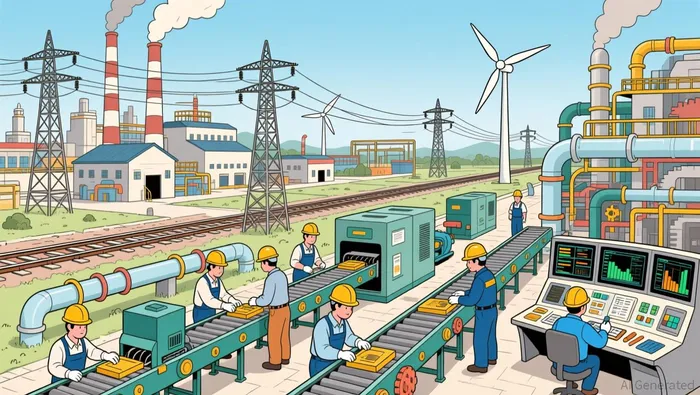 This is the bedrock: a portfolio of cash-generating assets that provides the capital for long-term growth, independent of any single market cycle.
The company's $1.1 trillion market cap is a headline figure, but it only tells part of the story. The market's valuation often fixates on the sum of its publicly traded parts, yet Berkshire's real value lies deeper-in the quality and resilience of its operating businesses. These subsidiaries are the source of the immense capital that Buffett and now Abel can deploy. The market cap is a price tag; the durable competitive advantages of the underlying businesses are the engine of intrinsic value.
Recent stock performance offers a telling contrast. While shares have rallied, the 1-year total shareholder return of 9.9% has lagged the broader market. This divergence is instructive. It suggests the market may not yet be fully pricing in the operational strength and the sheer scale of deployable capital that Berkshire represents. The stock's steady, if unspectacular, return over the past year reflects a market that sees the conglomerate's size but perhaps underestimates the compounding power of its business machine. For a value investor, this gap between price and operational reality is where opportunity often resides.
The Catalyst: Capital Deployment in a New Era
The most critical lever for Berkshire's future value creation has now shifted from the boardroom to the balance sheet. With Warren Buffett's retirement as CEO, Greg Abel inherits control of a record cash pile exceeding $381.6 billion. This hoard is not idle; Abel has already begun deploying it, signing off on the $9.7 billion acquisition of OxyChem from Occidental. The immediate catalyst is clear: a massive capital allocation engine is now in new hands, and the market is watching to see if the same disciplined engine will run as smoothly.
Early signals suggest the handover is aligned with Buffett's legacy. The latest 13F filing reveals a characteristically concentrated, yet active, quarter. While Buffett was still at the helm, he doubled down on durable franchises, adding nearly $4.3 billion in Alphabet shares and quietly accumulating Sirius XM. These moves reflect classic Buffett themes: exposure to long-term growth with wide moats, cash-rich businesses, and attractive valuations. The pattern of large, concentrated bets on high-conviction compounders appears to be continuing under Abel's watch.
Yet the central risk is execution. Buffett's genius was not just in buying good businesses, but in knowing when not to buy. With a cash pile of this magnitude, the temptation to deploy it quickly, perhaps to maintain a high return on equity, could test Abel's discipline. The transition introduces a new layer of execution risk, as the company moves from a highly centralized model to one where Abel has more hands-on consolidation focus. The market's patience will be tested if this hoard leads to overpaying for acquisitions, diluting the very moat that has made Berkshire so valuable.
For now, the setup is one of immense opportunity and heightened scrutiny. The cash is there, and the first move has been made. The question for investors is whether Greg Abel can maintain the capital allocation discipline that has defined Berkshire for decades, or if the sheer scale of this new era will inevitably introduce a different kind of risk.
Valuation and Scenarios: Price vs. Intrinsic Value
The stock now trades near an all-time high, a fact that naturally raises questions about whether the market has already priced in Berkshire's intrinsic value premium. With a 52-week high 9.3% above the current share price, the recent run-up has been substantial. The market cap has ballooned to over $1.1 trillion, making it the sixth-most valuable U.S. company. For a value investor, this proximity to a peak is a reminder that price and value are not the same. The question is whether the current price fully reflects the durable cash flows from its operating businesses and the disciplined deployment of its colossal capital.
A critical shift in the company's makeup provides a more stable foundation for that value. The value of Berkshire's marketable securities is now smaller than its cash position, and its controlled businesses have become the star. This is a fundamental change from the past, where the equity portfolio was a dominant driver. Now, the intrinsic value is more anchored in the predictable earnings from railroads, utilities, and manufacturing. This transition offers a wider moat against market volatility, as these operating assets generate cash regardless of stock market swings.
The primary scenario for underperformance hinges on the new leadership's execution. The risk is a failure in capital allocation discipline. With Greg Abel now in control of a $381.6 billion cash pile, the temptation to deploy it quickly could lead to overpaying for acquisitions or diluting returns. This is the new, heightened risk introduced by the transition. The market's patience will be tested if this hoard leads to a series of deals that fail to compound at the historic Berkshire rate.
Conversely, the primary scenario for outperformance is the continued compounding power of its operating businesses. The 189 subsidiary companies Buffett built are a self-funding engine. As long as Abel maintains the discipline to deploy capital into these durable franchises, the intrinsic value will grow steadily. The stock's recent strength, crushing the S&P 500, shows the market is betting on that compounding. The setup is one of immense opportunity, but the margin for error has narrowed. The stock's premium valuation now depends entirely on the new CEO's ability to steward the machine as faithfully as the old one.
Catalysts and Risks: What to Watch
The investment thesis now hinges on execution, not just assets. With Greg Abel firmly in control of a $381.6 billion cash pile, the near-term catalysts are clear, but so are the risks. Investors must monitor three key areas to gauge whether the post-Buffett era will compound value as promised.
First, watch the pace and quality of future acquisitions. The initial move to buy OxyChem for $9.7 billion was a classic Berkshire bet-a durable, cash-generating asset. The critical test is whether this discipline holds for larger deals. The market will be looking for strategic fit, not just size. A rapid sequence of purchases, especially at premium valuations, would signal a potential shift in capital allocation philosophy and raise red flags about discipline. Conversely, a measured, selective approach would validate the transition.
Second, track the earnings growth of Berkshire's core operating businesses. These are the true engines of intrinsic value, independent of stock market noise. The railroads, utilities, and insurance operations must continue to deliver steady, predictable cash flows. This is the barometer for the company's durable moat. Any sign of deceleration in these segments would challenge the narrative that the operating machine is self-funding and compounding reliably.
Finally, watch for any significant changes in the company's capital allocation philosophy. This is communicated through major announcements and shareholder letters. The market is already pricing in a high return on equity, which could pressure Abel to deploy capital quickly. Any move toward a regular dividend, for instance, would be a major philosophical shift from Buffett's model of retaining all capital for reinvestment. The first major buyback program or a change in the tone of the annual letter will be telling signs of how the new leadership views the use of that colossal cash hoard.
The bottom line is that the catalysts have shifted from the boardroom to the balance sheet. The risk is execution, as the transition introduces a new layer of scrutiny. For a value investor, the opportunity remains in the durable businesses, but the margin for error has narrowed. The next few quarters will show whether Greg Abel can steward the machine with the same discipline that built it.







Comentarios
Aún no hay comentarios