
Berjaya Food's Fragile Recovery Amid Political and Regulatory Headwinds
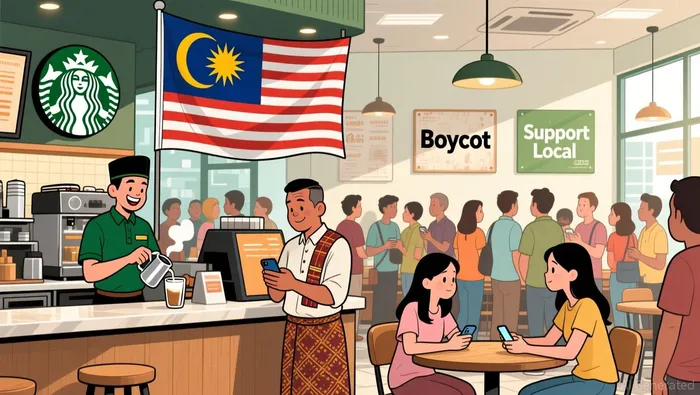
Revenue growth of 3.3% year-on-year to RM128.25 million in Q1 2025 provides some positive momentum according to financial reports. However, this improvement occurred alongside a reduced number of operating stores, down to 320 outlets from the previous 400 following boycott-driven closures as reported by industry analysis. The company attributes this growth to cost-cutting, store rationalization, and same-store sales gains, suggesting operational efficiency has been a primary driver rather than broad market recovery.
Cash flow visibility remains a critical concern. Despite the narrowed loss, the company's reliance on external funding to sustain operations is evident, reflecting persistent cash flow constraints. This dependence underscores the underlying vulnerability, as the business continues to operate at a loss. To address this, Berjaya Food is pursuing international expansion into markets like Denmark, Finland, and Iceland, a strategy aimed at stabilizing growth but adding new operational and market risks to its portfolio.
Operational Drivers: Local Resilience vs. External Vulnerabilities
Malaysia's Starbucks operator has stabilized after a severe downturn, but faces persistent headwinds. The operator closed 80 underperforming stores, reducing its footprint to 320 locations following boycotts linked to the Gaza conflict. While same-store sales growth helped offset this reduction, revenue only rose modestly, suggesting the rebound remains fragile. According to market analysis.
Competition from domestic chains like Zuspresso continues to pressure margins. Despite a 3.3% revenue increase to RM128.25 million in Q1 2025, analysts warn that expanding local rivals and shifting consumer preferences threaten profitability. Operational efficiencies and cost-cutting drove the narrower RM14.8 million loss, but intense competition erodes the gains.
International expansion into Nordic markets represents a strategic pivot to offset local challenges. However, entering new regions carries significant execution risks and capital demands. While political activism tied to the Middle East conflict continues to sway Malaysian consumer sentiment, the international push offers growth but introduces unfamiliar market risks and regulatory uncertainties. Full recovery remains contingent on navigating these complex external factors. According to industry reports.
Regulatory Overload and Activist Vulnerability
Malaysia's 2025 regulatory overhaul imposes steep compliance costs on businesses. New rules mandate social media licensing for platforms with 8 million users, stricter smoking controls, and phased implementation of a RM1,700 minimum wage. The US-Malaysia Reciprocal Tariffs Agreement (USMART) compounds this with extensive non-tariff measures covering labor, environmental standards, and digital trade rules as detailed in policy analysis. While designed to attract foreign investment through incentives like the Johor-Singapore SEZ's 5% tax breaks for AI firms, these requirements force significant operational adjustments. Companies now face heightened scrutiny on food safety, pharmaceuticals, and digital services, potentially straining margins as compliance budgets expand.
Our 35th global governance ranking creates unexpected vulnerability to activist campaigns. Despite strong ethical standards highlighted in the Soft Power Index, brands face boycott risks when perceived as politically aligned with controversial governments. The 36% sales collapse for Starbucks during Israel-related protests demonstrates how quickly consumer sentiment can turn. This activism risk is amplified by Malaysia's improved regulatory transparency, which makes corporate positions more visible to critics. While good governance helps navigate compliance walls, it offers no shield against boycotts that exploit geopolitical tensions.
Cash flow buffers face triple pressure from regulatory costs, boycott impacts, and policy uncertainty. The RM1,700 minimum wage increase directly squeezes labor costs, while USMART's contested legal basis under IEEPA creates compliance risks that may require legal reserves. When boycotts like the one hitting Starbucks with a $69 million loss occur, companies without strong liquidity positions face existential threats. The governance ranking improves operational predictability but doesn't mitigate sudden demand shocks from activist campaigns. Businesses must prioritize cash conservation given these overlapping pressures on working capital and contingency reserves.





Comentarios
Aún no hay comentarios