
Benzinga's Tech Overhaul: A Trading Catalyst or Just Cost Noise?
The catalyst here is a specific, internal operational upgrade. Benzinga's CFO, Robert Checchia, recently invested in automation to fix manual processes and inefficient go-to-market processes that were burdening the revenue operations. This isn't a new product launch or a major acquisition; it's a tactical fix to streamline the company's own sales and finance functions. The core tactical question is whether this tech bet creates a mispricing opportunity by improving margins and growth predictability, or if the real, more powerful catalyst is Benzinga's existing role as a news and data terminal for traders that captures the attention of a highly active audience.
The setup is clear. Benzinga Pro is a terminal designed for professional day traders, offering daily trade picks, exclusive market-moving stories, and stock scanners. Its audience is laser-focused on the most volatile, high-attention names. The 2025 data shows this focus: the most-searched tickers were dominated by broad market ETFs like SPY and mega-caps like TSLA and NVDA. This isn't a niche audience; it's a group of traders chasing the biggest moves, which aligns perfectly with Benzinga's content. The CFO's automation project aims to cut the time to close commission processes by half and improve overall revenue growth, directly attacking the inefficiencies that were slowing down the sales engine.
The Trading Link: News as a Propellant
Benzinga markets its Pro platform as a direct engine for trading activity. The explicit pitch is that tools like Stock Audio and Stock Scanner help day traders "spot trades and investments faster." This isn't just passive news consumption; it's framed as an active propellant. The company further cultivates a community-driven environment where traders let it rip about stocks in the Benzinga Pro Lounge, suggesting a feedback loop where news sparks discussion, which in turn fuels more trading interest.
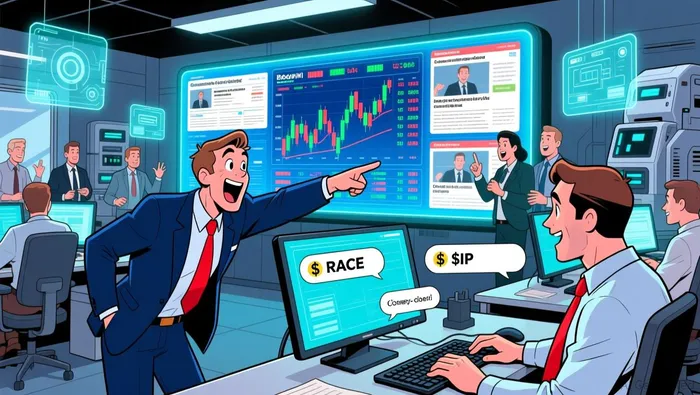
The critical question is whether this content actually drives the volatility it covers. The data on user behavior offers a mixed signal. On one hand, the platform's own analytics show a community actively discussing specific names, like $RACE, $IP, and $AOS. On the other, the most-searched tickers of 2025 tell a different story. The top names were overwhelmingly broad market ETFs like SPY and mega-caps like TSLA and NVDA. These are large, liquid, often passive vehicles-not typically the kind of volatile, news-driven small-caps or meme stocks that see explosive volume spikes from breaking stories.
This disconnect is the core tension. Benzinga's content is designed to move traders on the next big news, but the audience's deepest engagement is with the broad market's steady climb. The platform's tools may help traders react quickly to news, but the most searched names suggest the primary trading activity is less about chasing individual stock catalysts and more about riding the momentum of the largest companies and the overall market. For the stock, this implies a business model that captures attention from a high-activity audience, but the link between its exclusive stories and the specific, high-volume trades it aims to enable remains unproven by the search data.
Valuation & Risk: The Cost of the Upgrade
The CFO's characterization of the automation project as "a huge win" frames it as a strategic efficiency play. The upfront cost is clear: a significant investment to replace manual processes with a new platform. The promised returns-cutting commission-close time by half, reducing costs, and boosting revenue growth-are long-term efficiency gains. For a stock priced on future cash flows, this is a classic trade: spend capital today to improve margins and predictability tomorrow. The risk is that this capital expenditure does not directly accelerate the core business engine.
That engine is Benzinga's revenue model, which relies heavily on subscriptions and event sponsorships. Both are vulnerable to a slowdown in retail trading activity. If the platform's exclusive news and tools fail to drive the volume of high-impact trades it promises, then the audience that pays for subscriptions and sponsors events may contract. The tech investment, while smart for internal operations, does nothing to address this external demand risk.
The primary risk to the trading-catalyst thesis is that this upgrade consumes capital without directly increasing the volume of high-impact news or the platform's user base. It streamlines the company's own sales and finance functions, but it doesn't create new, viral content that moves markets. The Benzinga Pro Lounge shows a community that "lets it rip about stocks", but the most-searched tickers of 2025 were broad market ETFs and mega-caps. This suggests the audience's deepest engagement is with the market's broad momentum, not the specific, high-velocity stories Benzinga produces. The tech bet improves the company's internal efficiency, but it doesn't guarantee that its news will become the catalyst that moves those specific, high-attention names. For the stock, the risk is a misallocation of capital if the external growth engine stalls.
Catalysts & What to Watch
The CFO's tech overhaul is a necessary internal fix, but it doesn't create a new trading catalyst. The real test is whether Benzinga's content can shift user behavior from passive market watching to active, news-driven trading. The near-term metrics to watch are clear.
First, monitor Benzinga Pro's user growth and engagement following the tech rollout. The automation project promises to cut commission-close time by half and improve overall revenue growth by reducing costs and improving efficiency. If this internal efficiency gain translates to a faster sales cycle and more effective marketing, it could fuel subscriber growth. A visible uptick in active users or time spent on the platform in the coming quarters would signal the upgrade is working as intended for the business model.
The more critical metric is a change in the most-searched tickers. The 2025 data is telling: the audience's deepest engagement is with broad market ETFs like SPY and mega-caps like TSLA and NVDA. This suggests the primary trading activity is riding the momentum of the largest companies, not chasing individual stock catalysts. For the news-driven trading thesis to hold, Benzinga needs to see a shift in 2026 towards more volatile, news-sensitive stocks in its search rankings. If names like Palantir or Opendoor maintain their top-10 status, it would confirm the existing pattern of interest in high-performing, often passive vehicles. A move towards smaller, more speculative names would be the first sign that exclusive stories are sparking new trading activity.
The primary risk is that this automation project is a cost-cutting measure for an existing model, not a catalyst for new trading activity. The CFO called it "a huge win" for internal operations, but that win is measured in faster commission payouts and fewer finance disputes, not in moving markets. If the platform's user base and search behavior remain unchanged, the investment improves margins but does nothing to prove that Benzinga's news is the propellant it claims to be. The stock's valuation will hinge on whether this efficiency play can be paired with a demonstrable shift in user behavior that drives higher trading volume and, ultimately, more sponsorships and subscriptions. Watch the search data closely; it's the clearest window into the real catalyst.







Comentarios
Aún no hay comentarios