
Benzinga's Scaling Challenge: A Historical Comparison to Media Inflection Points
Benzinga's story is one of rapid scaling in a crowded digital landscape. The company ranks 1,586 on Inc. magazine's annual Inc. 5000 list, a prestigious benchmark for America's fastest-growing private firms. This ascent is powered by a traditional media revenue model, primarily built on subscriptions, advertising, and event sponsorships. The core product-market-moving news and financial data-has proven valuable enough to license to major brokerage platforms and aggregators.
Yet, this impressive growth trajectory was built on a pre-overhaul foundation that now shows its age. As the company expanded, its sales organization was burdened by manual processes and inefficient go-to-market strategies. The revenue operations team was drowning in spreadsheets, calculating commissions and tracking performance by hand. This friction wasn't just an internal annoyance; it was a direct drag on profitability and a bottleneck to scaling.
This setup creates a classic inflection point. The company's revenue momentum, evidenced by its high ranking, is now outpacing its operational capacity. The historical pattern for scaling media companies often shows a lag between top-line growth and the internal systems needed to manage it efficiently. Benzinga's journey mirrors that arc, but the critical question is whether it can catch up before the growing pains become unsustainable. The thesis here is that rapid growth is a necessary but insufficient condition for long-term success; operational efficiency must soon follow.
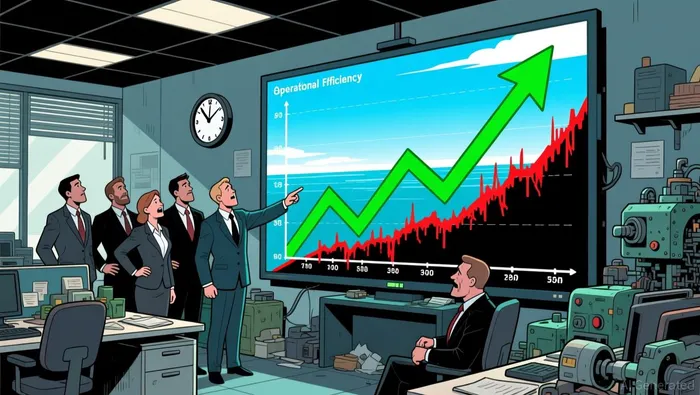
The Operational Inflection: Efficiency vs. Scale
The core challenge Benzinga is addressing is a classic tension in scaling businesses: aligning operational structure with growth ambitions. As the company expanded, its revenue operations became a bottleneck. The CFO, Robert Checchia, identified a critical flaw: the existing incentive programs were not structured to align with the company's growth goals. Generic commission structures across roles led to misaligned behaviors, eroded trust, and consumed finance resources with disputes. This wasn't just an administrative headache; it was a direct cost to profitability and a drag on the company's ability to scale.
The solution was automation. By implementing a dedicated platform, Benzinga achieved tangible results. The company cut time to accumulate data and close commission processes by 50%. More importantly, it reduced cost of commissions while improving overall revenue growth. The system also delivered 100% accuracy on commission calculations and payments, eliminating a major source of friction.
This mirrors a well-worn historical pattern. Media companies often scale revenue faster than their internal processes can keep up, accruing what could be called "growth debt." Benzinga's experience is a textbook case: rapid top-line expansion was outpacing the efficiency of its compensation engine. The CFO's observation that the structure was taking a long time to configure the results and incentivizing the wrong behaviors is the operational signature of this debt.
The durability of this solution hinges on its integration into the company's growth culture. The CFO noted a culture shift after optimization, with sales reps motivated by clearer, fairer payouts. This suggests the fix isn't just technical but cultural, embedding efficiency into the sales process. However, the real test will be whether this operational upgrade can keep pace with future growth phases. The automation provides a scalable foundation, but the company must now ensure that new sales strategies and market expansions are guided by the same data-driven discipline that fixed the commission system.
Market Context and Forward Catalysts
Benzinga's operational overhaul must be viewed against a backdrop of intense competition and rapid technological change in financial media. The company's flagship event, Benzinga Fintech Day & Awards, is a key revenue stream and a platform for industry influence. Scheduled for November 2025, it brings together capital markets leaders, fintech innovators, and investors. The agenda highlights the very trends Benzinga covers-AI reshaping services, prediction markets, and VC-backed innovation. This creates a dual-edged dynamic: the event is a direct audience for its content, but it also places Benzinga in the middle of the competitive landscape it reports on.
The broader fintech and AI landscape, as showcased at such events, represents both a potential audience and a source of competitive pressure. As leaders from firms like Perplexity and BMO explore AI's impact, the bar for content quality and technological sophistication rises. Benzinga must not only report on these shifts but also demonstrate it can operate with the same agility it covers. The automation investment is a direct response to this pressure, aiming to build an internal engine that can keep pace with the external market it serves.
The key catalyst for the investment thesis is whether these operational efficiencies translate directly to improved financial performance. The CFO's results-cut time to accumulate data and close commission processes by 50% and reduced cost of commissions while improving overall revenue growth-are promising. The real test is margin expansion and enhanced cash flow. If the automation allows Benzinga to scale its sales force more efficiently without a proportional rise in SG&A, it validates the capital expenditure. This is the classic resolution of "growth debt" that many scaling media companies face: the initial cost of fixing internal systems must yield a lasting improvement in profitability.
Historically, the companies that successfully navigate this inflection point are those that embed operational discipline into their growth culture. Benzinga's shift toward data-driven compensation is a step in that direction. The upcoming Fintech Day event will be a practical test of that culture, showcasing whether the company can leverage its improved internal processes to deliver even more valuable content and connections to its audience. The bottom line is that efficiency is no longer a back-office concern; it is the foundation for competitive relevance in a fast-moving market.







Comentarios
Aún no hay comentarios