
Benzinga's Private Platform: Monetizing Retail Attention at Scale
Benzinga was founded in 2010 to serve a new class of investor, born from the financial crisis and hungry for a different kind of information. Its core mission has always been to empower individual investors by providing the news, data, and education needed to navigate markets on their own terms. Today, that mission is executed at an unprecedented scale. The platform reaches approximately nearly 25 million readers each month across more than 125 countries, integrated directly into the workflows of major online brokerages.
This massive audience is the platform's most valuable asset. But Benzinga's true innovation lies in its proprietary data. Its primary technological edge is the Benzinga Ticker Clickstream, a unique dataset that captures real-time retail investor attention. This isn't just a traffic metric; it's a live feed of where individual traders are looking, what they're clicking on, and how they're reacting to news. It transforms passive readership into a quantifiable signal of market sentiment.
Together, the scale of the media platform and the specificity of its data asset form the bedrock of Benzinga's monetization strategy. The company is not merely a news outlet; it is a tech-enabled financial media platform that leverages its audience reach and behavioral insights to create new value for partners and advertisers. This foundation allows Benzinga to move beyond traditional advertising, positioning its data as a strategic tool for understanding the modern, retail-driven market.
Monetization Engine: From Content to Integrated Services
Benzinga's revenue model has evolved from a pure content play into a sophisticated ecosystem of data and services. Its primary business-to-business (B2B) pillar is the sale of news and data feeds to major online brokerages like TD Ameritrade and TradeStation. These partners rely on Benzinga to power their client-facing platforms, using its content to engage users and encourage trading activity. This institutional-grade content distribution forms a stable, recurring revenue stream.
Beyond this foundational B2B model, Benzinga has built a direct-to-consumer (D2C) premium tier. Services like Benzinga Plus and Stock Picks monetize the platform's audience by offering subscribers exclusive analysis, real-time alerts, and curated trading ideas. This segment leverages the company's media scale to convert attention into paid subscriptions, adding a higher-margin, scalable revenue line.
The most significant strategic shift, however, is the company's move into data infrastructure. 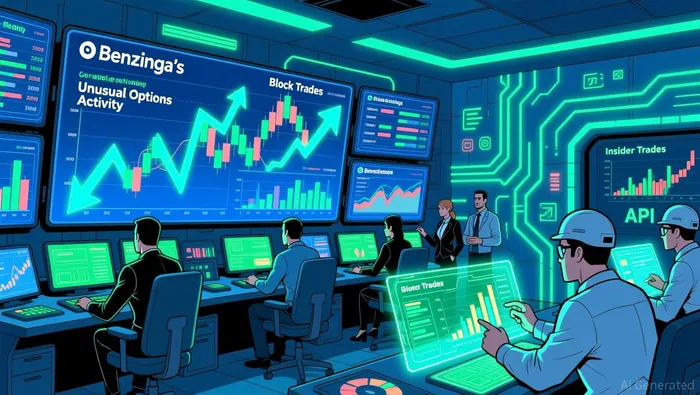 Benzinga is licensing its proprietary, real-time data APIs to other platforms. A key example is its recent collaboration with Newsquawk, where Benzinga's Unusual Options Activity, Block Trades, and Insider Trades datasets are being integrated. This partnership allows Newsquawk to enhance its real-time intelligence with Benzinga's alternative data, creating a more powerful tool for professional traders. By packaging its unique datasets-like the Benzinga Ticker Clickstream-into APIs, Benzinga is transforming its data assets into a scalable, institutional-grade product.
This evolution represents a clear pivot. The company is no longer just a media outlet selling advertising or subscriptions. It is becoming a provider of integrated market intelligence infrastructure, selling both the news and the underlying data signals that drive trading decisions. This multi-pronged approach-B2B content, D2C subscriptions, and data licensing-creates a diversified revenue model that captures value at multiple points in the financial information supply chain.
Strategic Positioning and Financial Health
Benzinga's competitive moat is built on two durable assets: its real-time, retail-focused data and its entrenched position within the brokerage distribution network. The Benzinga Ticker Clickstream provides a unique, quantifiable signal of where retail capital is flowing, a dataset with no direct peer. This is amplified by its established integration into every major online brokerage, making its content and data a default fixture in the trading workflow of millions. This dual advantage creates a high barrier to entry; replicating the data requires massive, real-time user engagement, while replicating the distribution requires deep, long-term partner relationships.
The strategic validation of this model is clear in its ownership structure. The recent acquisition of a majority stake by Beringer Capital is a powerful endorsement. This private equity backing provides the capital necessary to accelerate growth, likely funding the expansion of its data licensing business and the development of new platform features. It signals that the market sees a path to scale beyond traditional media revenue.
As a private company, exact financials are not public, but the strategic direction is evident. Benzinga's model is explicitly designed to reduce reliance on the volatile advertising and subscription markets. Its pivot toward data infrastructure and B2B content licensing aims for more stable, recurring revenue streams. The partnership with Beringer Capital directly supports this platform strategy, providing the resources to deepen its technological offerings and secure its position as a foundational data provider in the retail-driven market ecosystem.
Catalysts and Watchpoints
For investors, the path forward hinges on a few critical validation points. The most immediate catalyst is the expansion of Benzinga's data infrastructure business, particularly its API partnerships. The recent collaboration with Newsquawk is a blueprint. Success will be measured by the pace and scale of similar deals, as Benzinga licenses its unique datasets-like the Benzinga Ticker Clickstream-to other platforms. Each new integration demonstrates the commercial viability of its data as a standalone product, moving it further from a content brand toward a foundational market utility.
A more transformative but longer-term catalyst is the monetization of the Benzinga Cloud Playground. This platform is designed to lower the barrier for niche data providers, allowing them to offer their services through Benzinga's established distribution. If executed well, this could create a network effect, where Benzinga's audience becomes a launchpad for new data products, generating fees from both the providers and the end-users. The watchpoint here is not just the number of partners, but the quality and stickiness of the data being offered, and whether it drives meaningful incremental revenue.
The primary risk is execution. Transitioning from a trusted media source to a reliable, scalable data infrastructure provider is a fundamental shift. It demands a new operational model focused on uptime, security, and technical support-areas where a traditional media company may lack experience. Any failure to deliver consistent, high-quality data services could damage the brand's credibility and stall the strategic pivot.
A second, more tangible risk is customer concentration. The company's B2B revenue is heavily reliant on its established integration into every major online brokerage. The loss of a single key partner, or a significant renegotiation of terms, could materially impact its recurring revenue stream. This concentration creates a vulnerability that investors must monitor, especially as Benzinga seeks to diversify into new data licensing markets.
In essence, the coming months will test Benzinga's ability to leverage its unique assets. The expansion of its API ecosystem and the commercial success of its data marketplace are the key catalysts. The watchpoints are clear: execution on the data infrastructure promise and the resilience of its core brokerage partnerships.







Comentarios
Aún no hay comentarios