
Benzinga's Pivot: A High-Risk Platform Play for a Media Giant
Benzinga's announcement last week marks a decisive break from its past. The company is no longer just a media outlet; it is executing a high-stakes pivot to become a foundational data platform for retail traders. This shift is driven by a clear mission: to level the playing field by democratizing access to institutional-grade signals. The strategic collaboration with Newsquawk is the most visible proof point, integrating Benzinga's proprietary market data APIs-like Unusual Options Activity and Block Trades-into a rival platform. This isn't mere licensing; it's a bet that Benzinga's structured datasets are the essential, high-signal inputs that modern trading platforms need to deliver actionable intelligence.
The foundation for this platform play, however, is a deep technical overhaul. For years, Benzinga's rapid growth was hampered by a fragmented data ecosystem. As its Director of Data Science noted, the company was a big mess with siloed teams, conflicting data definitions, and a dozen Google Analytics instances. Answering basic operational questions was a challenge. The adoption of SQLMesh and Tobiko Cloud was a foundational rebuild, transforming this chaotic data landscape into a coherent, scalable platform. This infrastructure isn't just about cleaning up dashboards; it's about creating the reliable, unified data backbone required to power a serious trading platform and support future innovation.
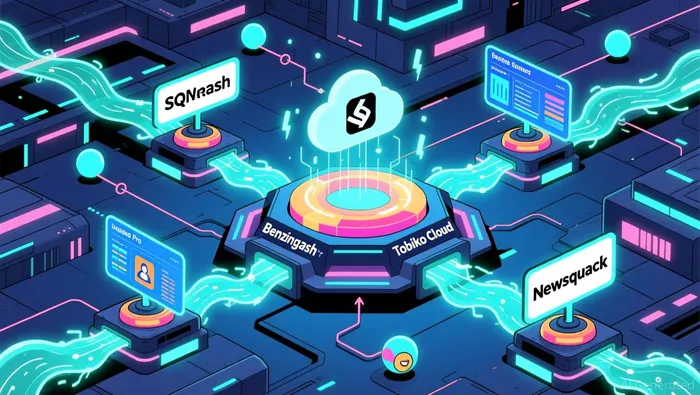
This strategic and technical pivot is now backed by a major investor. Beringer Capital's acquisition of a majority stake provides the capital and validation to accelerate this mission. Their partnership validates the vision that Benzinga's future lies not in content alone, but in becoming the data layer that empowers individual investors with the same sophisticated signals once reserved for professionals. The media company is becoming a platform.
Financial Model and Monetization Pathway
Benzinga's financial model is built on a clear duality. On one side is its established media platform, which commands a massive audience of nearly 25 million readers each month. This vast reach provides a powerful distribution channel and brand recognition. On the other side is its emerging data platform, which is designed for a higher-value, professional B2B segment. The company's pricing strategy reveals this ambition: its flagship Benzinga Pro service is priced at $197 per month, a premium tier that bundles real-time scanners, exclusive news feeds, and AI-powered analysis. This isn't a mass-market subscription; it's a targeted offering for active traders and professionals who demand speed and sophistication.
The monetization pathway, therefore, hinges on two parallel conversions. First, Benzinga must leverage its enormous reader base to convert passive consumers into paying users for its advanced data tools. The platform's features-like the real-time scanner and audio squawk streams-are explicitly marketed to professional traders, suggesting the company is engineering its content and user experience to funnel its audience toward these higher-margin services. The success of this internal conversion will determine whether Benzinga can scale its revenue per user beyond the traditional media model.
Second, and more critically for the platform play, Benzinga must monetize its proprietary datasets through external licensing. The collaboration with Newsquawk is the first major proof point, where Benzinga's Unusual Options Activity and Block Trades data are integrated into a rival platform. This represents a direct shift from selling a finished product to selling the raw, high-signal data inputs that power trading decisions. If successful, this B2B licensing model could create a more scalable and recurring revenue stream, independent of Benzinga's own user growth. The financial health of the company, now backed by Beringer Capital, will be tested on its ability to execute this dual strategy: converting its audience while simultaneously establishing its data as the essential, licensed infrastructure for other platforms.
Competitive Position and Execution Risks
Benzinga's platform play enters a competitive arena where quality is the only moat. The market for real-time trading data is crowded, with established players and new entrants vying for a slice of the professional trader's attention. Benzinga's success hinges entirely on the perceived exclusivity and actionability of its proprietary signals. Its collaboration with Newsquawk is a test of this thesis, as the rival platform is integrating datasets like Unusual Options Activity and Block Trades. For Benzinga, these aren't just features; they are the core assets that must consistently deliver institutional-grade insights to justify premium pricing and external licensing deals. If these signals are seen as merely incremental or easily replicable, the platform's value proposition unravels.
The most immediate risk, however, is execution on the foundational rebuild. The company's recent adoption of modern data infrastructure like SQLMesh and Tobiko Cloud was a necessary fix for a big mess of fragmented systems. While this creates the potential for a scalable platform, that potential remains unproven. The new architecture must now deliver reliable, low-latency data at scale-a critical requirement for real-time trading decisions. Any failure in performance or accuracy will damage credibility with both its internal user base and external partners, undermining the very platform it seeks to build.
This sets up a classic platform trap. The strategic shift demands significant upfront investment in technology and talent, with no guarantee of immediate returns. Benzinga is betting that by building a robust data layer first, it can then capture network effects as more platforms and users adopt its signals. But this path is fraught with uncertainty. The company must navigate the perilous gap between a costly technical build-out and the eventual realization of recurring B2B revenue and user conversions. Its recent capital infusion from Beringer Capital provides a runway, but it also raises the stakes for a successful execution that validates the high-risk pivot.
Catalysts and What to Watch
The strategic pivot is now live, but its success will be measured in concrete milestones over the coming quarters. Investors should watch for three key catalysts that will validate or challenge the platform thesis.
First, monitor for announcements of new data product launches or partnerships beyond the initial Newsquawk integration. The collaboration is a proof point, but the platform model requires a broader ecosystem. Look for evidence that Benzinga's proprietary trade and activity data is being licensed to other trading platforms, brokerages, or analytics firms. Each new partnership would signal that the company's datasets are becoming essential infrastructure, moving the revenue model further from pure media into scalable B2B licensing.
Second, track user growth and conversion metrics for Benzinga Pro and its data tools. The financial model depends on converting its massive audience of nearly 25 million readers into paying subscribers for high-value services. The premium tier, priced at $197 per month, bundles features like the real-time scanner and audio squawk streams. Success will be indicated by accelerating paid user growth, particularly within the Pro tier, and a rising average revenue per user. This internal conversion is the first step toward monetizing the platform's value before external licensing scales.
Finally, watch for financial results showing a shift in revenue mix toward data services and the scalability of the new infrastructure. The foundational rebuild with SQLMesh and Tobiko Cloud was a necessary fix for a big mess of fragmented systems. The new architecture must now demonstrate it can deliver reliable, low-latency data at scale-a critical requirement for real-time trading. Financial statements will reveal if the investment in this platform is beginning to pay off, with data licensing revenue growing and the cost structure supporting higher margins. The bottom line will show whether Benzinga's high-risk pivot is building a durable, scalable business or simply incurring costs without a clear path to returns.







Comentarios
Aún no hay comentarios