
Benzinga as a Catalyst: Analyzing Its News Feed for Event-Driven Trading Signals
For traders chasing event-driven opportunities, Benzinga's platform functions as a dedicated catalyst engine. The core of this setup is its app, which positions itself as a primary source for the fastest financial news and market data in a single, mobile-friendly interface. This real-time feed is the starting gun for identifying price-moving events before they fully register in broader markets.
The feed's power lies in its curated content. It delivers exclusive market moving stories that are classic catalysts for short-term trades. These include high-impact announcements like drug trial results and M&A deals, which can trigger immediate volatility and create clear entry or exit points. By being first with such news, Benzinga provides a critical informational edge.
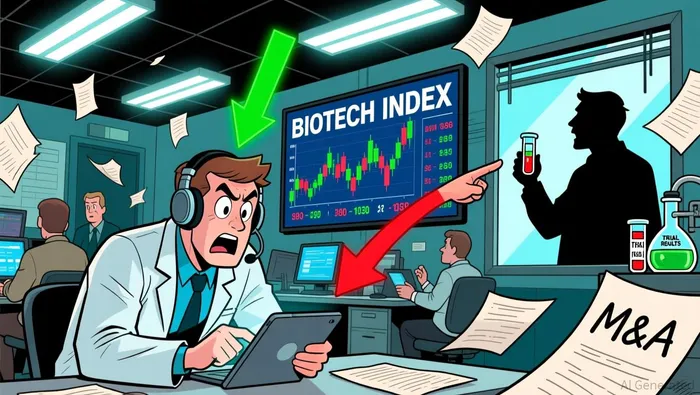
Beyond just delivering headlines, the platform includes specific features designed to turn news into action. The "Why is it moving" tool helps traders quickly parse the immediate cause behind a stock's price swing, cutting through noise. Meanwhile, stock alerts and watchlist news notifications automate the monitoring process, flagging potential catalysts the moment they break. This combination of timely exclusives and actionable tools creates a streamlined workflow for spotting and responding to event-driven price action.
Content Mechanics: Identifying the Signal vs. Noise
For event-driven traders, the Benzinga feed's value hinges on separating high-impact catalysts from the daily noise. The platform's promise as a most actionable financial research tool is only realized when users can filter its diverse content for events with the clearest price-moving potential.
One category that attracts significant attention is insider trading, particularly by public figures like members of Congress. Coverage of these trades, such as the recent purchases by Congressman Tim Moore in the microcap gene therapy stock Genprex, can create a short-term narrative. The story's appeal is clear: a top-performing lawmaker making concentrated bets in a tiny company. Yet the reliability of such signals is highly variable. While Moore's past performance is strong, the trade itself is a small and risky bet in a company valued at under $5 million. This creates a classic event-driven setup: high volatility potential but with a significant risk of being a speculative flash in the pan rather than a fundamental catalyst. The platform flags these stories, but the trader must weigh the potential reward against the inherent uncertainty of political insider moves.
More predictable catalysts come from scheduled corporate events, where Benzinga provides specific timelines and consensus expectations. The upcoming JPMorgan Chase earnings report on Tuesday, Jan. 13, 2026 is a prime example. The platform details the exact event date and cites analyst consensus for both earnings per share and revenue. This kind of forward-looking, quantified data is far more actionable than anecdotal insider news. It allows traders to build a clear setup: the stock is expected to report a sequential earnings increase, and the actual result will be the immediate catalyst for price movement. Similarly, the coverage of Citigroup's earnings on Jan. 14 provides the same structured event timeline. The key is that these are known, scheduled events with measurable expectations, not discretionary trades.
The bottom line is that Benzinga's content mechanics demand active filtering. The platform delivers both the "why is it moving" tool for breaking news and the detailed earnings previews for scheduled events. To exploit the feed effectively, a trader must prioritize the latter-events with a defined date, a consensus number, and a clear path to volatility-over the more speculative, narrative-driven stories. In a crowded news stream, that focus on high-impact, time-bound catalysts is what separates a signal from the noise.
Valuation and Setup: The Benzinga Pro Premium Model
The core question for any event-driven trader is whether the premium price buys a meaningful edge. Benzinga Pro's $46.99 monthly subscription is a significant cost, but it's designed to deliver a specific value: time-saving efficiency and curated, high-impact content. The service promises to save time, energy and screenspace without missing a beat, a critical advantage in a fast-moving market. Its key features-daily trade picks from professional day traders, a stock scanner trusted by the community, and live audio squawk channels-are built to streamline the process of finding catalysts and executing trades.
This setup creates a clear tactical advantage. Instead of manually sifting through the main feed for potential signals, a Pro subscriber gets expertly curated trade ideas and real-time audio updates that can be consumed passively. For a trader running multiple screens or managing a watchlist, this consolidation reduces cognitive load and the risk of overlooking a breaking story. The model works best for those who treat the feed as a primary source and need to act quickly on exclusives like drug trial results or M&A deals.
Yet the investment thesis faces a key risk: the premium content may not consistently outperform the free, market-moving stories available on the main feed. The core value of event-driven trading is the catalyst itself-the news that moves the price. If the exclusive stories flagged by Pro are not materially different in impact or timing from those breaking on the free platform, the $46.99 monthly fee becomes a cost for convenience, not a guaranteed alpha generator. The risk is that the subscription's value is more about workflow optimization than about uncovering a superior set of catalysts.
The bottom line is a trade-off between efficiency and edge. For a disciplined trader, the Pro model can be a powerful tool to systematize their event-driven approach and act faster. But the setup only works if the premium content delivers exclusives with a higher probability of creating significant volatility. If the edge is marginal, the subscription's cost erodes the potential returns from the very trades it's meant to facilitate.
Catalysts and Risks: What to Watch in the Benzinga Feed
For event-driven traders, the Benzinga feed is a double-edged sword. It provides a steady stream of potential catalysts, but navigating the content requires discipline to separate the truly actionable from the distracting. The key is to focus on specific types of stories that have a proven track record of triggering rapid price moves.
The most reliable catalysts are exclusive, high-impact announcements. Benzinga's promise to deliver exclusive market moving stories includes drug trial results and M&A deals, which are classic volatility drivers. More predictable are major earnings previews for large-cap stocks. The upcoming JPMorgan Chase earnings report on Tuesday, Jan. 13, 2026 is a prime example. When a company of that scale reports, the market's consensus expectations become a clear benchmark. A significant beat or miss against those numbers is the immediate catalyst for a sharp move. Traders should monitor the feed for any pre-earnings sentiment shifts or analyst downgrades that could set up a surprise.
The primary risk is over-reliance on the platform's curated picks without independent verification. The feed highlights daily trade picks from professional day traders and features commentary from well-known figures like Jim Cramer. Yet the track record of famous stock picks is mixed. As one analysis noted, the Inverse Cramer picks were up 60% in 2025 while Nancy Pelosi's picks were up 25%, suggesting that following popular advice can lead to crowded trades. If many traders act on the same Benzinga pick, the potential for a sharp move diminishes as the trade gets front-run. The risk is that the "most accurate analysts" or daily picks become a herd signal rather than an alpha source.
To cut through this noise, traders must pay close attention to the quality of the "why is it moving" explanations. This tool is critical for distinguishing between a temporary price swing and a fundamental catalyst. For instance, a stock popping on a small insider trade by a member of Congress may be noise, while a similar move on a scheduled earnings report is a signal. The feed's "Why is it moving" feature helps parse the immediate cause, but traders must ask whether the reason is material enough to justify a position. The bottom line is that the feed's value is highest when used to confirm a catalyst you've already identified through broader market analysis, not as a standalone signal generator.







Comentarios
Aún no hay comentarios