
Benton Resources' Strategic Acquisition of Noble Minerals' Island Pond Property and Its Implications for South Pond Gold Expansion
Strategic Land Consolidation in a High-Potential District
Newfoundland's central mining district has long been recognized for its polymetallic potential, with historical production of gold, copper, zinc, and silver. However, much of the region remains underexplored, particularly in areas adjacent to existing discoveries. Benton's acquisition of the Island Pond Property is a calculated step to capitalize on this untapped potential. The property's geological and geophysical similarities to the South Pond Gold Zone suggest continuity in mineralization, a hypothesis supported by prior drilling results that included 74.20 meters of 1.43 g/t Au, as reported in a GlobeNewswire release. By consolidating land along strike, Benton is positioning itself to test for extensions of its existing resources while mitigating dilution from external stakeholders.
The transaction terms further underscore the strategic value of this acquisition. For a relatively modest cash payment of $30,000 and the issuance of 1,000,000 common shares, Benton has secured full control of a property subject to only a 2% net smelter royalty (NSR), which it can buy back for $1.5 million. Additionally, the company retains a right of first refusal on Noble's 1% NSR, ensuring flexibility in managing future royalty obligations, according to a MarketBeat alert. These terms highlight the cost-effectiveness of land consolidation in a district where junior explorers often prioritize near-term discoveries over long-term land control.
Broader Industry Trends and Analyst Perspectives
Benton's move mirrors a growing trend among junior miners in Newfoundland to consolidate land positions ahead of major discoveries. Canterra Minerals, for instance, recently raised $2.0 million to fund drilling at its Wilding Gold Project, adjacent to Equinox Gold's Valentine Mine, as shown in a StockTitan filing. This financing underscores investor confidence in the district's potential, particularly as historical producers like Buchans and Duck Pond demonstrate the region's capacity for large-scale mineralization. Analysts have also flagged the strategic value of land holdings in Newfoundland, with reports noting that companies controlling contiguous, underexplored ground are better positioned to capitalize on district-scale discoveries.
The Island Pond acquisition aligns with this thesis. By securing a critical land parcel along the Great Burnt structural trend, Benton is addressing a key risk in exploration: the dilution of resource potential due to fragmented land ownership. This is particularly relevant in gold-copper districts, where mineralization often extends across multiple properties. As one analyst noted in a Yahoo Finance article, "The ability to control key structural corridors without third-party encumbrances is a rare advantage in junior mining, and Benton's acquisition provides exactly that."
Geological and Financial Synergies
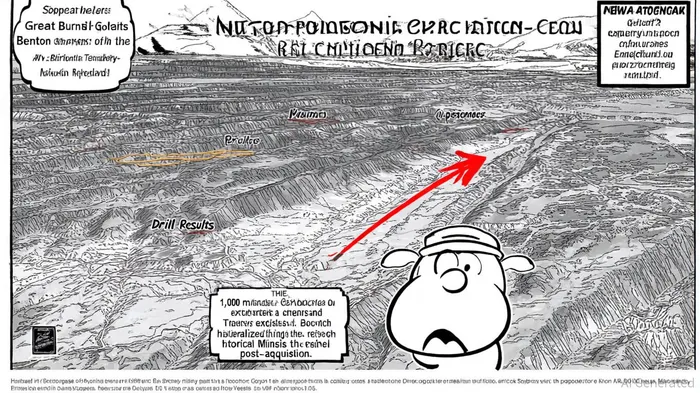
From a geological perspective, the Island Pond Property is strategically located to bridge Benton's South Pond Gold Zone and the broader Great Burnt Copper-Gold project. The property's proximity to existing drill results-such as the 43.75 meters of 1.62 g/t Au-suggests that the mineralized system may extend beyond currently defined boundaries . Immediate geophysical and prospecting work will be critical to validate this hypothesis, but the potential for a district-scale discovery is evident.
Financially, the acquisition is a low-cost bet on a high-reward scenario. At a cash outlay of $30,000 and a share issuance of 1,000,000 (valued at approximately $1.5 million based on Benton's recent share price), the total cost of the transaction is minimal compared to the potential upside of expanding a 2.7-kilometer mineralized trend. This aligns with Benton's broader strategy of prioritizing high-impact, low-cost exploration in underexplored regions.
Conclusion: A Model for Undervalued Land Consolidation
Benton Resources' acquisition of the Island Pond Property is a textbook example of strategic land consolidation in a gold-copper district. By securing a critical parcel at minimal cost, the company has enhanced its exploration potential while aligning with broader industry trends of capitalizing on underexplored ground. As Newfoundland's central mining district continues to attract attention from both juniors and majors, Benton's proactive approach positions it to benefit from a potential step-out discovery or even a district-scale expansion. For investors, this acquisition underscores the importance of evaluating junior miners not just for their current assets but for their ability to control undervalued land in high-potential corridors.







Comentarios
Aún no hay comentarios