
Belt and Road's New Frontiers: Asymmetric Growth in Latin America and Southeast Asia
The Belt and Road Initiative (BRI) is no longer a mere infrastructure play—it has evolved into a geopolitical chessboard where China’s economic heft is reshaping global supply chains, commodity demand, and technology ecosystems. For investors, the BRI’s pivot to the Global South presents asymmetric opportunities in overlooked sectors like Brazilian agribusiness, Southeast Asian ports, and AI-driven industrial collaborations. These markets are primed to thrive as Beijing’s diversification strategy mitigates U.S. trade risks. Here’s why you should act now.
Latin America: From Commodity Dependence to Lithium and Green Energy Leadership
Latin America’s BRI engagement has been overshadowed by Southeast Asia’s rapid growth, but this creates a buying opportunity. While investment volumes fell to a decade low in 2024 due to geopolitical headwinds, the region’s strategic minerals and agricultural bounty position it for a rebound in 2025.
Lithium and EV Supply Chains:
The “Lithium Triangle” of Chile, Argentina, and Bolivia holds 58% of global lithium reserves. BRI-backed projects here are critical to China’s EV ambitions. SQM (NYSE: SQM), a Chilean lithium giant, could see demand surge as BYD and CATL expand battery production in Asia.
Brazil’s Agribusiness Boom:
Brazil’s soy and beef exports to China have grown 30% since 2020, yet equity valuations remain depressed. Companies like JBS (NYSE: JBSS) and Bunge (NYSE: BG) benefit from direct BRI logistics investments, reducing trade friction with the U.S.Colombia’s Strategic Entry:
Colombia’s 2024 BRI accession opens doors to $1.2–$1.8 billion in 2025 projects, focusing on hydropower and mining. Look to local infrastructure firms like Ecopetrol (NYSE: EC) and Celsia, which could partner with Chinese SOEs like PowerChina.
Southeast Asia: The BRI’s Growth Engine
Southeast Asia’s BRI engagement grew 7% in 2024 to $25.1 billion, fueled by EV manufacturing, ports, and tech partnerships. This is where China’s “New Three” sectors—EVs, batteries, and renewables—are materializing fastest.
Indonesia’s EV Battery Hub:
BYD’s $1.3 billion EV battery plant in Indonesia epitomizes BRI’s tech-infrastructure hybrid. Investors should track PT Indonesia Battery (IDX: INDB), a joint venture with Chinese firms, which could become a regional battery giant.
Malaysia’s Digital Economy Play:
Malaysia’s $265 million BRI-backed tram project is a gateway to its $5 billion AI and digital economy pipeline. Malakoff Corp (Bursa: 5255), a power utility, and Tenaga Nasional (Bursa: TNB) are poised to benefit from green energy tie-ups with Chinese firms.Singapore’s Logistics Dominance:
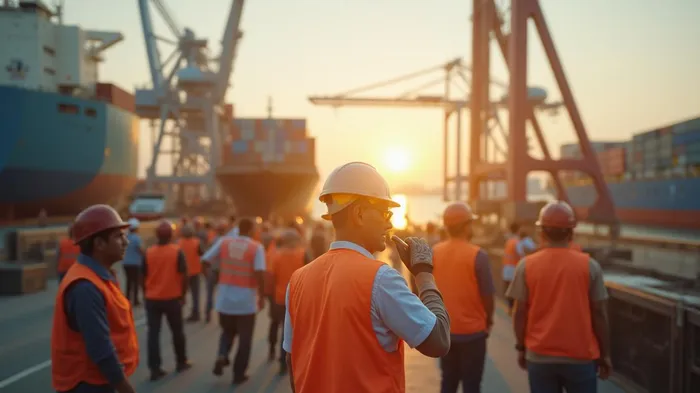
Singapore’s ports, managed by PSA International (SGX: TN7), handle 7% of global maritime trade. BRI’s focus on Southeast Asian logistics infrastructure makes this a defensive play against U.S.-China trade wars.
Tech Partnerships: The BRI’s Hidden Edge
Beyond commodities, BRI’s AI and robotics collaborations are underappreciated. In Vietnam, Chinese firms like Hikvision (SZSE: 002415) are building smart factories for electronics. Meanwhile, Malaysia’s “Two Countries, Twin Parks” initiative with China targets AI-enabled supply chains. Investors should monitor:
- Vietnam’s FPT Software (HNX: FPT) for cloud and AI contracts.
- Malaysia’s Telekom (Bursa: A102) for 5G partnerships with Huawei.
Mitigating U.S. Trade Risks
The U.S. has imposed 24–46% tariffs on Southeast Asian goods linked to China, but BRI’s diversification offers a hedge:
- Regional Supply Chains: Vietnam’s $150 billion trade surplus with China (2023) highlights its role as a manufacturing hub insulated from U.S. tariffs.
- Commodity Exports: Latin American agribusiness and Southeast Asian minerals are less exposed to U.S. trade restrictions than electronics.
Risks & Reality Checks
- Debt Sustainability: Laos and Cambodia’s BRI-linked debt/GDP ratios exceed 50%. Stick to firms with strong balance sheets.
- Geopolitical Volatility: The South China Sea disputes remain unresolved. Prioritize BRI equity plays in neutral markets like Colombia or Singapore.
Conclusion: Time to Deploy Capital
The BRI’s shift to the Global South is creating a two-speed world: while U.S.-centric sectors stagnate, these underfollowed markets are quietly building infrastructure, tech ecosystems, and commodity dominance. Investors who act now can capture asymmetric returns in:
- Lithium miners (SQM, BOLIVIA’s state-owned Yacimientos)
- Southeast Asian ports (PSA, Malakoff)
- AI-infrastructure plays (FPT, Telekom Malaysia)
The window to buy before these stories hit mainstream Wall Street is closing. The BRI’s next phase isn’t about China—it’s about how the Global South uses its resources and location to rewrite the rules of the global economy. Move quickly, or miss the boat.







Comentarios
Aún no hay comentarios