
Beiersdorf's Regulatory Crossroads: Pricing Power Under Fire?
The Swiss Competition Commission's (COMCO) ongoing investigation into Beiersdorf's pricing disparities between Switzerland and Germany has thrust the skincare giant into a regulatory crossroads. At the heart of the case: accusations that Beiersdorf exploits its market dominance to charge Swiss retailers like Migros up to 80% more for Nivea products than German competitors. The outcome could redefine Beiersdorf's profit margins, market strategy, and valuation.
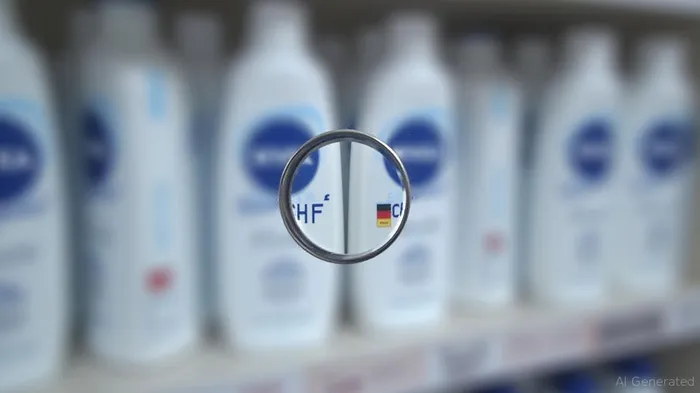
The Regulatory Stakes: A Test of Market Power
The case hinges on Switzerland's revised Federal Cartel Act (2022), which targets abuses of relative market power—even if a company doesn't hold an absolute monopoly. Migros alleges Beiersdorf's pricing strategy creates an unfair advantage by leveraging its position as a supplier to Swiss retailers dependent on its popular brands. If COMCO rules in Migros' favor, Beiersdorf could be forced to align Swiss prices with Germany's, directly compressing margins.
The company's skincare division, which accounts for ~50% of sales, already faces margin pressures from rising raw material costs and supply chain bottlenecks. A price adjustment in Switzerland—potentially extending to other markets—could amplify this strain.
Strategic Risks and Adaptation
Beiersdorf's pricing model relies on regional market segmentation, a strategy common in consumer goods. However, Switzerland's legal precedent could embolden retailers in other high-income markets (e.g., Scandinavia, Austria) to challenge similar disparities. The company's ability to pivot—such as negotiating tiered pricing or diversifying its product portfolio—will be critical.
Migros, a key partner, represents a double-edged sword. Losing its distribution could hurt sales, but Beiersdorf's market power means Migros may lack alternatives. The stalemate highlights a broader dilemma: balancing short-term profits with long-term regulatory resilience.
Valuation Implications: A Two-Track Outlook
- Bear Case (Adverse Ruling): Forced price adjustments in Switzerland could reduce EBIT margins by 1–2%, assuming 10% of skincare revenue comes from Switzerland. Multiplying this across potential global lawsuits could pressure the stock.
- Bull Case (Favorable Ruling): A victory would validate Beiersdorf's pricing strategy, potentially unlocking €50–100 million in annualized margin upside from its buyback program and operational efficiencies.
The stock has underperformed peers by ~5% YTD, pricing in some regulatory risk. However, a prolonged stalemate could deter investors until clarity emerges.
Investment Thesis: Wait for the Dice to Roll
Investors should hold Beiersdorf until COMCO's ruling—expected within 12–18 months—while monitoring margin trends and regulatory developments. A positive outcome could unlock upside, but a negative ruling demands a price target haircut of 10–15% to reflect margin erosion.
In the long term, Beiersdorf's success hinges on transforming its value proposition. Shifting from pure price differentiation to innovation (e.g., sustainability-focused products) could mitigate dependency on regional pricing gaps. Until then, this skincare giant remains a regulatory tightrope walker.
Final Take:
- Hold for now; wait for COMCO's decision.
- Sell if forced price adjustments become widespread.
- Buy only on a favorable ruling or significant margin expansion.
The era of unchecked regional pricing power may be ending—Beiersdorf's response will determine its next chapter.







Comentarios
Aún no hay comentarios