
Baytex Energy Corp (BTE): Strategic Efficiency, Debt Discipline, and the Energy Transition Path in Q2 2025
In Q2 2025, Baytex EnergyBTE-- Corp (BTE) has emerged as a compelling case study in the energy sector's evolving landscape. The company's strategic focus on operational efficiency, disciplined debt reduction, and early-stage energy transition initiatives positions it as a resilient player navigating both traditional and future-oriented energy markets. For investors, this trifecta of strengths offers a unique opportunity to assess a company that balances near-term profitability with long-term sustainability.
Operational Efficiency: The Foundation of Resilience
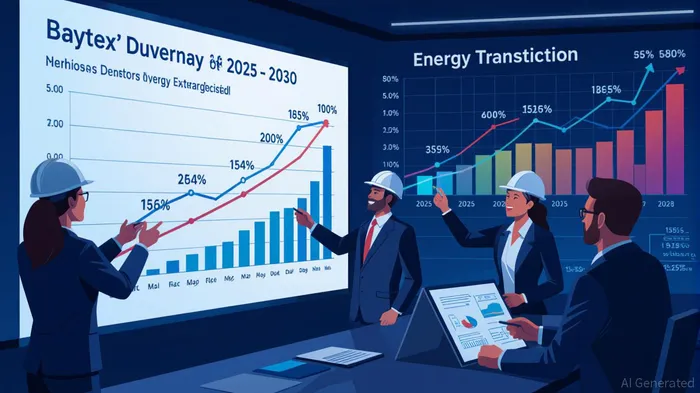
Baytex's operational improvements in Q2 2025 are nothing short of transformative. In the Pembina Duvernay, the company achieved record 30-day peak oil rates of 1,865 BOE per day per well, driven by enhanced drilling and completion techniques. These results underscore a 12% reduction in drilling and completion costs compared to 2024, with average well costs now at $12.5 million for a 12,500-foot lateral—equating to $1,000 per completed lateral foot. Such efficiency gains are critical in an industry where cost parity with competitors can determine market share.
In the Eagle Ford, Baytex's refrac program has proven equally impactful. The company identified 300 refrac opportunities, with initial projects delivering 963 BOE per day per well. Refracs are now 50% cheaper than new wells, enabling capital-efficient production growth. By targeting 6–10 refracs in 2026, Baytex is extending asset life while minimizing capital outlay—a strategy that aligns with its broader goal of maximizing returns in a low-commodity-price environment.
Debt Reduction: A Path to Financial Flexibility
Baytex's Q2 2025 results highlighted a 4% reduction in net debt, bringing it to $2.3 billion, supported by $96 million in debt reduction and the repurchase of $41 million in high-yield notes. The company's debt-to-EBITDA ratio of 1.1x is a stark improvement from previous years, reflecting disciplined capital allocation. With $1.1 billion in undrawn credit facilities maturing in 2029, Baytex has ample liquidity to weather volatility or fund new opportunities.
The company's forward-looking guidance is equally impressive. Based on forward strip pricing, Baytex expects $400 million in free cash flow for 2025, with 100% of this surplus allocated to debt reduction post-dividend payments. This strategy is projected to reduce net debt to $2 billion by year-end 2025, significantly improving its credit profile. For investors, this debt reduction not only lowers financial risk but also creates a buffer for future investments in the energy transition.
Energy Transition: Bridging the GapGAP-- to a Low-Carbon Future
While 84% of Baytex's Q2 2025 production remains oil and NGLs, the company is proactively positioning itself for the energy transition. Its distributed hydrogen model, leveraging renewable natural gas (RNG) as a feedstock, could produce carbon-neutral or even carbon-negative hydrogen. RNG blends exceeding 30% are particularly promising, aligning with global decarbonization targets.
Baytex's partnerships with carbon capture leaders further underscore its commitment to reducing emissions. Though no specific projects were announced in Q2, the company's strong balance sheet—bolstered by its $53 million in free cash flow—positions it to pursue greenfield opportunities or strategic collaborations. This forward-looking approach is critical in an industry where regulatory and market pressures for decarbonization are intensifying.
However, Baytex's energy transition is not without risks. The renewable diesel segment reported a $79 million operating loss in Q2 2025, highlighting the challenges of diversifying into lower-margin, emerging markets. Yet, the company's oil-weighted production model provides a financial cushion, ensuring cash flow stability as it experiments with new technologies. This balanced approach—prioritizing profitability while investing in the future—sets Baytex apart from peers who may overextend themselves in the transition.
Investment Analysis: A Strategic Buy for the Long Term
For investors, Baytex's Q2 2025 performance offers a compelling case for strategic investment. The company's operational efficiency and debt reduction efforts have created a robust financial foundation, while its energy transition initiatives position it to capitalize on future growth areas. Key metrics to monitor include:
- Production Growth: Baytex's Pembina Duvernay is projected to reach 20,000–25,000 BOE per day by 2029–2030, up from 6,665 BOE per day in Q2 2025.
- Debt Metrics: A continued reduction in net debt-to-EBITDA to below 1.0x by 2026 would signal strong balance sheet health.
- Energy Transition Progress: Partnerships in hydrogen and carbon capture, as well as RNG adoption rates, will determine the success of Baytex's long-term strategy.
Given these factors, Baytex appears undervalued relative to its peers. With a forward P/E ratio of 8.5 and a dividend yield of 3.2%, it offers both income and growth potential. However, investors should remain cautious about short-term volatility in oil prices and the risks associated with its renewable diesel segment.
Conclusion: A Company Built for the Future
Baytex Energy Corp's Q2 2025 results demonstrate a company that is not only surviving in a challenging energy landscape but thriving. By combining operational excellence, debt discipline, and a proactive approach to the energy transition, Baytex is creating a sustainable value proposition for shareholders. For investors seeking a balanced portfolio of resilience and innovation, BTE represents a strategic opportunity to participate in the evolution of the energy sector.





Comentarios
Aún no hay comentarios