
BASF's Profitability Challenges Amid Currency and Pricing Pressures: Assessing Long-Target Resilience and Strategic Adaptability in a Volatile Global Market
Currency Pressures and Hedging Strategies
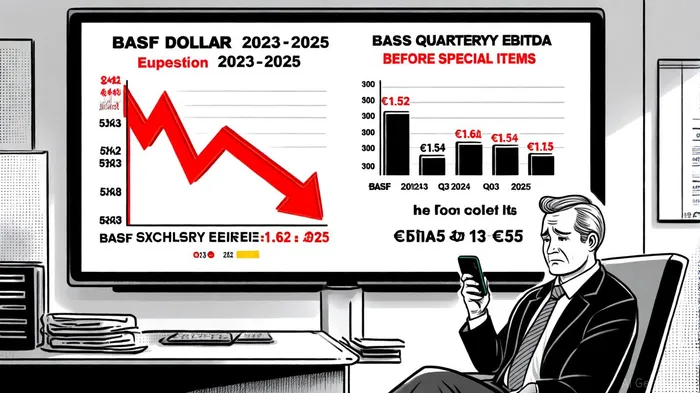
BASF's exposure to currency fluctuations has intensified as the euro weakened against the U.S. dollar, with the average exchange rate projected at $1.15 per euro in 2025, according to BASF's preliminary figures. This depreciation has eroded margins, particularly in the Chemicals segment, where pricing power remains constrained by oversupply in global markets, as reported by BodyShop News. To mitigate these risks, BASF employs a centralized hedging framework, leveraging derivative instruments such as foreign currency forward contracts and options to lock in exchange rates for planned transactions, as described in BASF's financial instruments note. For instance, in 2024, the company used currency options to hedge ¥7.6103 per euro and combined interest rate swaps to manage Polish zloty exposures, details the company's financial report. While these tools provide short-term stability, their effectiveness in a persistently volatile environment remains uncertain.
Pricing Pressures and Strategic Rebalancing
BASF's profitability has also been strained by falling prices, particularly in the Chemicals and Coatings segments. Sales in Q3 2025 fell to €14.3 billion, down from €14.8 billion in the prior-year period, as customer buying behavior remained cautious. The company's response has focused on portfolio optimization and capital reallocation. A landmark example is the sale of a majority stake in its coatings business to Carlyle Group, which generated €5.8 billion in cash, according to a MarketScreener report. This capital has been redirected into a share buyback program, with €1.5 billion allocated for repurchases starting in November 2025, the report says. Such moves aim to return value to shareholders while streamlining operations.
However, pricing pressures persist due to structural oversupply in commodity chemicals. BASF's EBITDA before special items in Q2 2025 fell to €1.77 billion from €1.96 billion in Q2 2024, reflecting the sector-wide challenge of maintaining margins, as BASF's preliminary figures indicate. To counter this, the company has integrated behavioral economics-driven pricing strategies, potentially enhanced by partnerships like Accenture's acquisition of Vocatus, reported by InvestorsObserver. These strategies aim to optimize pricing elasticity in volatile markets.
Market Diversification and Leadership Transition
BASF's "Winning Ways" strategy emphasizes geographic and sector diversification. The Zhanjiang Verbund site in southern China, a €10 billion investment, is expected to bolster its position in the Asia-Pacific region by 2025, according to BASF's progress update. Meanwhile, the Agricultural Solutions division is preparing for a minority IPO in 2027, signaling a shift toward unlocking value through partial divestitures, the update notes. Yet, progress in new markets has been uneven. For example, the sale of the Brazilian decorative paints business to Sherwin-Williams for $1.15 billion highlights the company's focus on core competencies, as BASF's progress update describes.
Leadership changes have also shaped BASF's strategic direction. Dr. Markus Kamieth's appointment as CEO in April 2024 followed Martin Brudermüller's departure, marking a pivot toward cost-cutting and operational efficiency, according to a MarketWatch report. Kamieth's tenure has coincided with the launch of Verdium™, a 100% recycled platinum group metal offering that reduces carbon emissions by 97% compared to mined materials, as noted in a GlobeNewswire release. This innovation aligns with BASF's sustainability goals and positions it to capitalize on the growing circular economy.
Long-Term Resilience: A Balancing Act
BASF's ability to withstand prolonged currency and pricing pressures hinges on its capacity to balance short-term cost discipline with long-term innovation. The company's revised EBITDA guidance for 2025-€6.7–7.1 billion-reflects a realistic assessment of macroeconomic headwinds, including slower global GDP growth and industrial production, as BASF's preliminary figures reflect. However, its commitment to returning €12 billion to shareholders by 2028 demonstrates confidence in its capital structure.
Critically, BASF's hedging strategies and market diversification efforts must evolve to address systemic risks. For instance, while forward contracts provide near-term stability, they may not offset prolonged currency volatility. Similarly, reliance on asset sales to fund buybacks could limit reinvestment in high-growth areas like battery materials or green hydrogen.
Conclusion
BASF's profitability challenges in 2025 highlight the fragility of even the most diversified industrial giants in a volatile global market. Yet, the company's proactive measures-ranging from advanced hedging techniques to strategic divestitures and sustainability-driven innovation-suggest a commitment to long-term resilience. Investors will need to monitor how effectively these initiatives translate into sustained profitability, particularly as geopolitical and macroeconomic uncertainties persist.







Comentarios
Aún no hay comentarios