
BASF's Hydrosulfite Unit Closure: Strategic Implications for Industrial Chemicals and Alternatives
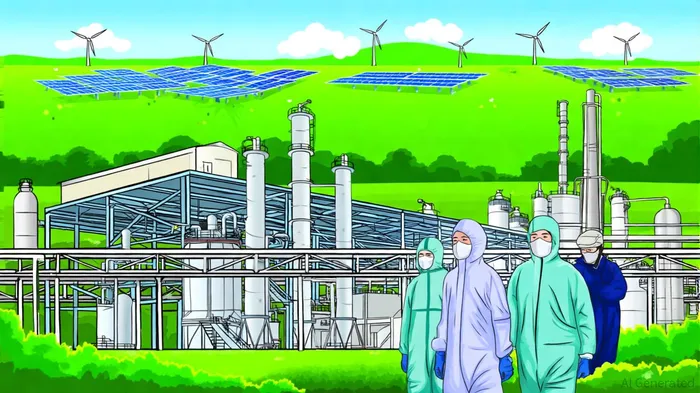
The recent closure of BASF's hydrosulfite production unit in Ludwigshafen marks a pivotal moment in the industrial chemicals sector, reflecting both the company's strategic recalibration and broader industry trends. Sodium hydrosulfite, a critical reducing and bleaching agent in textiles, pulp, and mining, has long been a niche but vital component of BASF's portfolio. However, the decision to exit this market underscores growing sector concentration risks and the imperative for chemical giants to diversify into sustainable, high-growth areas.
Market Concentration and Environmental Pressures
The global sodium hydrosulfite market, valued at USD 1.4 billion in 2025, is projected to grow at a 4.0% CAGR through 2035[1]. Despite this growth, the market is highly concentrated, with BASF, Transpek-Silox, and Chinese producers like Zhongcheng Chemical and Jinhe Group collectively controlling over 50% of global capacity[2]. BASF's dominance stems from its patented zinc recovery technology, which reduces production costs and environmental impact[3]. Yet, the sector faces headwinds: stringent regulations on chemical waste and a shift toward greener alternatives are pressuring players to innovate. For instance, the EU's Packaging and Packaging Waste Regulation demands higher recyclability standards, indirectly challenging traditional bleaching agents like sodium hydrosulfite[4].
Strategic Rationale for BASF's Exit
BASF's decision to exit the hydrosulfite business aligns with its broader "Winning Ways" strategy, which prioritizes profitability and long-term value creation[5]. The closure is part of a €2.2 billion annual cost-cutting program by 2026, targeting overcapacity and high energy costs at its Ludwigshafen site[6]. While the hydrosulfite unit's exact revenue contribution remains unspecified, its exit reflects a shift away from commoditized chemicals toward sustainable solutions. This move is emblematic of a sector-wide trend: chemical firms are divesting non-core assets to fund innovation in low-emission technologies and circular economy models[7].
Diversification into Sustainable Technologies
BASF's post-hydrosulfite strategy centers on three pillars: sustainable chemicals, industrial solutions, and green energy integration. Key investments include:
1. Zhanjiang Verbund Site: A €10 billion greenfield project in China, operational by 2025, powered entirely by renewable energy[8]. This site exemplifies BASF's pivot to sustainable production, leveraging China's growing demand for eco-friendly materials.
2. Green Hydrogen Production: A 1-ton-per-hour proton exchange membrane (PEM) electrolyzer at Ludwigshafen, reducing annual CO₂ emissions by 72,000 metric tons[9]. This aligns with the EU's push for decarbonization and positions BASF as a leader in hydrogen-based industrial processes.
3. Partnerships for Low-Carbon Solutions: Collaborations with Solvay and AkzoNobel to supply low-carbon aluminum chloride and biomass-balanced raw materials[10]. These partnerships underscore BASF's focus on reducing Scope 3 emissions while maintaining customer relevance.
Sector Concentration Risks and Opportunities
While BASF's exit mitigates exposure to a volatile niche market, the company's reliance on core regions like Europe and China introduces new risks. For example, high energy costs in Europe and geopolitical tensions in Asia could disrupt supply chains[11]. However, BASF's diversified portfolio—spanning 35% of global chemical sales—buffers against such shocks[12]. The company's TripleS 3.0 strategy, aiming for 50% of sales from "Sustainable-Future Solutions" by 2030, further insulates it from sector-specific downturns[13].
Conclusion: A Model for Chemical Industry Resilience
BASF's hydrosulfite closure is not a retreat but a calculated reallocation of resources. By exiting commoditized markets and investing in green technologies, the company is addressing sector concentration risks while aligning with global sustainability mandates. For investors, this strategy highlights the importance of evaluating chemical firms not just by current market share but by their agility in pivoting toward decarbonization and circularity. As the sodium hydrosulfite market evolves, BASF's focus on innovation and sustainability may serve as a blueprint for resilience in an increasingly regulated and competitive industry.







Comentarios
Aún no hay comentarios