
Barclays' Strategic Bet on Ubyx and the Future of Digital Money Infrastructure
Barclays' recent investment in Ubyx, a U.S.-based clearing system for tokenized deposits and regulated stablecoins, marks a pivotal moment in the evolution of digital money infrastructure. This move, the UK bank's first direct investment in stablecoin infrastructure, underscores a broader institutional shift toward tokenized finance and highlights the critical role of interoperability in bridging traditional and blockchain-based systems. By backing Ubyx, BarclaysBCS-- is not merely diversifying its portfolio-it is signaling confidence in a future where regulated digital money operates seamlessly across platforms, institutions, and geographies.
Interoperability: The Next Frontier in Tokenized Finance
The core value proposition of Ubyx lies in its focus on interoperability-a concept increasingly recognized as foundational to the scalability of tokenized assets. Ubyx aims to build a "globalised acceptance network" that connects disparate issuers, institutions, and blockchain wallets, enabling tokenized funds to be exchanged and redeemed at par value across multiple platforms. This aligns with a broader industry trend: in 2025, financial institutions are prioritizing technologies that eliminate silos between blockchain ecosystems and traditional financial systems. For instance, collaborations like Chainlink's integration with SWIFT demonstrate how tokenized fund transactions can leverage existing fiat payment rails to achieve seamless settlement.
Barclays' Head of Digital Assets and Strategic Investments, Ryan Hayward, emphasized that interoperability is key to unlocking the potential of digital assets. "Specialist technology will play a pivotal role" in enabling regulated financial institutions to interact seamlessly with tokenized money, he noted. This sentiment is echoed across the industry. Platforms like Securitize, which partnered with cross-chain protocol WormholeW--, are similarly advancing accessibility for digital assets, fostering mass adoption by ensuring compatibility across chains.
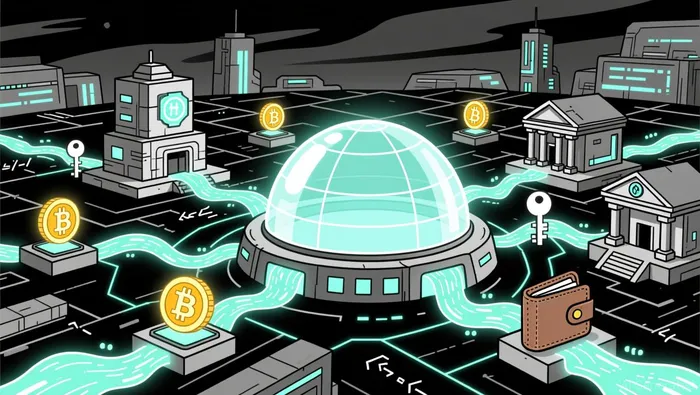
Barclays' involvement with Ubyx is emblematic of a larger trend: traditional financial institutions are increasingly allocating capital to early-stage infrastructure players that address interoperability and regulatory compliance. This shift is driven by the recognition that tokenized finance will require robust, institutional-grade systems to support real-world applications. For instance, BlackRock's tokenized products operate across multiple blockchains, highlighting the demand for scalable infrastructure that can handle diverse asset classes.
Moreover, the Middle East's emergence as a tokenization hub-particularly in Dubai and the UAE-further underscores the global demand for regulated digital money infrastructure. Proactive regulatory environments in these regions are accelerating real-world asset tokenization (RWA), with market forecasts predicting a trillion-dollar sector by 2030. Ubyx's focus on regulated stablecoins and cross-platform connectivity positions it to benefit from this growth, particularly as institutions seek solutions that align with both blockchain innovation and compliance requirements.
Conclusion: A Signal of Institutional Confidence
Barclays' investment in Ubyx is more than a strategic bet-it is a vote of confidence in the future of digital money infrastructure. By prioritizing interoperability and regulated frameworks, Ubyx addresses two of the most pressing challenges in tokenized finance: technical fragmentation and regulatory uncertainty. As traditional banks and institutional investors continue to explore blockchain-based solutions, the demand for infrastructure that bridges these gaps will only intensify.
For investors, the case for early-stage players like Ubyx is clear. These firms are not only shaping the technical architecture of the next financial era but also navigating the complex regulatory landscape that will define its success. With Barclays and other industry leaders backing this vision, the path toward a globally interconnected digital money ecosystem is gaining momentum.





Comentarios
Aún no hay comentarios