
Barbie's Price Hike: A Strategic Necessity or a Costly Gamble?
Mattel, the iconic toy maker behind the Barbie brand, has issued a stark warning: prices for its American-made toys could rise in the coming months. The move, driven by escalating tariffs on imports and inflationary pressures, has sparked debate over whether this strategy will safeguard profitability—or risk alienating price-sensitive consumers. Let’s dissect the data to understand the risks and opportunities ahead.
The Tariff Tsunami and Mattel’s Response
The U.S. government’s recent tariffs on imports from China, Mexico, and Canada—set to take effect in February 2025—pose a $270 million annual cost burden on MattelMAT--. To counter this, the company has unveiled a three-pronged plan:
1. Supply Chain Overhaul: Reducing reliance on China, targeting imports below 15% of U.S. shipments by 2026 (down from ~20% today).
2. Product Mix Adjustments: Routing cheaper Chinese-made goods to international markets while diversifying production to Vietnam, Mexico, and India.
3. Selective Price Hikes: Raising prices on select U.S. products, while keeping 40–50% of items under $20 to maintain affordability.
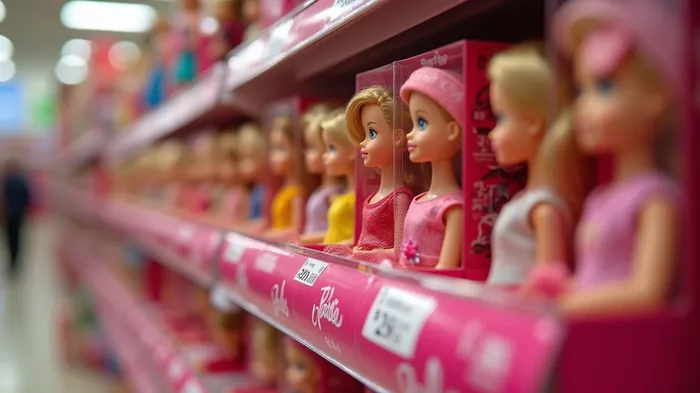
The company’s financial health offers a buffer: $1.24 billion in cash and a strong liquidity ratio (current assets/liabilities of 2.38) suggest it can weather near-term headwinds. However, the pause on full-year 2025 guidance—citing tariff and macroeconomic uncertainty—has unnerved investors, causing shares to dip 0.12% post-earnings despite beating Q1 estimates.
Financial Resilience Meets Strategic Gambles
Mattel’s 2024 performance reveals both strengths and vulnerabilities:
- Margin Improvements: Gross margin expanded to 50.8% (up 330 basis points from 2023), thanks to cost-cutting initiatives like its “Optimizing for Profitable Growth” program.
- Sales Slump in Core Brands: Barbie-driven Doll sales fell 8% in constant currency for the full year, while Latin America posted a 7% sales decline.
Analysts highlight the paradox here: while cost controls and margin gains are encouraging, the underperformance of flagship brands like Barbie raises questions about whether price hikes will further deter demand.
The Elasticity Test: Can Consumers Pay More?
The success of Mattel’s strategy hinges on consumer willingness to pay higher prices, particularly during the critical holiday season. Key risks include:
- Inflation Fatigue: Middle-income households, already strained by rising costs, may trade down to cheaper alternatives.
- Competitor Pressure: Private-label toys and rivals like Hasbro could capitalize on Mattel’s pricing moves.
- Execution Risks: Delays in supply chain reconfiguration (e.g., relocating 500 SKUs from China in 2025) could disrupt inventory and hurt sales.
CEO Ynon Krei’s confidence in “fully offsetting” tariff impacts through mitigation measures is tempered by analysts’ warnings about the “elasticity calculus.” Post-Labor Day POS data and Black Friday performance will be key litmus tests.
The Long Game: IP, Content, and Global Growth
Beyond immediate cost pressures, Mattel is doubling down on its IP-driven growth strategy:
- Content Partnerships: Licensing deals with Disney (Toy Story 5), Netflix (Hot Wheels Let’s Race), and DC Comics (Masters of the Universe sequel) aim to boost cross-platform engagement.
- Barbie’s 80th Anniversary: 2025 marks a rebranding opportunity, with new product lines and entertainment tie-ins to reignite demand.
The company’s Q1 2025 results offer a glimmer of hope: global retail inventory grew at a “high single-digit” pace (described as “appropriate” by management), while POS data showed double-digit growth across U.S. and international markets.
Conclusion: A Balanced Bet on Resilience
Mattel’s price hike warning is not merely a defensive move—it’s a calculated pivot to navigate a storm of tariffs and inflation. While near-term risks are real (stock volatility, holiday demand uncertainty), the company’s liquidity, margin improvements, and IP-driven pipeline position it to outlast smaller competitors.
Key data points reinforce this outlook:
- Cost Savings: The $80 million annual savings target (up from $60 million) and $200 million cumulative goal by 2026 will offset tariff impacts.
- Valuation: Trading at 10.3x forward P/E and 7.24x EV/EBITDA, Mattel remains undervalued relative to peers.
- Global Momentum: Asia Pacific sales grew 12% in Q1, signaling resilience outside the U.S.
Investors willing to endure short-term uncertainty may find value in Mattel’s long-term story. The critical question remains: Can Barbie’s price hike double as a price increase in shareholder confidence? The answer lies in execution—and the elasticity of American wallets.







Comentarios
Aún no hay comentarios