
Bankruptcy Sale Creates Rare Opportunity in Lithium Battery Recycling: Li-Cycle’s Undervalued Assets and Glencore’s Play
The lithium battery recycling sector is at a crossroads. As Li-Cycle Holdings Corp.LI-- navigates bankruptcy proceedings, its $40 million stalking horse bid led by Glencore has unveiled a rare chance for investors to secure stakes in critical recycling infrastructure and patented technologies at a fraction of their potential value. While the headlines focus on Li-Cycle’s struggles, beneath the surface lies an undervalued trove of assets positioned to capitalize on the EV supply chain’s insatiable demand for lithium, cobalt, and nickel.
The sale process, now under Canada’s Companies’ Creditors Arrangement Act (CCAA), centers on Li-Cycle’s operational facilities and intellectual property. At the core are its Germany Spoke (a fully operational recycling plant) and Rochester Hub project (a mothballed facility with 20,000 metric ton annual capacity), along with patents for mechanical black mass production—a key intermediate in battery recycling. These assets are being marketed as part of a Sale and Investment Solicitation Process (SISP), with bids due by June 12.
Why the Assets Are Undervalued—and Why That’s a Buying Opportunity
The $40 million stalking horse bid from Glencore (which holds a secured 66.7% stake via converted notes) sets a floor for the sale, but the true value lies in Li-Cycle’s patented recycling technology. While analysts have questioned the technical feasibility of Li-Cycle’s processes—particularly its ability to produce high-quality black mass—its IP could still command a premium.
Consider this:
- Battery recycling is a $50 billion market by 2030, with automakers like Tesla and Ford racing to secure supply chains.
- China dominates 80% of global lithium refining, creating urgency for Western firms to build domestic recycling capacity.
- Li-Cycle’s patents could enable buyers to leapfrog competitors in scaling up black mass production, a bottleneck in the EV supply chain.
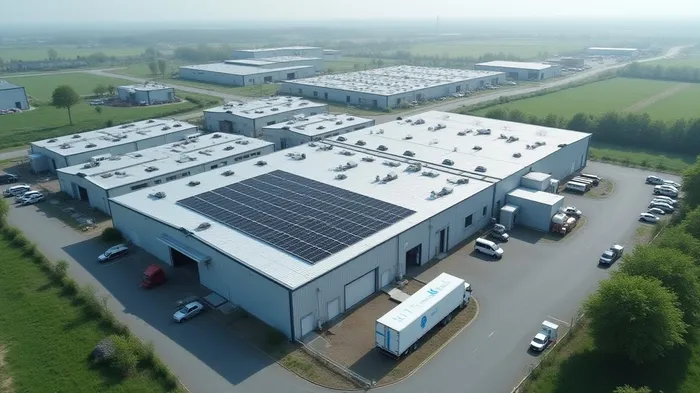
The physical assets themselves, while undervalued in the stalking horse bid, also hold strategic significance. The Germany Spoke is a functioning plant with proximity to Europe’s EV manufacturing base, while the Rochester Hub, if revived, could become a U.S. lithium hub. Even if the facilities’ current valuations are low due to paused construction or depreciated infrastructure, their potential to be repurposed or upgraded makes them a bargain in a sector where new lithium refining projects cost $500 million+.
The Glencore Play: A Strategic Move for Resource Dominance
Glencore’s bid isn’t a charity play. As the world’s largest diversified miner, it’s aggressively expanding into battery materials. By securing Li-Cycle’s IP and key facilities, Glencore gains a foothold in the closed-loop recycling space, where it can feed its own cobalt, nickel, and lithium into EV supply chains. This vertical integration could give Glencore a 10–20% cost advantage over competitors reliant on mined raw materials alone.
But Glencore’s bid isn’t a guarantee. The SISP is open to rival offers, and firms like Cirba Solutions (a recycling-focused SPAC) or Redwood Materials (backed by Tesla) could outbid it. For investors, the key is to act before the June 12 SISP deadline, when the true value of Li-Cycle’s assets will crystallize.
Risks: Operational Challenges and Market Realities
The risks are clear. Li-Cycle’s non-Germany/European facilities are being liquidated, and the Rochester Hub’s construction halt raises questions about its viability. Additionally, the lithium market’s current oversupply has depressed prices, potentially undermining asset valuations.
Yet these risks are already priced into Li-Cycle’s bankruptcy process. The $10.5 million debtor-in-possession (DIP) financing from Glencore ensures the Germany Spoke’s operation continues, preserving its value. Meanwhile, the DOE’s $32 million loan guarantee for the Rochester Hub (now paused) suggests the facility has strategic merit if resurrected.
The Bottom Line: A Rare Entry Point into the EV Supply Chain
The Li-Cycle sale is a once-in-a-decade opportunity to invest in the lithium recycling sector at a deep discount. The patents and facilities are undervalued in the stalking horse bid, but their strategic importance to EV manufacturers and miners is undeniable.
For investors with a 3–5 year horizon, this is a chance to:
1. Secure a stake in critical recycling IP that could be worth multiples of today’s valuation.
2. Benefit from lithium’s long-term structural demand as EV adoption hits 20% of new car sales by 2030.
3. Lock in exposure to Glencore’s or Cirba’s potential bids, which could trigger a valuation reset.
The May 22 court hearing to approve the DIP financing and extend the stay period is a key catalyst. If approved, the SISP will proceed, and bids will start flowing. For those willing to look beyond the bankruptcy headlines, Li-Cycle’s restructuring is a hidden gem in the EV supply chain’s next phase of growth.
Act now—or risk missing a generational opportunity in one of the most critical industries of the 21st century.





Comentarios
Aún no hay comentarios