
Bankless: Navigating the Volatile World of Memecoins in 2025 – Risk, Backers, and Capital Preservation
The 2025 cryptocurrency market has witnessed a seismic shift in investor behavior, with memecoins-once dismissed as internet jokes-now commanding billions in liquidity and institutional attention. Tokens like DogecoinDOGE-- (DOGE), Shiba InuSHIB-- (SHIB), and PepePEPE-- (PEPE) have defied traditional market correlations, outperforming even EthereumETH-- in certain periods. This divergence reflects a broader "selective altseason," where speculative assets tied to meme culture and social media sentiment dominate retail and institutional portfolios, according to an Ambcrypto article. However, the explosive growth of memecoins has also exposed critical risks, from governance gaps to regulatory uncertainty. For investors, the challenge lies in balancing the allure of high-reward opportunities with disciplined capital preservation strategies.
The Rise of Institutional and HNW Backers
Institutional investors, once wary of memecoins, have cautiously entered the space. By 2025, 68% of institutional portfolios include crypto exposure, with 1-2% allocated to memecoins, according to a memecoins-tracker analysis. Grayscale's launch of a Dogecoin-focused fund and U.S. asset managers' applications for ETFs tied to tokens like $TRUMP signal a growing acceptance of memecoins as speculative assets, as detailed in an Analytics Insight piece. High-net-worth individuals (HNWIs) have also embraced the trend, with projects like Little Pepe (LILPEPE) raising $26.38 million through presales and Arctic Pablo Coin leveraging gamified marketing to attract $2 million in investments, per a FinanceFeeds report. These developments underscore a cultural shift: memecoins are no longer just viral memes but structured ecosystems with utility-driven tokenomics and community governance.
Yet, institutional adoption remains fragmented. While some firms view memecoins as "cultural assets" with speculative momentum (see the CoinDesk guide), others reject them due to governance gaps and compliance risks. For example, Shiba Inu's attempt to introduce a DAO model has yet to meet traditional institutional standards for transparency, as noted in the Ambcrypto article. This duality highlights the tension between innovation and regulation in a market still grappling with its identity.
Risk Assessment: Liquidity, Governance, and Regulatory Gaps
The memecoinMEME-- market's volatility is both its strength and its Achilles' heel. Daily price swings exceeding 20% are common, with liquidity concentrated in a handful of tokens. For instance, SHIBSHIB-- and PEPE trade over $2 billion daily, rivaling mid-cap altcoins, according to the Ambcrypto article. However, this liquidity is often illusory, as extreme price swings-such as a 300% surge followed by a 70% retrace-expose the fragility of memecoin ecosystems, argues a Kenson Investments analysis.
Governance structures further complicate risk assessment. Unlike BitcoinBTC-- or Ethereum, most memecoins lack formal governance, relying instead on community campaigns or celebrity endorsements, a pattern covered in the Ambcrypto article. The $TRUMP coin case study exemplifies this: early investors captured most profits, while retail traders faced steep losses due to opaque tokenomics and transaction fee structures, as documented in a ResearchGate study. Regulatory scrutiny is another wildcard. With many memecoins lacking underlying cash flows, institutions face reputational and compliance risks, particularly in jurisdictions with evolving crypto laws - again a point raised by the Ambcrypto article.
Capital Preservation Strategies for Speculative Markets
Given these risks, investors must adopt tailored strategies to protect capital while participating in the memecoin boom. Key approaches include:
- Dollar-Cost Averaging (DCA): By investing fixed amounts at regular intervals, investors mitigate the risk of entering at market peaks. This strategy is particularly effective in memecoins, where price volatility is extreme, as explained in a Mevx guide.
- Diversification: Limiting memecoin exposure to 5-10% of a broader digital asset portfolio reduces the impact of potential losses. Blue-chip memecoins like DOGEDOGE-- and SHIB, with established communities, are preferable to newer, unproven tokens - a perspective echoed by a TradersOnTrend piece.
- Stop-Loss Orders: Automated sell orders at predetermined price thresholds help limit downside risk in fast-moving markets (the Mevx guide offers practical examples).
- Due Diligence (DYOR): Tools like DexTools and RugCheck.xyz are essential for assessing liquidity locks and identifying scams, as reported by the memecoins-tracker analysis. Investors should also evaluate tokenomics, community size, and utility-driven initiatives (e.g., decentralized exchanges or NFT integrations), topics also covered in the FinanceFeeds report.
- Regulatory Vigilance: Staying informed about regulatory changes is critical. For example, Binance's new liquidity risk analysis tools provide insights into market manipulation and insider advantages, highlighted in the ResearchGate study.
The Future of Memecoins: Cultural Assets or Speculative Time Bombs?
The 2025 memecoin landscape is a paradox: a market driven by internet culture and speculative fervor, yet increasingly scrutinized by institutions and regulators. While projects like LILPEPE and Arctic Pablo Coin demonstrate innovation in tokenomics and community engagement (noted in the FinanceFeeds report), the sector's long-term viability remains uncertain. For investors, the key is to treat memecoins as niche exposures within a diversified portfolio, balancing high-risk bets with conservative allocations to infrastructure tokens like Ethereum (see the CoinDesk guide).
As the market evolves, the line between cultural phenomenon and financial asset will blur further. Whether memecoins will cement their place in the crypto ecosystem or fade into the annals of internet history depends on their ability to address governance, utility, and regulatory challenges. For now, the mantra remains: speculate with caution, and preserve with discipline. 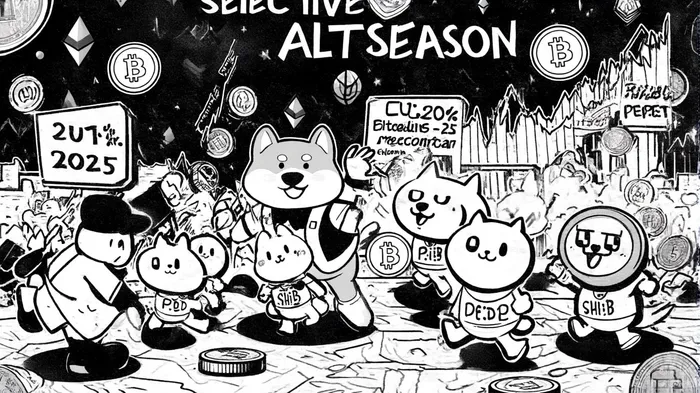






Comentarios
Aún no hay comentarios