
Banking Sector Volatility and Shareholder Reactions to M&A Outcomes: Strategic Missteps and Market Consequences
The banking sector's M&A landscape from 2023 to 2025 has been marked by turbulence, with strategic missteps and regulatory scrutiny reshaping shareholder value and market dynamics. High-profile failures, such as Toronto-Dominion Bank's $13.4 billion acquisition of First HorizonFHN-- and Kroger's $25 billion merger with Albertsons, underscore the fragility of large-scale deals in a high-interest-rate, highly regulated environment. These cases reveal how flawed strategies-ranging from inadequate regulatory preparedness to poor antitrust defenses-can trigger sharp stock price declines, lawsuits, and long-term reputational damage.
Strategic Missteps and Market Consequences
1. TD Bank-First Horizon: AML Scrutiny and Regulatory Paralysis
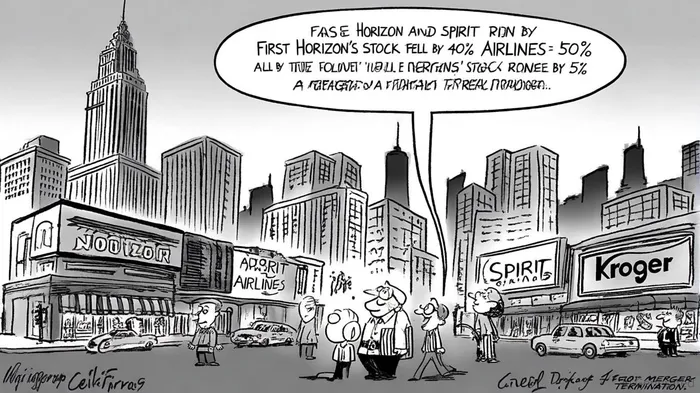
The collapse of TD Bank's $13.4 billion acquisition of First Horizon in May 2023 exemplifies how unaddressed regulatory concerns can derail even well-structured deals. U.S. regulators, including the Office of the Comptroller of the Currency and the Federal Reserve, delayed approval due to unresolved issues with TD's anti-money laundering (AML) practices, according to a Banking Dive report. This regulatory paralysis forced TD to withdraw its application, costing First Horizon a 40% single-day stock price drop and TD a $225 million termination fee, according to a Reuters report. The failure also highlighted the broader instability in the U.S. regional banking sector, exacerbated by the collapse of Silicon Valley Bank earlier in 2023, as noted in a CGAA analysis.
2. Kroger-Albertsons: Antitrust Overreach and Consumer Protection
The $24.6 billion Kroger-Albertsons merger, blocked by a federal court in late 2024, illustrates the growing antitrust vigilance under the Biden administration. The Federal Trade Commission (FTC) and eight states argued that the merger would reduce competition in 1,002 local markets, leading to higher prices and weakened labor bargaining power, as detailed in a National Law Review article. Despite Kroger's proposed divestiture of 579 stores, regulators deemed the plan inadequate, citing C&S Wholesale Grocers' lack of infrastructure to compete effectively, according to a ScienceDirect article. The court's ruling not only cost Albertsons a $600 million reverse termination fee but also set a precedent for stricter antitrust enforcement in the retail sector, as discussed in a Harvard Law Forum piece.*
Broader Market Impacts
Failed mergers have had quantifiable effects on shareholder value. For instance, the termination of the JetBlue-Spirit Airlines $3.8 billion merger in 2024 led to a 50% decline in Spirit's stock price, according to a Medium analysis. Conversely, acquirers sometimes benefited: Kroger's shares rose 5% after the Albertsons merger was blocked, as investors interpreted the termination as a relief from overpayment risks, based on a Cherry Bekaert report. These outcomes reflect the volatility inherent in M&A markets, where regulatory and strategic uncertainties can rapidly shift investor sentiment.
Regulatory scrutiny has also spurred a shift in banking strategies. In 2023, deal values in the sector fell by 36%, with banks prioritizing divestitures of noncore assets over large-scale consolidations, according to a Bain & Company report. For example, Deutsche Bank and Crédit Agricole pursued smaller, capital-light acquisitions (e.g., wealth management firms) to strengthen competitive positions without diluting capital, as observed in a Deloitte outlook.
Outlook and Strategic Adaptation
Despite these challenges, the banking sector has shown signs of recovery in 2025. Lower interest rates and easing regulatory scrutiny have spurred a resurgence in M&A activity, with 34 deals worth $1.61 billion announced in Q1 2025 alone, according to Cherry Bekaert. Banks are increasingly focusing on regional consolidation to achieve economies of scale, as seen in SouthState's $2 billion acquisition of Independent Bank Group, according to Bain & Company. However, the lessons from past failures remain critical: robust regulatory preparedness, transparent antitrust defenses, and alignment with market realities are now non-negotiable for successful deal execution.
Conclusion
The 2023–2025 M&A landscape in the banking sector serves as a cautionary tale of strategic missteps and their far-reaching consequences. From regulatory misjudgments to antitrust overreach, the fallout from failed deals has reshaped shareholder value, legal risk profiles, and industry strategies. As banks navigate a more cautious M&A environment, investors must remain attuned to the interplay of regulatory, economic, and strategic factors that define the sector's volatility.





Comentarios
Aún no hay comentarios