
M&T Bank's Series J Preferred Dividend: A High-Yield Opportunity or Rate-Driven Risk?
M&T Bank Corporation's recent announcement of its Series J Preferred Stock dividend, offering a 7.5% fixed yield, has drawn attention from income-focused investors. But with the Federal Reserve poised to cut rates later this year, the question remains: Is this a compelling investment, or does the non-cumulative structure and evolving bank sector dynamics create hidden risks?
The Series J Preferred Stock, which pays $187.50 annually per share ($0.46875 per depositary share), is non-cumulative—a critical detail. This means dividends are not owed to shareholders if M&T skips a payment, a risk that looms as the Fed navigates a tightening labor market and persistent inflation. While M&T's financial stability has been praised, the 7.5% yield must be weighed against broader macroeconomic headwinds.
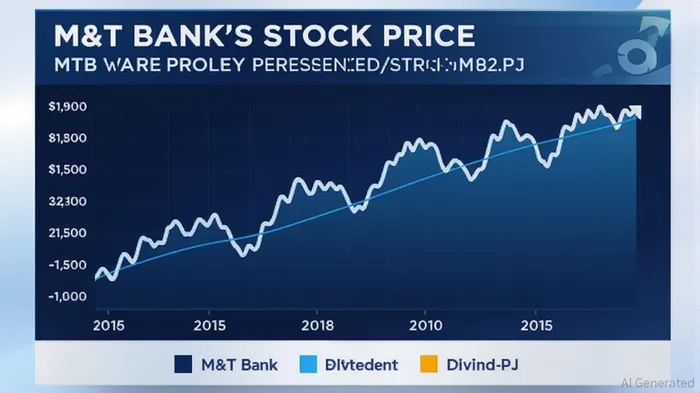
The Rate Cut Gamble
The Federal Reserve's hold on rates at 4.25%–4.5% through July 2025 signals caution, but two cuts by year-end are anticipated. For preferred stocks, this creates a dual dynamic:
1. Yield Competitiveness: Falling rates typically boost bond prices, but preferreds with fixed rates like Series J could see their yield-to-worst become more attractive if broader yields decline.
2. Bank Profit Pressures: Rate cuts reduce banks' funding costs, potentially easing net interest margin pressures. However, they also signal a weakening economy, which could limit dividend flexibility for banks like M&T.
Bank Sector Dynamics: Stability vs. Uncertainty
M&T's strong capital ratios and stable charge-off rates position it as a resilient player in a sector facing tariff-driven inflation and stagnant GDP growth. Yet, the Fed's “wait-and-see” stance on tariffs and employment data introduces uncertainty. Analysts like Fidelity's Andrew Garvey note that labor market softening—a key Fed trigger for cuts—could delay dividend-friendly policies.
The Case for Caution
While the 7.5% yield is enticing, Series J's non-cumulative structure and subordinate claim in bankruptcy (behind debt holders) raise red flags. Investors should also consider:
- Callable Risk: If rates drop sharply, M&T may redeem the shares early, capping upside.
- Sector Volatility: Preferred stocks underperformed in 2023 as rates rose; a reversal could now favor income assets—if the Fed delivers.
Investment Thesis: Proceed with Discipline
For income investors, Series J offers a high yield in a low-rate environment, but only if:
1. You can tolerate the non-cumulative risk.
2. You believe M&T's financial stability will outlast near-term macro risks.
3. You hold it as part of a diversified portfolio, not as a “set-it-and-forget-it” play.
The Bottom Line
M&T's Series J Preferred Stock is a high-reward, high-risk bet. The 7.5% yield is a standout in a 4%-5% rate environment, but investors must balance that against the Fed's uncertain path and the non-cumulative structure. For conservative investors, consider shorter-duration preferreds or corporate bonds with narrower credit risk. For those willing to take on the risk, Series J could be a tactical addition—but pair it with patience and diversification.
In an era of Fed uncertainty, the Series J dividend is a reminder: Income comes with a price—and that price is vigilance.







Comentarios
Aún no hay comentarios