
Bank of England's Regulatory Shift and Its Impact on Stablecoin Market Growth
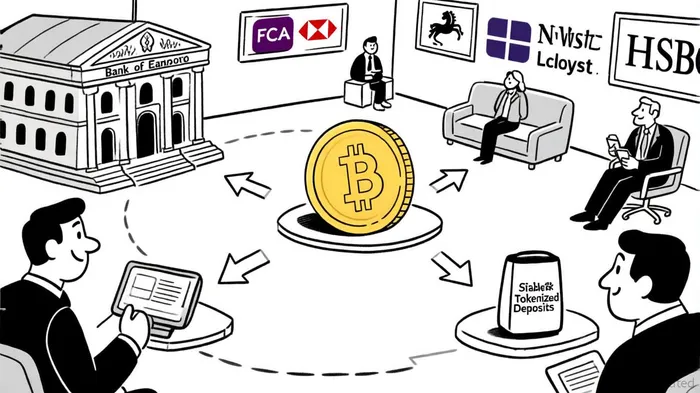
The Bank of England's (BoE) 2025 regulatory overhaul of stablecoins has sparked a seismic shift in the UK's fintech and digital asset landscape. By balancing innovation with financial stability, the BoE and Financial Conduct Authority (FCA) have introduced a framework that both restricts and nurtures the stablecoin market. This analysis explores the implications of these changes, identifies strategic investment opportunities, and evaluates the evolving role of tokenized deposits in the UK's financial future.
Regulatory Framework: A Dual Approach to Stability and Innovation
The BoE's 2025 proposals initially included strict caps on stablecoin holdings-£20,000 for individuals and £10 million for businesses-to mitigate systemic risks, according to a CoinDesk report. However, industry backlash led to a pragmatic pivot. By Q2 2026, the BoE announced exemptions for crypto exchanges and fintech firms, allowing larger reserves for liquidity and settlement, according to a Coinpedia article. This flexibility aligns the UK with the U.S. and EU, where stablecoin regulations are more permissive, per a Cointelegraph report.
The FCA's parallel efforts under the Financial Services and Markets Act 2000 mandate that stablecoins be fully backed by high-quality liquid assets held in statutory trusts, as noted in an Arnold Porter advisory. These measures aim to protect holders while fostering trust in the ecosystem. Meanwhile, the BoE's Digital Securities Sandbox has become a testing ground for stablecoin integration, signaling a commitment to innovation (Coinpedia also reported on the sandbox).
Market Reactions: Criticism vs. Pragmatism
Crypto groups have criticized the BoE's initial caps as overly restrictive, arguing they could stifle innovation and drive activity to jurisdictions like Singapore or Hong Kong, according to a Coin-Views post. However, the BoE's subsequent exemptions and sandbox initiatives suggest a willingness to adapt. Deputy Governor Sarah Breeden emphasized that these limits are temporary, designed to allow the financial system to adjust to stablecoin adoption (as she told Cointelegraph).
The regulatory clarity has also spurred a shift in focus toward tokenized deposits. Major UK banks, including HSBC, NatWest, and Lloyds, are piloting tokenized versions of customer deposits for payments and settlements, as reported by Reuters. This move reflects the BoE's skepticism toward stablecoins and a preference for tokenization as a safer, regulated alternative, according to Cryptopolitan.
Strategic Investment Opportunities
Compliant Stablecoin Issuers:
The FCA's requirement for stablecoins to be 100% asset-backed creates opportunities for firms with robust liquidity management. Projects like Quant-selected to deliver infrastructure for tokenized sterling deposits (GBTD)-are already benefiting from regulatory alignment, per a Quant press release. Investors should prioritize stablecoin platforms with transparent reserve audits and FCA authorization.Tokenization Infrastructure Providers:
The BoE's endorsement of tokenized deposits has accelerated demand for blockchain-based solutions. Fintech firms like Quant and EY are leading the charge, with Quant's programmable money platform enabling real-time transactions in the GBTD pilot, according to a Cointelegraph report https://cointelegraph.com/news/uk-finance-tokenized-sterling-deposits-barclays-hsbc-quant. These companies are well-positioned to capitalize on the UK's National Payments Vision.Fintech Adoption in Traditional Banking:
The collaboration between UK banks and fintechs is unlocking new revenue streams. For example, the GBTD pilot's focus on online marketplace payments and remortgaging processes could reduce transaction costs by up to 30%, according to a UK Finance press release. Investors should target fintechs with partnerships in major banking consortia.
Data-Driven Insights
Conclusion: Navigating the New Normal
The BoE's 2025 regulatory shift has created a nuanced environment for stablecoin and fintech investors. While initial restrictions raised concerns, the subsequent flexibility and focus on tokenization have opened doors for innovation. Strategic opportunities lie in compliant stablecoin platforms, tokenization infrastructure, and fintech-bank collaborations. As the FCA finalizes its rules by late 2026, investors must remain agile, leveraging regulatory clarity to target high-growth, low-risk ventures.






Comentarios
Aún no hay comentarios