
Bank of England’s Forecast Overhaul: A Defensive Investor’s Playbook in Volatile Markets
The Bank of England’s recent abandonment of rigid growth and inflation forecasts has ushered in an era of heightened policy uncertainty. With the central bank now prioritizing “data-dependent” decisions over long-term projections, investors face a landscape where traditional assumptions about monetary policy stability are crumbling. For defensive investors, this volatility presents both risks and opportunities—particularly in sectors sensitive to interest rates and inflation. Here’s how to navigate it.
The BoE’s New Reality: Forecasting in Fragile Times
The Bank of England’s March 2025 rate cut to 4.5%—its first since 2023—marked a stark pivot from earlier optimism. Growth forecasts were slashed to 1.0% for 2025, down from 2.0% just months prior, while inflation is now projected to rebound to 3.7% by mid-2025. But the bigger shift lies in how the BoEBOE-- now frames its outlook: instead of precise targets, policymakers emphasize “gradual and careful” adjustments, citing risks from U.S. tariffs, energy prices, and structural productivity gaps.
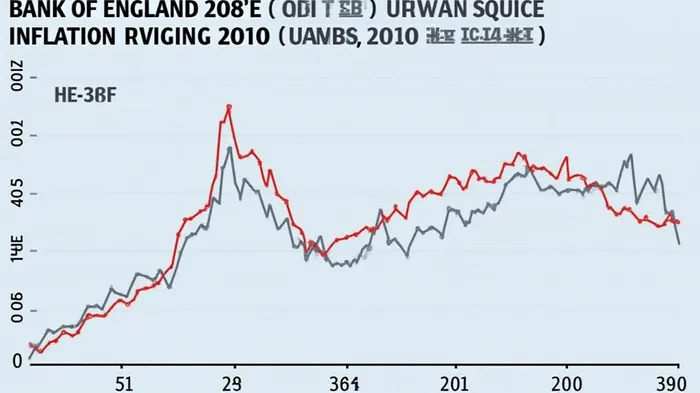
This de-emphasis on central forecasts signals a critical truth: policy uncertainty is here to stay. The BoE’s credibility has been dented by past errors, including its 2022 overestimation of inflation (projected 13.1% vs. actual 10.8%) and its failure to anticipate energy-driven inflation spikes post-2021. These mistakes, detailed in internal reviews, reveal systemic flaws in modeling supply chain disruptions and geopolitical shocks.
The Sector Divide: Winners and Losers in a Volatile Policy Environment
The BoE’s newfound ambiguity creates divergent paths for sectors:
1. Rate-Sensitive Plays: Utilities and Bonds
With the BoE signaling further rate cuts—potentially to 3.5% by early 2026—utilities and government bonds emerge as defensive anchors.
- Utilities: Companies like National Grid (NG) or SSE benefit from stable cash flows and regulated pricing, making them less sensitive to economic swings. Their low beta (volatility) and dividends make them ideal for hedging equity exposure.
- Bonds: The BoE’s downward rate trajectory supports gilt prices. Short-term gilts (<5 years) offer safety, while inflation-linked bonds (ILGs) protect against the BoE’s inflation rebound risks.
2. Equity Risks: Fragile Growth and Policy Whiplash
Equities reliant on clear policy signals—such as consumer discretionary stocks or housing developers—are vulnerable. The BoE’s fragmented guidance (e.g., “judge meeting by meeting”) amplifies uncertainty about future rate paths, deterring investors in sectors tied to borrowing costs.
- Consumer Discretionary: Retailers likeocado or Tesco face headwinds from stagnant wage growth and energy price pressures, compounded by BoE uncertainty.
- Construction/Real Estate: Developers such as Berkeley Group depend on stable mortgage rates. With BoE policy now “data-driven,” any inflation surprise could trigger abrupt rate hikes, destabilizing housing markets.
Hedging Strategies for the New Volatility Regime
To capitalize on this environment, investors must adopt a multi-pronged approach:
A. Inflation-Protected Assets
- TIPS (Treasury Inflation-Protected Securities): U.S. Treasury equivalents like the iShares TIPS ETF (TIP) offer inflation-adjusted principal.
- Commodity Exposure: Gold ETFs (e.g., GLD) or energy stocks (e.g., BP) hedge against BoE’s inflation rebound scenarios.
B. Short-Term Liquidity
- Cash Reserves: Maintain 10–15% in high-yield savings accounts or money market funds to capitalize on potential BoE rate cuts.
C. Sector Diversification
- Utilities: Allocate 20% to utility stocks or ETFs (e.g., XLU).
- Inverse Rate ETFs: Tools like ProShares Short 20+ Year Treasury (TBF) profit from BoE-driven gilt fluctuations.
Why Act Now?
The BoE’s forecast overhaul isn’t just about numbers—it’s a seismic shift in policy communication. With the central bank explicitly acknowledging “significant uncertainty” in its Economic and Fiscal Outlook, investors can no longer rely on past trajectories. Historical errors—from 2021’s inflation underestimation to 2022’s overestimation—show how quickly policy can falter.
Defensive investors must act decisively:
- Lock in yields on bonds before further rate cuts erode prices.
- Position for inflation through commodities and ILGs.
- Avoid overexposure to equities tied to fragile growth assumptions.
Conclusion
The Bank of England’s new era of policy ambiguity isn’t a temporary phase—it’s the new normal. For defensive investors, this means abandoning old playbooks and embracing strategies that thrive in uncertainty. Rate-sensitive assets, inflation hedges, and liquidity buffers are the keys to navigating this volatile landscape. The BoE’s forecast overhaul isn’t just a risk—it’s a roadmap for those willing to act before the next shock hits.
Invest now, or risk being left behind.





Comentarios
Aún no hay comentarios