
Bank of England Expected to Hold Rates at 4.50% Amid Inflation and Economic Slowdown
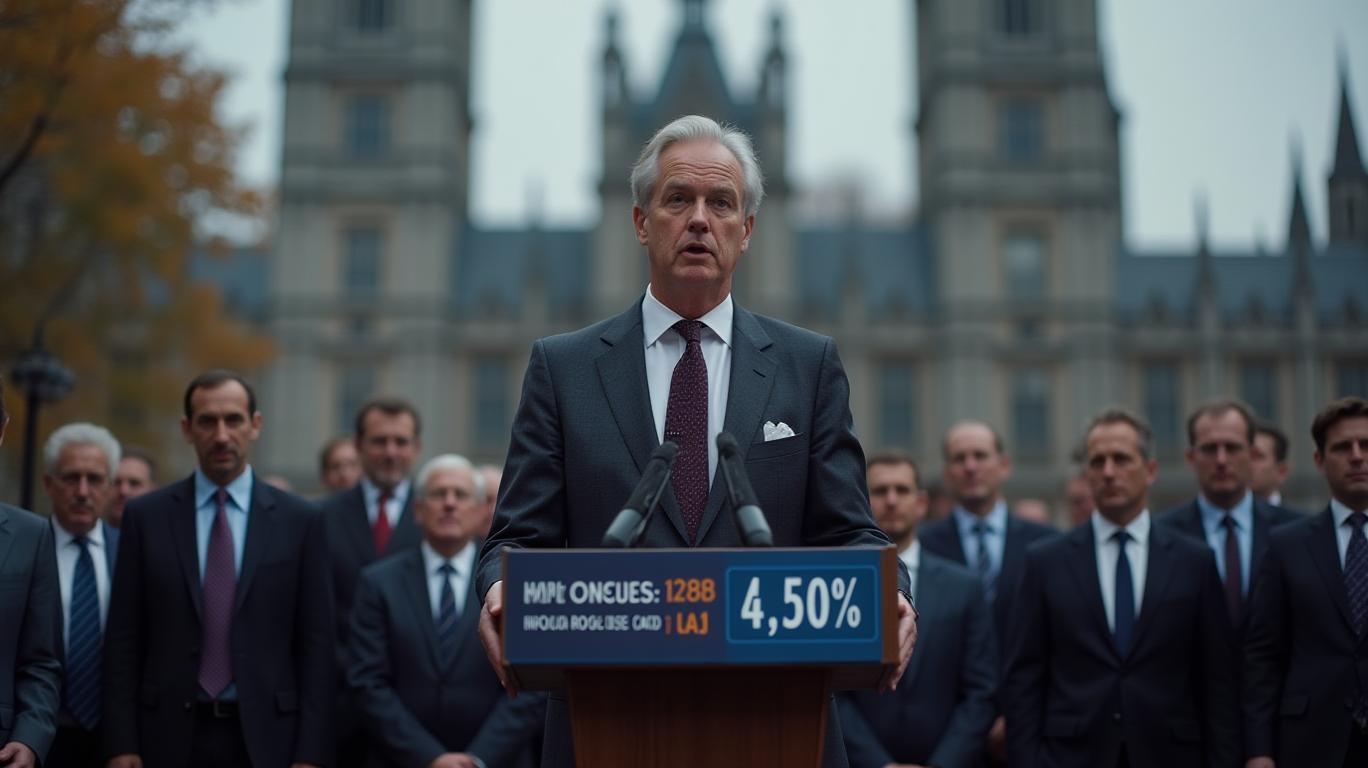
The Bank of England (BoE) is widely anticipated to maintain its benchmark interest rate at 4.50% during its upcoming monetary policy meeting, mirroring the Federal Reserve's recent decision to pause rate cuts. This decision comes against a backdrop of persistent inflation and a slowing UK economy. The BoE's cautious approach to rate adjustments reflects the uncertainty surrounding global economic conditions and the need to balance inflationary pressures with potential economic slowdown.
The BoE's Monetary Policy Committee (MPC) has been deliberate in its approach, with Governor Andrew Bailey emphasizing a "gradual and careful" strategy to rate adjustments. This cautious stance is expected to be reiterated in the upcoming meeting, with the BoE focusing on providing clear forward guidance to manage market expectations. The BoE's decision to hold rates steady is part of a broader trend among major central banks, which have been cautious in their approach to rate cuts in response to global economic uncertainty.
Economic data released recently has shown mixed signals. While inflation remains above the BoE's target, with headline inflation rising to 3.0% in January from 2.5% in December, economic growth has shown signs of slowing. The UK's Gross Domestic Product (GDP) shrank by 0.1% in January, and industrial and manufacturing production data have also been downbeat. These factors suggest that the BoE may need to consider further rate cuts in the future to support economic growth, despite the current pause.
Nomura Securities economist George Buckley predicted that the central bank will keep interest rates unchanged in March, cut rates again in May, and then cut rates "at every meeting from here to February 2026 (including February 2026), with the terminal rate at 3.5%." This prediction underscores the potential for further rate cuts in the future, as the BoE continues to monitor economic developments closely.
The BoE's decision to hold rates steady is expected to have a limited impact on the British Pound (GBP), as investors have already priced in this outcome. However, any deviations from the expected decision or significant changes in the BoE's forward guidance could lead to volatility in the currency markets. Investors will closely monitor Governor Bailey's remarks for any hints on the future direction of monetary policy.
The UK economy has been much weaker than the US, with flat growth in the third quarter and a mere 0.1% growth in the fourth quarter, barely avoiding a recession. Concerns about global economic growth, including the impact of the Russia-Ukraine conflict and the impact of Trump's tariffs, are affecting the UK. The government led by Prime Minister Stamer has been working hard to restore confidence among consumers and businesses in the outlook.







Comentarios
Aún no hay comentarios