
Bangladesh's Textile Sector: A Race Against Tariffs for Duty-Free Access
The Bangladesh textile and garment industry, a cornerstone of its economy, faces a pivotal moment as it seeks to secure duty-free access for cotton-based garments in the U.S. market. With the U.S. imposing escalating tariffs—up to 37% by 2025—the sector’s survival hinges on diplomatic wins and strategic shifts.
The Tariff Threat and Its Economic Impact
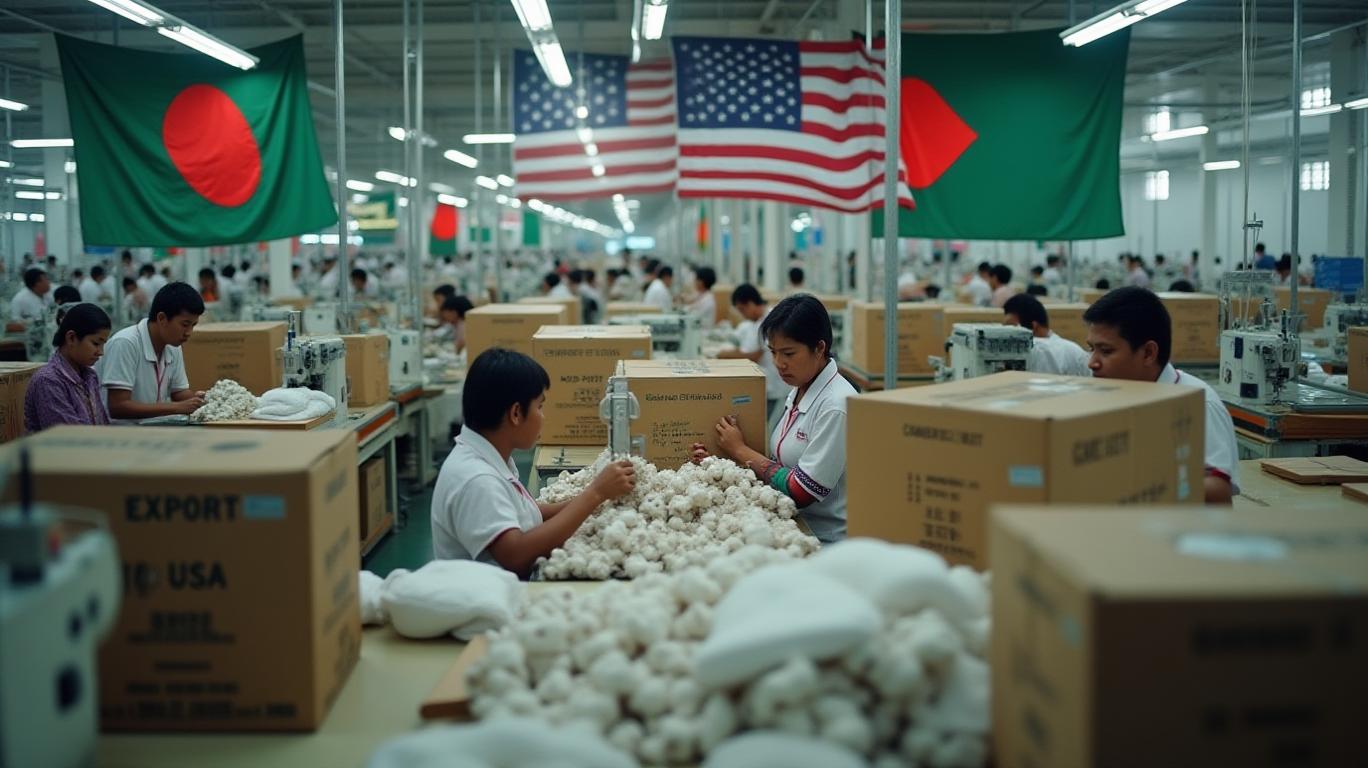
Bangladesh’s garment industry accounts for 87% of its exports to the U.S., employing over 4 million workers, mostly women. The U.S. tariffs, initially set at 10% under the "reciprocal tariff" policy, were slated to jump to 37% in July 2025. While delayed, the uncertainty has already caused a 17.68% decline in Q1 2025 exports, as U.S. buyers shift orders to lower-tariff nations like Vietnam and Cambodia.
VF Corporation, a major U.S. apparel buyer, saw its stock dip 5% in early 2025 amid rising supply chain costs—a sign of the sector’s sensitivity to tariff-driven disruptions.
Bangladesh’s Bold Play: Duty-Free Access for Cotton Garments
To counter the tariff threat, Bangladesh has proposed a strategic exchange: zero tariffs for garments made with U.S. cotton. Key components of this push include:
1. U.S. Cotton Dependency: Bangladesh aims to quadruple its U.S. cotton imports (from $270 million in 2024 to $1.1 billion) by establishing a dedicated central depot for storage and distribution.
2. Diplomatic Overtures: A 12-member delegation from the Bangladesh Textile Mills Association (BTMA) is engaging U.S. policymakers and the National Cotton Council to formalize this trade-off.
3. Balancing the Trade Surplus: Bangladesh’s $5.1 billion trade surplus with the U.S. (as of 2024) has drawn criticism. The proposal offers to expand zero-tariff access to 100 new U.S. goods, reducing the imbalance.
Risks and Competitors in the Global Marketplace
While Bangladesh’s low production costs (Unit Value Realization of $14.86/kg) and revealed comparative advantage (RCA: 27.36) give it an edge over China, the tariff threat looms large. Competitors like Vietnam, which faces only 15% tariffs, are already poaching orders.
Vietnam’s lower tariffs and proximity to Chinese suppliers make it a formidable rival. Bangladesh’s 37% tariff risk could push buyers further into Vietnam’s favor, eroding its $23 billion cumulative investment in textiles.
The Path Forward: Negotiations and Innovation
- Diplomatic Success: Securing duty-free status for cotton garments would stabilize Bangladesh’s export revenue, which contributes 56% of its current account earnings.
- Market Diversification: Expanding exports to the EU, Japan, and Gulf countries (already accounting for 18% of RMG exports) offers a buffer against U.S. tariffs.
- Sustainability and Automation: Bangladesh’s 192 LEED-certified green factories and investments in automation could attract ethically conscious buyers, even under tariffs.
Conclusion: A High-Stakes Gamble with Global Implications
Bangladesh’s textile sector stands at a crossroads. If it secures duty-free access for cotton garments, it could lock in its position as the U.S.’s second-largest apparel supplier, sustaining 4 million jobs and $7.6 billion in annual exports. However, failure risks a collapse in competitiveness, with workers and investors bearing the brunt.
The stakes are clear: $270 million in U.S. cotton imports today could become $1.1 billion in trade, or the sector could lose 17% of its U.S. market share by mid-2026. For investors, Bangladesh’s outcome will ripple through global supply chains, reshaping the $3 trillion apparel industry. The next 12 months will determine whether this nation’s textile miracle endures—or unravels.







Comentarios
Aún no hay comentarios