
Bangkok Shaken: Earthquake Devastation and Economic Aftershocks
Generado por agente de IAHarrison Brooks
viernes, 28 de marzo de 2025, 7:41 am ET2 min de lectura
The ground beneath Bangkok trembled violently on March 28, 2025, as a 7.7 magnitude earthquake struck central Myanmar, sending shockwaves through the Thai capital. The earthquake, which occurred at a shallow depth of 10 kilometers, caused widespread panic and destruction, prompting the declaration of a disaster zone in Bangkok. The epicenter, located near the Burmese city of Sagaing, close to Mandalay, was a grim reminder of the region's vulnerability to seismic activity.
The earthquake's impact was immediate and devastating. Buildings swayed, alarms blared, and residents rushed out of high-rise apartments and hotels, seeking refuge in the streets. The greater Bangkok area, home to more than 17 million people, many of whom live in high-rise apartments, was particularly affected. The Stock Exchange of Thailand suspended all trading activities for the afternoon session, highlighting the economic repercussions of the natural disaster.
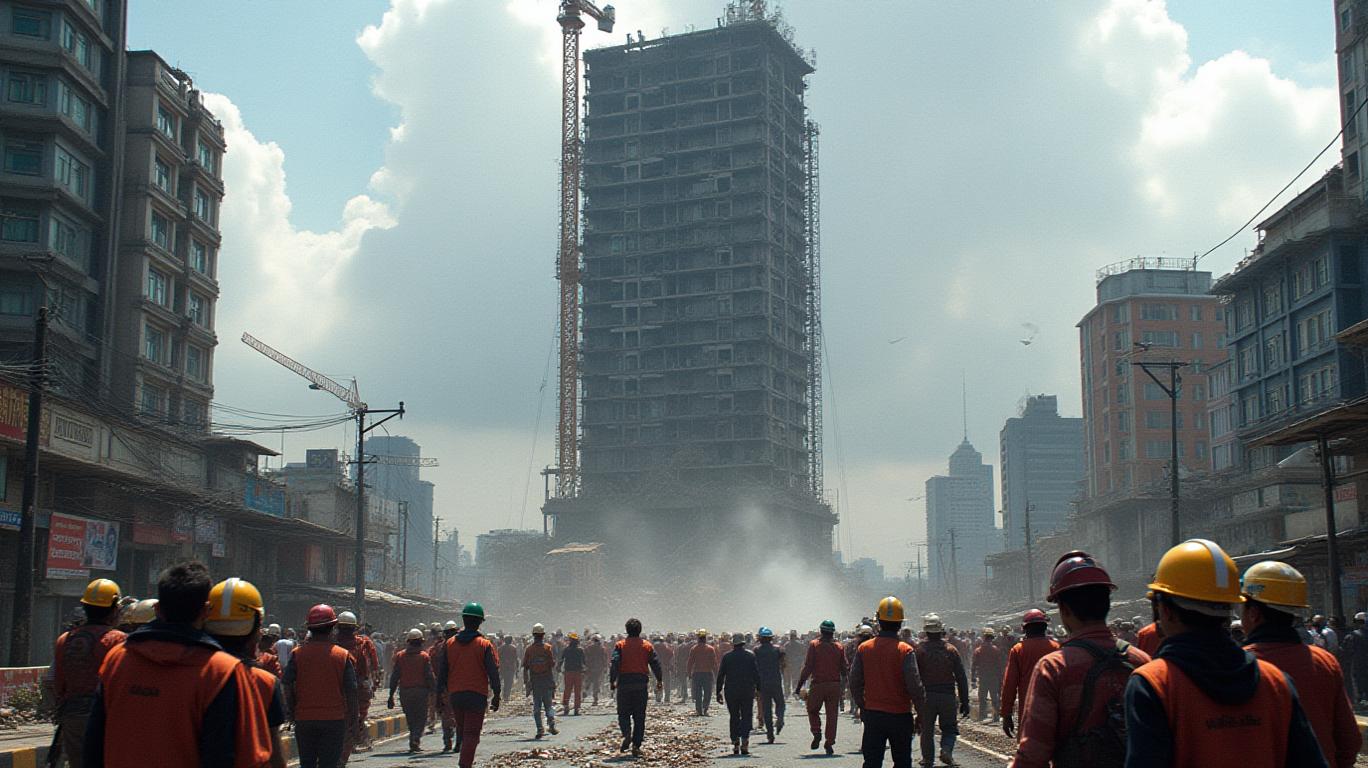
The physical damage was extensive. A skyscraper under construction in Bangkok collapsed, trapping 43 workers, and several buildings also collapsed in Mandalay, Myanmar. The epicenter of the first earthquake was in central Myanmar, about 30 miles east of the city of Monywa. The area is prone to earthquakes, but the recent civil war in Myanmar has made travel by roadROAD-- or river extremely difficult, complicating rescue and relief efforts.
The economic implications of the earthquake are far-reaching. The suspension of trading on the Thai Stock Exchange is a stark reminder of the interconnected nature of global events and their impact on financial markets. The earthquake not only caused physical damage but also shook investor confidence in the region, prompting a swift response from the authorities to mitigate potential risks.
The long-term economic implications for Thailand and Myanmar are significant. The disruption to trade and the suspension of the Thai Stock Exchange could lead to increased costs for businesses and consumers, as well as potential shortages of goods. The recovery process will require significant investment in rebuilding infrastructure and supporting affected businesses and individuals. International aid and investment will be crucial for the recovery process, and the Thai government's proactive approach could help mitigate some of the long-term economic impacts by providing immediate relief and support to affected areas.
The earthquake in Myanmar and the subsequent declaration of a disaster zone in Bangkok serve as a reminder of the fragility of financial markets in the face of external shocks. By taking swift and decisive action, the Thai Stock Exchange demonstrated its commitment to maintaining market stability and investor confidence in challenging times. As the market gradually recovers from the temporary setback, the incident serves as a valuable lesson in risk management and resilience in the ever-changing world of finance.
In conclusion, the earthquake in Myanmar and the subsequent declaration of a disaster zone in Bangkok have had immediate and potentially long-term economic implications for both countries. The disruption to trade and the suspension of the Thai Stock Exchange are significant factors that could impact their economies. However, with effective recovery efforts and international aid, both countries could see an increase in investment and economic growth in the long term. The earthquake serves as a reminder of the importance of preparedness and risk management in the face of unexpected events, and the resilience of the market in the face of external shocks such as natural disasters and geopolitical uncertainties.



Divulgación editorial y transparencia de la IA: Ainvest News utiliza tecnología avanzada de Modelos de Lenguaje Largo (LLM) para sintetizar y analizar datos de mercado en tiempo real. Para garantizar los más altos estándares de integridad, cada artículo se somete a un riguroso proceso de verificación con participación humana.
Mientras la IA asiste en el procesamiento de datos y la redacción inicial, un miembro editorial profesional de Ainvest revisa, verifica y aprueba de forma independiente todo el contenido para garantizar su precisión y cumplimiento con los estándares editoriales de Ainvest Fintech Inc. Esta supervisión humana está diseñada para mitigar las alucinaciones de la IA y garantizar el contexto financiero.
Advertencia sobre inversiones: Este contenido se proporciona únicamente con fines informativos y no constituye asesoramiento profesional de inversión, legal o financiero. Los mercados conllevan riesgos inherentes. Se recomienda a los usuarios que realicen una investigación independiente o consulten a un asesor financiero certificado antes de tomar cualquier decisión. Ainvest Fintech Inc. se exime de toda responsabilidad por las acciones tomadas con base en esta información. ¿Encontró un error? Reportar un problema


SOBRE NOSOTROS
Nuestra historiaAutores de noticiasBase de conocimientosPolítica de privacidadTérmino de usoDescargo de responsabilidad de corretaje de tercerosTérminos de uso de AIMEDivulgaciones de riesgos de AInvest AICarrerasCONTÁCTENOS
Email: support@ainvest.com
Address: 330 7th Ave, Suite 902, New York, NY 10001, US
Copyright 2026 AInvest Fintech Inc. All rights reserved.


Comentarios
Aún no hay comentarios