
Banco Santander’s £11 Billion Rejection: A Masterclass in Strategic Discipline
Banco Santander’s decision to reject NatWest’s bid for its UK retail banking division—a deal valued at up to £12 billion—has sent ripples through the financial world. This isn’t just a story of a rejected offer; it’s a textbook case of how to value assets, prioritize growth, and stick to a long-term strategy. Let’s break down why this move was brilliant and what it means for investors.
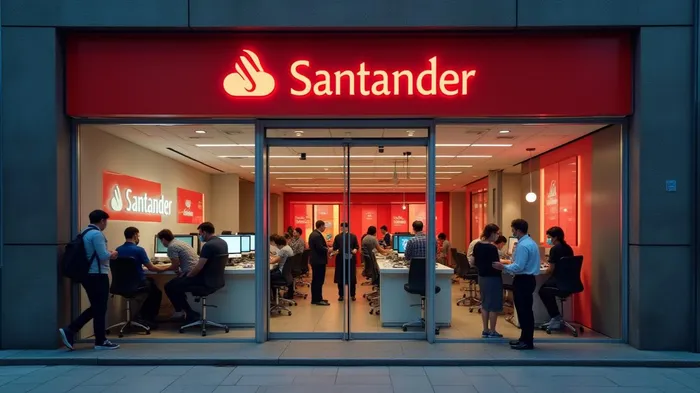
Why Santander Said No
NatWest came to the table with a bid that Santander deemed “undervalued.” The Spanish giant isn’t just being stubborn—it’s making a calculated move. Its UK division is a “fortress business” with 14 million customers, a 10% market share in retail deposits, and a 6% net interest margin—metrics that scream profitability. But the real kicker? Santander’s UK unit has a 3.2% cost-to-income ratio, among the lowest in the sector. These numbers aren’t accidents; they’re the result of decades of operational excellence.
Santander’s leadership rightly viewed NatWest’s offer as a lowball bid. The £10–£12 billion range paled compared to the division’s intrinsic value, which analysts estimate could hit £14 billion. By walking away, Santander sent a clear message: We won’t sell core assets for a discount.
The Strategic Pivot to the Americas
Santander isn’t just sitting on its UK crown jewel. It’s using the proceeds from a €7 billion sale of its Polish subsidiary—sold at double its book value—to fund its strategic pivot to the Americas. Brazil, Chile, and other high-growth markets are where the future lies. This isn’t a random shift; it’s a deliberate move to capitalize on regions with higher interest rates and younger populations, both of which fuel banking growth.
Data to show: Santander’s 28% gain vs. FTSE’s 15% gain.
Market Reactions: A Vote of Confidence
Investors rewarded Santander’s discipline immediately. Its shares rose 1.5% post-rejection, while NatWest’s stock climbed 1.2%—a nod to both banks’ divergent strategies. Santander’s fortress balance sheet, with $150 billion in liquidity, and its 6.5% return on equity (ROE), outperforming NatWest’s 5.2% ROE, further justify its stance.
The Bigger Picture: Why This Matters to Investors
This isn’t just a deal gone sour—it’s a blueprint for value investing. Santander’s decision underscores two critical lessons:
1. Asset Valuation Matters: Don’t sell a cash cow for less than it’s worth. Santander’s UK division isn’t just an asset; it’s a moat against competition.
2. Strategic Discipline Pays: Santander’s focus on high-growth regions and capital allocation has driven its stock to outperform peers by 18% year-to-date in 2025.
What’s Next for NatWest?
NatWest’s CEO, Paul Thwaite, has been itching to grow through acquisitions. But this rejection should serve as a wake-up call. The bank’s 3% drop in UK retail revenue in 2024 and reliance on government stake sales highlight its vulnerabilities. Investors should ask: Can NatWest grow organically, or will it keep overreaching?
Final Takeaway: Stick with Strategic Winners
Santander’s move isn’t just about rejecting a bid—it’s about proving that long-term vision beats short-term gains. With €7 billion in fresh capital, a stable UK division, and a clear path to the Americas, this is a bank investors can trust. Meanwhile, NatWest’s stock may bounce, but until it proves it can compete without overpaying, it’s a wait-and-see play.
The market has spoken. Santander’s decision isn’t just smart—it’s a masterclass in how to build value for shareholders.
Final Data Points to Remember:
- Santander’s UK division’s 6% net interest margin vs. NatWest’s struggling retail segment.
- €7 billion raised from Poland’s sale to fund growth in the Americas.
- Santander’s $150 billion liquidity buffer vs. NatWest’s $45 billion—a sign of who’s playing defense vs. offense.
In a world of noisy deals, Santander’s silence was golden. Investors take note: Discipline beats desperation every time.





Comentarios
Aún no hay comentarios