
Banco BPM's EUR17M Share Buyback: A Strategic Move for Value Creation?
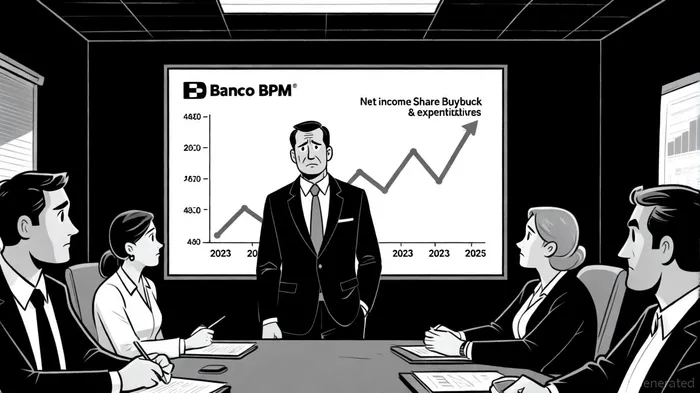
In the evolving landscape of European banking, share buybacks have become a critical tool for signaling financial strength and allocating capital efficiently. Banco BPM's recent EUR15 million share repurchase program—part of a broader EUR45 million buyback plan approved in April 2024—has sparked debate about its strategic implications for shareholder value. While the bank's 2025 buyback is smaller than the EUR17 million figure often cited in preliminary reports, the move reflects a disciplined approach to capital management amid a backdrop of robust earnings growth and competitive pressures from peers like UniCredit.
Capital Allocation and Strategic Rationale
Banco BPM's buyback strategy is rooted in optimizing its capital structure while rewarding shareholders. The EUR45 million program, split into two tranches (EUR30 million in March 2024 and EUR15 million from September 17 to October 17, 2025), follows a pattern of periodic repurchases aimed at stabilizing share prices and enhancing equity returns. According to a report by Marketscreener, the second tranche of EUR15 million was initiated to “support the bank's capital management flexibility and align with its long-term incentive plans” [4]. This approach contrasts with UniCredit's aggressive but ultimately unsuccessful EUR3.6 billion buyback program, which highlighted the risks of overextending capital in a sector still sensitive to regulatory scrutiny [2].
The decision to proceed with a modest buyback in 2025, rather than a larger one, suggests prudence. Banco BPM's Q1 2025 results—marked by a 38% year-over-year surge in net income to €511 million and a 3.5% reduction in operating costs—underscore its ability to generate internal capital without overleveraging [4]. By allocating EUR15 million to buybacks, the bank balances growth and shareholder returns, avoiding the pitfalls of overcapitalization that have plagued some European banks in recent years.
Financial Health and Market Signals
Banco BPM's financial performance provides a strong foundation for its buyback strategy. Total revenues in Q1 2025 rose 2.9% year-over-year to €1.476 billion, driven by diversified income streams and cost discipline [4]. This resilience is critical in a sector where profitability remains uneven. The bank's 2024 dividend of €0.60 per share, totaling €909.1 million, further demonstrates its commitment to distributing capital [4]. Together, these actions signal confidence in its ability to sustain earnings while navigating macroeconomic headwinds.
However, the EUR15 million buyback must be contextualized within the broader Italian banking landscape. UniCredit's abandoned takeover attempt—blocked by the Italian government's “golden power” rules—highlighted the strategic importance of domestic banks in safeguarding national interests [5]. For Banco BPM, this means maintaining a strong balance sheet to deter external pressures while focusing on organic growth. The buyback, though smaller than some peers' initiatives, aligns with this defensive strategy.
Implications for Shareholders and Stock Performance
For long-term equity holders, Banco BPM's buyback program offers a dual benefit: reducing the equity base to boost earnings per share (EPS) and signaling management's confidence in undervaluation. The EUR15 million allocation, while modest, is proportionate to the bank's market capitalization and earnings trajectory. As noted by analysts, the buyback's timing—coinciding with Q1 2025's strong results—could enhance investor sentiment by demonstrating fiscal discipline [4].
Yet, the stock's performance will depend on broader sector dynamics. European banks face challenges from low interest margins and regulatory costs, but Banco BPM's focus on cost optimization and diversified revenues positions it to outperform. The EUR15 million buyback, combined with its 2024 dividend, suggests a balanced approach to capital returns that could support a gradual upward trend in its stock price.
Conclusion
Banco BPM's EUR15 million share buyback, though smaller than the EUR17 million figure often referenced, is a strategic and measured move that reflects the bank's commitment to capital efficiency and shareholder value. By aligning buybacks with strong earnings growth and cost reductions, the bank avoids the risks of overcapitalization while reinforcing its position in a competitive market. For investors, this signals a disciplined management team focused on long-term value creation—a rare but valuable trait in the European banking sector.







Comentarios
Aún no hay comentarios