
Banca Mediolanum's Inflow Surge: A Beacon of Resilience in Europe's Volatile Wealth Markets
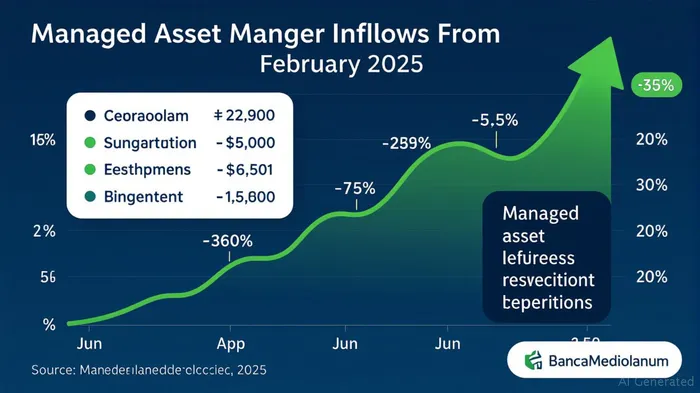
Amid geopolitical tensions, fluctuating interest rates, and market uncertainty, Banca Mediolanum has emerged as a standout player in European wealth management. Its net inflows for June 2025 hit €721 million, marking a 56% increase from February's €461 million—a trajectory that underscores the bank's ability to attract capital even as peers face headwinds. This article dissects the drivers behind this growth and argues that Banca Mediolanum is positioned to capitalize on enduring demand for stable, relationship-driven wealth management.
The Inflow Surge: Client Confidence Meets Strategic Diversification
Banca Mediolanum's performance since early 2025 reflects a dual strategy: client-centric relationship-building and product innovation. The February-June inflow jump—from €461 million to €721 million—was driven by:
The Intelligent Investment Strategy (IIS):
This initiative, which allocates funds to money market instruments before transitioning them into equities over four years, has become a magnet for risk-averse investors. By April, the IIS had attracted €3.6 billion, with plans to reallocate these funds into higher-margin equity holdings. This strategy not only stabilizes cash flows but also positions the bank to benefit from future market recoveries.Targeted Client Segmentation:
The “Grandi Patrimoni” project, launched in early 2025, focuses on high-net-worth individuals (HNWIs), offering tailored wealth management solutions. This segment, which accounts for ~30% of Banca Mediolanum's customer base, has seen 8% growth in new clients in Q1 2025 alone. The bank's family banker network—now 6,491 employees—ensures personalized service, fostering loyalty in a sector where trust is paramount.Promotional Leverage:
January and February's 4% time deposit offer drew €1.8 billion in short-term deposits, which later matured into long-term managed assets. April's record inflow of €1.13 billion (the highest since July 2024) suggests clients are redeploying maturing deposits into higher-yielding, advisory-driven products.
Competitive Advantages in a Volatile Landscape
European wealth managers face headwinds: falling interest rates, geopolitical risks, and competition from megabanks like Mediobanca-Generali, which recently merged to consolidate market share. Yet Banca Mediolanum's cost discipline and asset-light model provide a buffer:
- Cost-to-income ratio: 38.4% (below its 40% target), reflecting efficient operations.
- CET1 ratio: 22.5%, ensuring robust capital strength despite Basel III regulations.
- Cross-selling prowess: The “Next Project,” which pairs senior bankers with consultants, boosted productivity by 40% and client acquisition by 80% in Italy.
Investment Implications: A Defensive Growth Play
For investors seeking resilience in European financials, Banca Mediolanum offers a compelling mix of defensive stability and growth potential:
- Dividend Upside: A base dividend hike from €0.75 to over €1.00/share is anticipated, fueled by recurring fees from managed assets.
- Margin Expansion: As IIS funds shift to equities (currently at 20 basis points in fees, rising to 150+ basis points over four years), margins could expand meaningfully.
- Geographic Diversification: Spain's managed assets grew 73% YoY to €451 million in Q1 2025, signaling scalability beyond its Italian core.
Risks and Considerations
- Interest Rate Sensitivity: A 5% projected decline in net interest income (due to lower rates) could pressure short-term earnings.
- Regulatory Headwinds: Basel IV compliance may require capital retention, limiting dividend flexibility.
- Market Volatility: Equity allocations tied to the IIS could face markdowns in a downturn, though the strategy's gradual reallocation mitigates this risk.
Conclusion: A Strategic Buy for European Financial Resilience
Banca Mediolanum's inflow surge—from €461 million in February to €721 million in June—illustrates its success in attracting capital through client trust, innovative product design, and operational efficiency. In a fragmented European wealth management landscape, its focus on HNWIs and its ability to navigate macro uncertainty position it as a defensive growth stock. Investors prioritizing stability and long-term upside in financial services should consider adding this name to portfolios, particularly as its valuation remains reasonable relative to peers.
Final Note: Monitor the bank's managed asset inflow trajectory and CET1 ratio updates, which will be key indicators of its capacity to sustain this momentum.







Comentarios
Aún no hay comentarios