
Banc of California's Post-Merger Strategy and Path to Sustainable Growth in a Competitive Market
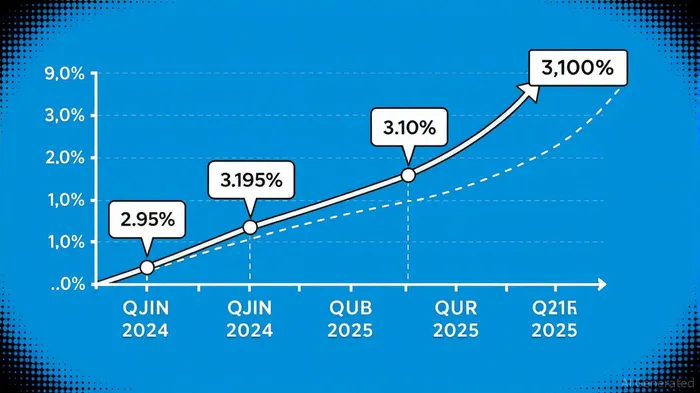
Banc of California's integration of PacWest has marked a pivotal inflection pointIPCX-- in its evolution as a regional banking leader. The merger, completed on November 30, 2024, has already delivered tangible results, including a projected net interest margin (NIM) of nearly 3% in Q1 2025, driven by higher asset yields and reduced funding costs[2]. This progress underscores the bank's disciplined approach to balance sheet optimization and cost synergies, which are critical to navigating a competitive market landscape.
Strategic Integration and Operational Efficiency
The PacWest merger has enabled Banc of CaliforniaBANC-- to streamline operations while addressing structural inefficiencies. By restructuring its balance sheet and normalizing legacy PacWest deposit accounts, the bank has positioned itself to reduce its balance sheet size over time—a move that aligns with its focus on capital efficiency[2]. Management has also emphasized expense management, targeting a return to normalized operating expense levels by Q2 2025, with a long-term goal of maintaining a 2% operating expense ratio[3]. These efforts are not merely cost-cutting exercises but strategic levers to enhance profitability. For instance, the bank's Q2 2025 results revealed a 4-basis-point NIM expansion to 3.08%, reflecting improved loan yields and disciplined cost of funds management[3].
The integration has also highlighted the importance of risk management. While loan balances are expected to remain flat in 2024, the bank has adopted a conservative approach to underwriting, particularly in commercial real estate. A strategic sale of $507 million in commercial real estate loans in Q2 2025 exemplifies this caution, as the bank seeks to optimize credit quality and reduce risk exposure[2]. This proactive stance is critical in a macroeconomic environment marked by uncertainties, including potential tariff impacts and shifting interest rates.
Regional Banking Model and SME Market Positioning
Banc of California's strength lies in its regional banking model, which prioritizes relationship-based lending to small- and middle-market businesses. As the third-largest bank in California and the largest independent bank in Los Angeles, it operates 80 branches across California, Colorado, and North Carolina[1]. CEO Jared Wolff emphasized at the BarclaysBCS-- 2025 Global Financial Services Conference that the bank's focus on “being the business bank of choice” is underpinned by its ability to deliver tailored solutions in high-growth sectors such as lender finance, fund finance, and single-family residential loans[3].
This strategy is paying dividends. In Q2 2025, the bank achieved 9% annualized loan growth, driven by robust commercial loan production[3]. Notably, its digital banking initiatives and full-stack payment solutions are expanding fee income opportunities, further diversifying revenue streams[1]. The bank's emphasis on non-interest-bearing deposits and treasury management services also positions it to capitalize on the evolving needs of SMEs, particularly in California's innovation-driven economy.
Leadership Insights and Future Outlook
Wolff's remarks at the Barclays conference provided clarity on the bank's long-term vision. He reiterated a target of 1.10% ROAA and 13% ROTCE by year-end 2025, metrics that reflect a balance between growth and profitability[2]. However, the CEO acknowledged macroeconomic headwinds, adjusting the 2025 loan growth outlook to mid-single digits from previously expected mid-to-high single digits[3]. This adjustment underscores the bank's commitment to sustainable growth over short-term gains.
Capital deployment remains a key focus. In Q1 2025, Banc of California repurchased $150 million in shares and expanded its buyback program to $300 million, signaling confidence in its intrinsic value[3]. Such actions align with the bank's broader strategy to reward shareholders while maintaining a strong capital and liquidity position to weather economic volatility[3].
Conclusion
Banc of California's post-merger strategy is a masterclass in balancing integration challenges with long-term value creation. By leveraging PacWest's scale, optimizing its balance sheet, and maintaining disciplined risk management, the bank is well-positioned to capitalize on its regional expertise in California's SME market. While economic uncertainties persist, its focus on operational efficiency, digital innovation, and strategic capital allocation provides a clear path to sustainable growth. For investors, the combination of a resilient regional model and a management team prioritizing both profitability and prudence makes Banc of California a compelling case study in adaptive banking.







Comentarios
Aún no hay comentarios