
Bally's: A Value Trap At $17, Years Away From Planned Expansions
Bally's Corporation (BALY) has long been a poster child for high-risk, high-reward investing. . gaming and iGaming sectors, the company's valuation appears to hinge on its ability to execute a capital-intensive growth strategy. However, a closer examination of its financials, project timelines, and debt structure reveals a stark disconnect between management's bullish rhetoric and the structural risks embedded in its business model.
A Growth Strategy Built on Debt and Uncertainty
Bally's recent financial results paint a mixed picture. In Q3 2025, the company , ; . These gains, however, are overshadowed by the company's reliance on debt-fueled expansion. , . , its leverage remains precarious.
The Chicago project, a cornerstone of Bally'sBALY-- "2.0" strategy, is particularly problematic. Despite being touted as a catalyst for growth, . This timeline is further complicated by construction delays and lender resistance. Gaming & Leisure Properties (GLPI), Bally's key partner, . Meanwhile, term lenders are pushing back . 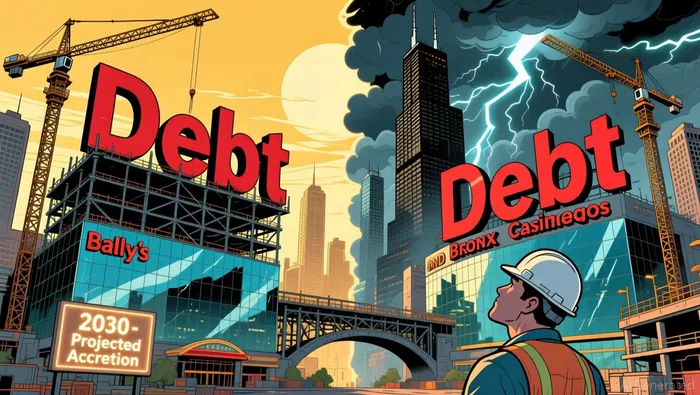
Valuation Metrics and the Illusion of Growth
Bally's current valuation metrics raise red flags. , 2025, . . Yet, the Bronx project remains one of three finalists for a downstate New York gaming license, with a decision pending by year-end. Even if approved, .
The disconnect between management's optimism and the reality of delayed monetization is stark. CEO statements emphasize "long-term value creation", through domestic expansion and digital integration, . Fitch Ratings has placed Bally's on a negative watch, citing execution risks tied to asset sales and restructuring efforts.
Structural Risks and the Path Forward
Bally's capital-intensive strategy is inherently risky. The company's debt-to-EBITDA ratio, while not explicitly stated, is likely elevated given its $3.72 billion debt load and . This leverage becomes a liability when projects fail to meet timelines or face regulatory hurdles. For instance, the Chicago casino's construction has already faced setbacks, . The Bronx project, meanwhile, depends on a New York state license that could still be denied, leaving the company with stranded assets.
Moreover, Bally's reliance on GLPI for funding introduces counterparty risk. While GLPI executives have praised Bally's liquidity, they remain noncommittal about supporting future projects, like the Las Vegas resort. This lack of commitment underscores the fragility of Bally's financing model, which depends heavily on a single partner.
Conclusion: A Value Trap or a Misunderstood Opportunity?
, , . However, , , . For investors, . Given the company's history of project delays and lender pushback, .
In the absence of near-term earnings visibility, . While its strategic pivot to U.S. land-based and digital operations is sound in theory, .





Comentarios
Aún no hay comentarios