
Bally's Strategic Financial Moves and Growth Opportunities in the Evolving iGaming and Luxury Retail Sectors
In an era of economic uncertainty and shifting consumer preferences, Bally's CorporationBALY-- has emerged as a case study in strategic financial agility and cross-sector innovation. By extending its revolving credit facility and leveraging partnerships, the company is positioning itself to capitalize on high-growth opportunities in both iGaming and luxury retail. These moves reflect a broader industry trend of diversification, where firms seek to mitigate risks while tapping into complementary markets.
Extended Credit Facilities: Fueling iGaming and Brick-and-Mortar Expansion
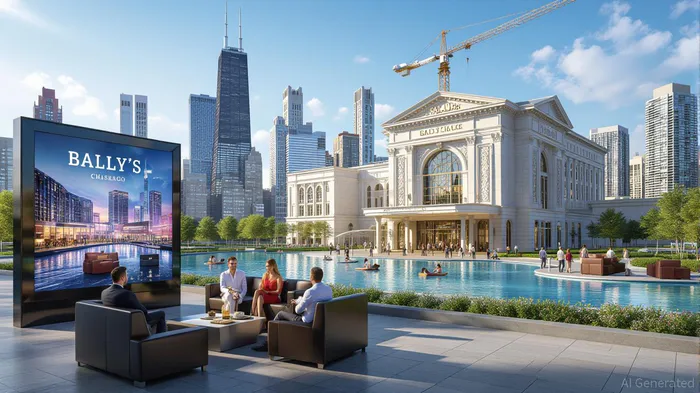
Bally's recent $460 million extension of its revolving credit facility, pushing the maturity date to October 2028, underscores its commitment to long-term growth[1]. This financial maneuver provides flexibility to fund its Bally'sBALY-- 2.0 initiative, which includes ambitious projects in iGaming and physical casino development. For instance, the company is advancing a $1.7 billion casino resort in Chicago, slated to open in September 2026, and a $4 billion project in New York at the former Trump Golf Links site[2]. To finance these ventures, Bally's has secured a $2.07 billion funding commitment from Gaming and LeisureGLPI-- Properties (GLPI), including $940 million in construction financing for the Chicago project[3].
The iGaming segment, in particular, has shown robust momentum. Bally's digital platforms—Bally Bet and BallyBALY-- Casino—reported a 21.5% year-over-year revenue increase in Q2 2025[2]. This growth is driven by expanding regulatory approvals and a shift in consumer behavior toward online gambling861167--. By securing extended credit, Bally's is not only addressing immediate capital needs but also hedging against potential liquidity constraints in a sector prone to regulatory and economic volatility.
Cross-Sector Diversification: Navigating Luxury Retail Challenges
While Bally's iGaming expansion is well-documented, its foray into luxury retail remains less explicit. The brand's online store offers high-end shoes, bags, and accessories[1], but no specific 2025 initiatives or partnerships have been disclosed. However, broader industry trends suggest that Bally's is likely following a familiar playbook. Luxury brands are increasingly diversifying into beauty, accessories, and wearable fashion to attract younger consumers while preserving their core identity[1]. For example, Louis Vuitton's foray into beauty and smaller accessories has created accessible entry points for aspirational buyers[1].
Bally's approach aligns with insights from The State of Luxury 2025 report, which emphasizes the need for product portfolio expansion and enhanced client engagement[2]. The brand's existing luxury offerings—such as its iconic leather goods—position it to leverage cross-sector synergies. For instance, a customer drawn to Bally's iGaming platforms might develop brand loyalty that extends to its retail arm, creating a flywheel effect.
Strategic Partnerships: A Path to Resilience
Bally's financial and operational strategies are further strengthened by strategic alliances. The GLPIGLPI-- partnership, for example, not only provides capital but also taps into GLPI's expertise in real estate development[3]. Similarly, the luxury retail sector has seen a surge in collaborations aimed at digital transformation and market expansion. Recent examples include Mytheresa's acquisition of YNAP and the Authentic Luxury Group's formation[3]. These partnerships highlight a shift toward shared resources and innovation, which Bally could emulate to bolster its retail segment.
Risks and Opportunities
Bally's strategy is not without risks. The iGaming sector faces regulatory scrutiny and competition from established players, while luxury retail contends with U.S. tariffs and shifting consumer priorities. However, the company's dual focus on digital and physical expansion creates a buffer against sector-specific downturns. For instance, if iGaming growth slows, the luxury retail segment could provide stable cash flows, and vice versa.
Investors should also consider macroeconomic factors. The extended credit facility's 2028 maturity aligns with projected timelines for the Chicago and New York projects[2], reducing refinancing risks in a high-interest-rate environment. Meanwhile, Bally's ability to integrate its iGaming and retail brands could unlock premium valuations, as seen in conglomerates like LVMH, which blend digital and physical ecosystems.
Conclusion
Bally's strategic use of extended credit facilities and cross-sector diversification positions it to navigate a complex economic landscape. By investing in iGaming infrastructure and exploring luxury retail synergies, the company is building a resilient business model. While uncertainties remain, its proactive approach to capital allocation and market expansion offers compelling opportunities for investors seeking exposure to high-growth, adaptive industries.





Comentarios
Aún no hay comentarios