
Baker Hughes' Strategic Win at Rio Grande LNG: A Catalyst for Energy Transition Exposure?
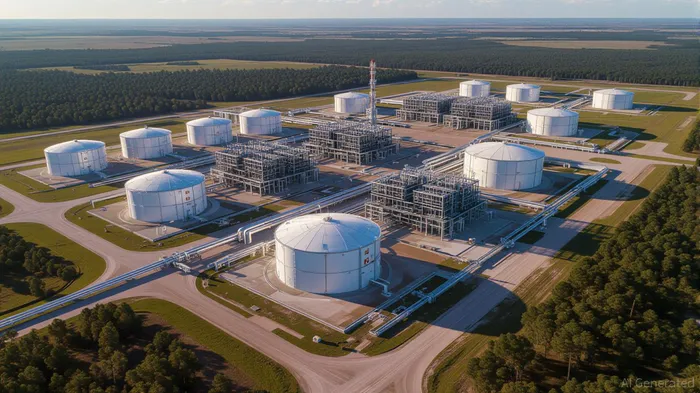
In the evolving landscape of global energy, liquefied natural gas (LNG) infrastructure has emerged as a linchpin for both energy security and the transition to lower-carbon systems. Baker Hughes' recent contract with Rio Grande LNG—specifically for Train 4 of the expansion—has positioned the company at the forefront of this transformation. By supplying two Frame 7 gas turbines and six centrifugal compressors, Baker HughesBKR-- is enabling an additional 6 million tonnes per annum (MTPA) of LNG production capacity at the facility[1]. This deal, part of a broader framework agreement covering Trains 4 through 8, underscores the company's strategic alignment with the long-term recovery of the upstream exploration and production (E&P) sector and its role in facilitating energy transition goals[3].
LNG Infrastructure: A Cornerstone of E&P Recovery
The U.S. E&P sector's resurgence hinges on the development of robust LNG infrastructure. According to Deloitte's 2025 Oil and Gas Industry Outlook, natural gas production in the Permian Basin has nearly doubled over the past five years, reaching 25 billion cubic feet per day (Bcf/d), yet takeaway capacity remains constrained, with pipeline utilization exceeding 90% in 2024[2]. Projects like the 2.5 Bcf/d Matterhorn Express Pipeline, which began operations in October 2024, are critical to alleviating bottlenecks and stabilizing prices[2]. Baker Hughes' involvement in Rio Grande LNG directly supports this infrastructure push, linking Permian production to global markets and enabling upstream companies to monetize lower-tier shale resources profitably[2].
The strategic importance of LNG is further amplified by the U.S. becoming the world's largest LNG exporter, with exports hitting record levels in early 2024[1]. This shift has not only diversified global energy supply chains but also bolstered domestic economic growth. For Baker Hughes, the Rio Grande project represents a scalable opportunity: the framework agreement for Trains 4 through 8 could add 18 MTPA of liquefaction capacity, significantly expanding the facility's footprint[4].
Energy Transition and Technological Leadership
Baker Hughes' role in Rio Grande LNG extends beyond equipment supply. The company's provision of long-term maintenance services for the turbines and compressors highlights its commitment to operational efficiency and reliability—key attributes for energy transition infrastructure[4]. As global demand for cleaner energy sources grows, LNG is increasingly viewed as a transitional fuel, bridging the gap between fossil fuels and renewables. Baker Hughes' gas turbine technology, which offers lower emissions compared to traditional alternatives, aligns with this vision[1].
The broader energy transition narrative also intersects with the U.S. Oil & Gas EPC (Engineering, Procurement, and Construction) market, which is projected to grow from USD 13.54 billion in 2023 to USD 22.42 billion by 2032[5]. This expansion is driven by LNG export terminals, offshore projects, and midstream infrastructure, all of which require Baker Hughes' expertise in integrated energy solutions. The company's focus on sustainability—such as incorporating carbon capture and hydrogen-ready technologies—further strengthens its positioning in a decarbonizing world[5].
Navigating Challenges in a Shifting Market
While LNG infrastructure remains pivotal, the sector faces headwinds. In Europe, renewable energy now accounts for over 20% of electricity generation, reducing natural gas's role in the energy mix to 22% in 2024[4]. However, the EU's expansion of LNG import capacity—adding over 10 Bcf/d of regasification capacity since 2021—demonstrates that infrastructure investments will continue to shape the E&P sector's trajectory[4]. For Baker Hughes, this duality of declining demand in some regions and rising demand in others (e.g., Asia and Africa) necessitates a diversified approach to market opportunities.
Conclusion: A Catalyst for Long-Term Growth
Baker Hughes' strategic win at Rio Grande LNG is more than a single contract—it is a testament to the company's ability to navigate the dual imperatives of energy transition and E&P recovery. By securing a long-term role in one of the most significant LNG projects in the U.S., Baker Hughes is not only reinforcing its technological leadership but also aligning itself with the infrastructure needs of a sector poised for sustained growth. As global energy systems evolve, companies that can bridge the gap between traditional hydrocarbons and emerging low-carbon solutions will be best positioned to thrive. For investors, Baker Hughes' deepening involvement in LNG infrastructure offers a compelling case for long-term value creation.





Comentarios
Aún no hay comentarios