
Baker Hughes Co: Strategic Positioning in the Energy Transition Drives Market Optimism
Financial Performance: A Catalyst for Growth
Baker Hughes' first-half 2025 results highlight its accelerating momentum in the energy transition. The Industrial & Energy Technology (IET) segment, which focuses on clean energy and digital solutions, drove 49% of total orders in Q1 2025, with $3.2 billion attributed to this division, including $6.5 billion in total orders for the quarter, according to an Energy Advisors analysis. This trend continued into Q2 2025, where IET secured $3.5 billion in orders, contributing to a record backlog of $31.3 billion, per a Monexa analysis. Such figures reflect robust demand for Baker Hughes' energy transition offerings, particularly in data center power solutions and carbon capture technologies.
Strategic Partnerships and Acquisitions
The company's aggressive expansion into clean energy infrastructure is evident in its strategic partnerships and acquisitions. In Q1 2025, Baker Hughes partnered with Frontier Infrastructure to develop large-scale carbon capture and storage (CCS) projects, targeting industrial and data center clients, as reported by Energy Advisors. This collaboration aligns with the growing need for decarbonization in high-energy sectors.
A landmark acquisition further solidified Baker Hughes' position: the $9.6 billion purchase of Chart Industries in July 2025, according to an Enkiai report. This move expanded the company's capabilities in hydrogen production, industrial cooling, and cryogenic systems-critical components for clean energy infrastructure. By integrating Chart's expertise, Baker Hughes is now better equipped to meet surging demand for low-carbon technologies, particularly in hydrogen and carbon management.
Technological Innovation: Digital Solutions for Carbon Abatement
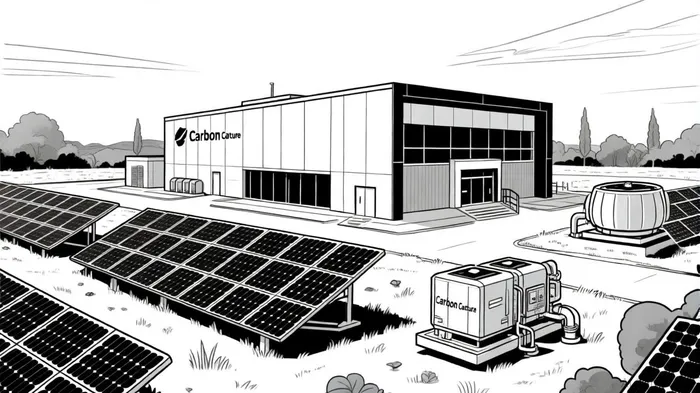
Baker Hughes has also prioritized digital innovation to enhance its energy transition offerings. The launch of CarbonEdge, a digital solution for carbon capture, utilization, and storage (CCUS) operations, exemplifies this focus. CarbonEdge is already being deployed by Wabash Valley Resources to monitor and verify CO₂ sequestration at its Indiana facility, as noted in a SustainabilityMag article. Such tools not only improve operational efficiency but also address regulatory and investor demands for transparency in emissions reduction.
The company's shift from digital optimization to infrastructure-led carbon abatement is a strategic masterstroke. By combining hardware, software, and project execution, Baker Hughes is creating end-to-end solutions that cater to both traditional energy players and emerging clean tech firms.
Investment Implications
Baker Hughes' strategic alignment with the energy transition is not merely defensive but proactive. Its financial performance, bolstered by high-margin IET contracts, and its ability to scale through acquisitions and partnerships, position it to capitalize on multi-decade trends. The energy transition is expected to require trillions in infrastructure investment over the next decade, and Baker Hughes is uniquely positioned to capture a significant share of this market.
For investors, the company's dual focus on decarbonization and digital transformation offers a compelling value proposition. With a record backlog and a clear roadmap for scaling clean energy solutions, Baker Hughes is well on its way to becoming a cornerstone of the net-zero economy.
Historically, however, earnings releases have not provided a reliable edge for investors. A backtest of BKR's performance around earnings dates from 2022 to 2025 reveals that average cumulative returns relative to the benchmark remained statistically insignificant over a 30-day window, with slightly negative returns in the first two weeks before drifting sideways, as shown in a backtest. This suggests that while the company's fundamentals are strong, timing trades around earnings announcements may not yield consistent advantages.





Comentarios
Aún no hay comentarios