
Baker Hughes' Strategic Expansion in Saudi Gas Fields: Assessing Long-Term Growth and Operational Scalability in UBCTD
Margham Gas Storage Project: A Testbed for Innovation
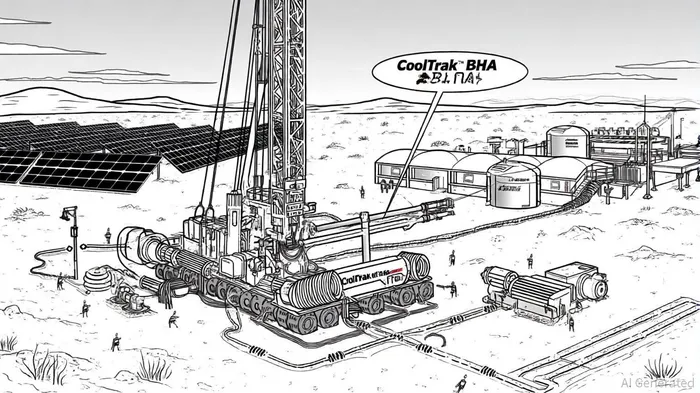
Baker Hughes' involvement in Dubai's Margham Gas Storage Project, according to a World Oil report, highlights its expertise in integrating UBCTD with underbalanced drilling techniques. The project, a multi-year contract with the Dubai Petroleum Establishment (DPE), aims to enhance energy system flexibility by enabling a seamless transition between solar power and natural gas. Central to this effort is the CoilTrak™ coiled-tubing bottomhole assembly (BHA) system, which optimizes horizontal drilling efficiency and maximizes reservoir contact, as noted in a Rigzone article. By minimizing reservoir damage, underbalanced drilling ensures higher recovery rates-a critical factor for revitalizing mature fields like Margham, EnergyNews reported.
The project also incorporates Baker Hughes' Integrated Compressor Line (ICL) units for gas storage and export, reflecting a holistic approach to energy infrastructure, according to Hydrocarbon Engineering. These technologies align with Dubai's push for lower-carbon energy solutions, positioning Baker HughesBKR-- as a key enabler of regional energy stability.
Aramco Partnership: Scaling UBCTD Across Saudi Arabia
The company's collaboration with Saudi Aramco represents a more direct and expansive foray into the Kingdom's gas fields. , , , according to a StockTitan report. This expansion, , includes services such as underbalanced drilling, well construction, and geosciences advisory, a GlobeNewswire release notes.
The strategic significance of this move is twofold. First, , . Second, , large-scale projects, as reported by an Investing.com article. The integration of the CoilTrak system and GaffneyCline™ advisory services further enhances production efficiency and safety, , as StockTitan notes.
Technological and Strategic Advantages
Baker Hughes' technological edge lies in its ability to combine hardware innovation with data-driven solutions. The CoilTrak system, for instance, , ; these capabilities were outlined in the GlobeNewswire release. These tools not only improve operational efficiency but also align with the industry's shift toward digitalization and predictive analytics.
From a strategic standpoint, . While the Margham project serves as a pilot for integrated energy systems, . This duality mitigates risks associated with single-market exposure and positions Baker Hughes to benefit from both short-term contracts and long-term infrastructure development.
Long-Term Growth and Market Implications
The scalability of Baker Hughes' UBCTD operations is further supported by macroeconomic trends. , , as noted in the GlobeNewswire release. , .
For investors, . However, . , which Investing.com identified as a key milestone, will be critical to assess operational execution and financial returns.
Conclusion
Baker Hughes' strategic expansion in Saudi gas fields, , . , scale, and adapt to regional priorities. As Saudi Arabia and the UAE continue to prioritize energy diversification and decarbonization, .





Comentarios
Aún no hay comentarios